Bulletin of Botanical Research ›› 2026, Vol. 46 ›› Issue (3): 531-541.doi: 10.7525/j.issn.1673-5102.2026.03.013
• Original Paper • Previous Articles Next Articles
Wanting PENG1,2, Jinyu CHEN1, Fan YANG1, Xinyu LI1, Xinyi GUO1, Yi WEI1, Hongyi WANG1,2,3, Zhihui WANG1,2( )
)
Received:2026-01-21
Online:2026-05-20
Published:2026-06-01
Contact:
Zhihui WANG
E-mail:byndwzh@163.com
CLC Number:
Wanting PENG, Jinyu CHEN, Fan YANG, Xinyu LI, Xinyi GUO, Yi WEI, Hongyi WANG, Zhihui WANG. Comparative Analysis of the Phyllosphere Microbial Diversity among Three Different Grassland Plants[J]. Bulletin of Botanical Research, 2026, 46(3): 531-541.
Add to citation manager EndNote|Ris|BibTeX
URL: https://bbr.nefu.edu.cn/EN/10.7525/j.issn.1673-5102.2026.03.013
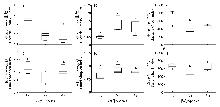
Fig.1
Alpha diversity of phyllospheric bacteria and fungi in different speciesA-C. Shannon index, Simpson index, and Chao1 index of phyllospheric bacteria in different species; D-F.Shannon index, Simpson index, and Chao1 index of phyllospheric fungi in different species. Lc, Vs and Aa represented Leymus chinensis, Vicia sativa, and Aster altaicus, respectively. Different lowercase letters indicated significant differences among species(P<0.05).
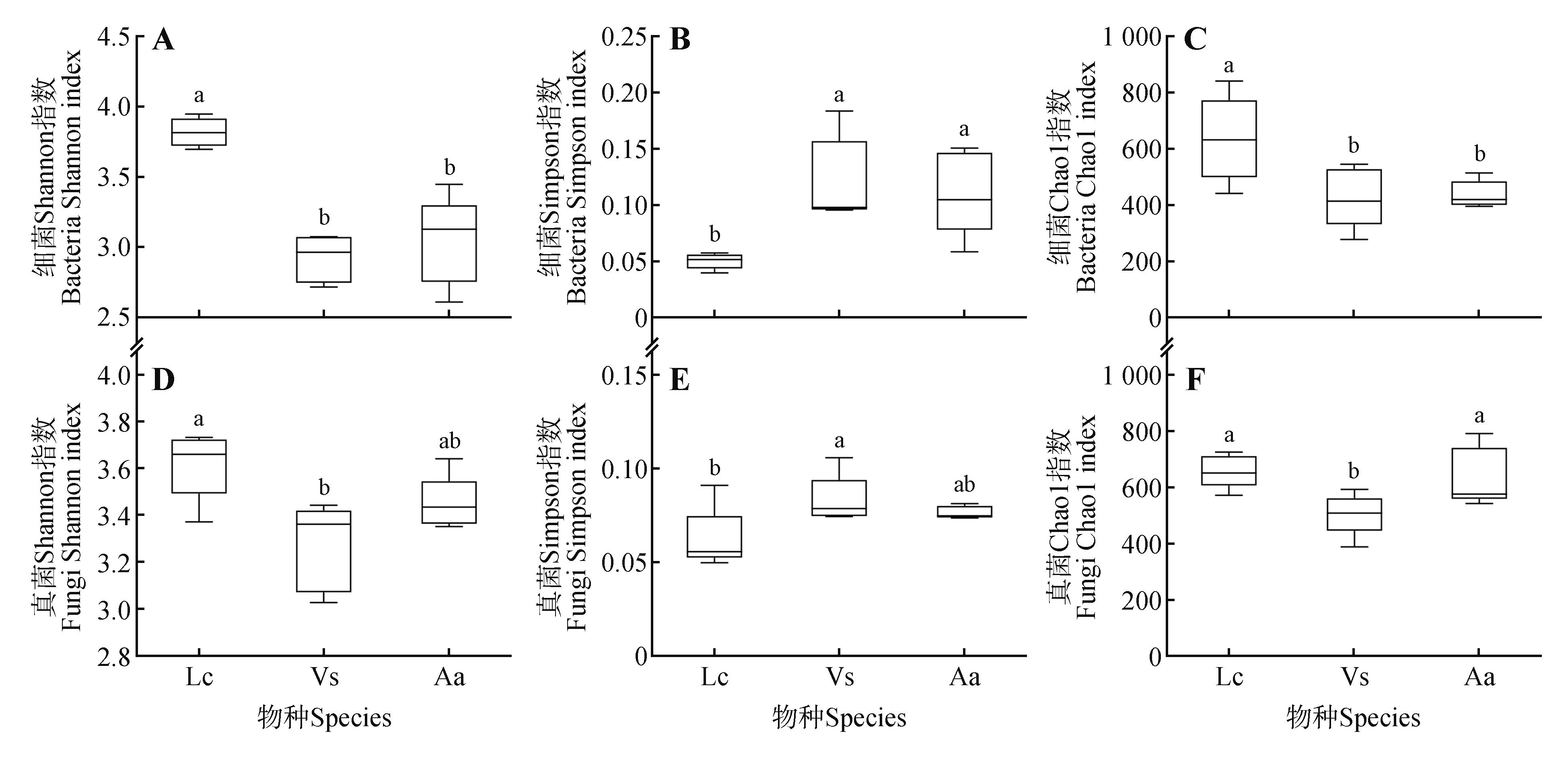

Fig.2
β diversity of phyllospheric bacteria and fungi in different speciesA.NMDS analysis of phyllospheric bacteria from different plant species;B.NMDS analysis of phyllospheric fungi from different plant species.Lc, Vs and Aa represented Leymus chinensis, Vicia sativa, and Aster altaicus, respectively.
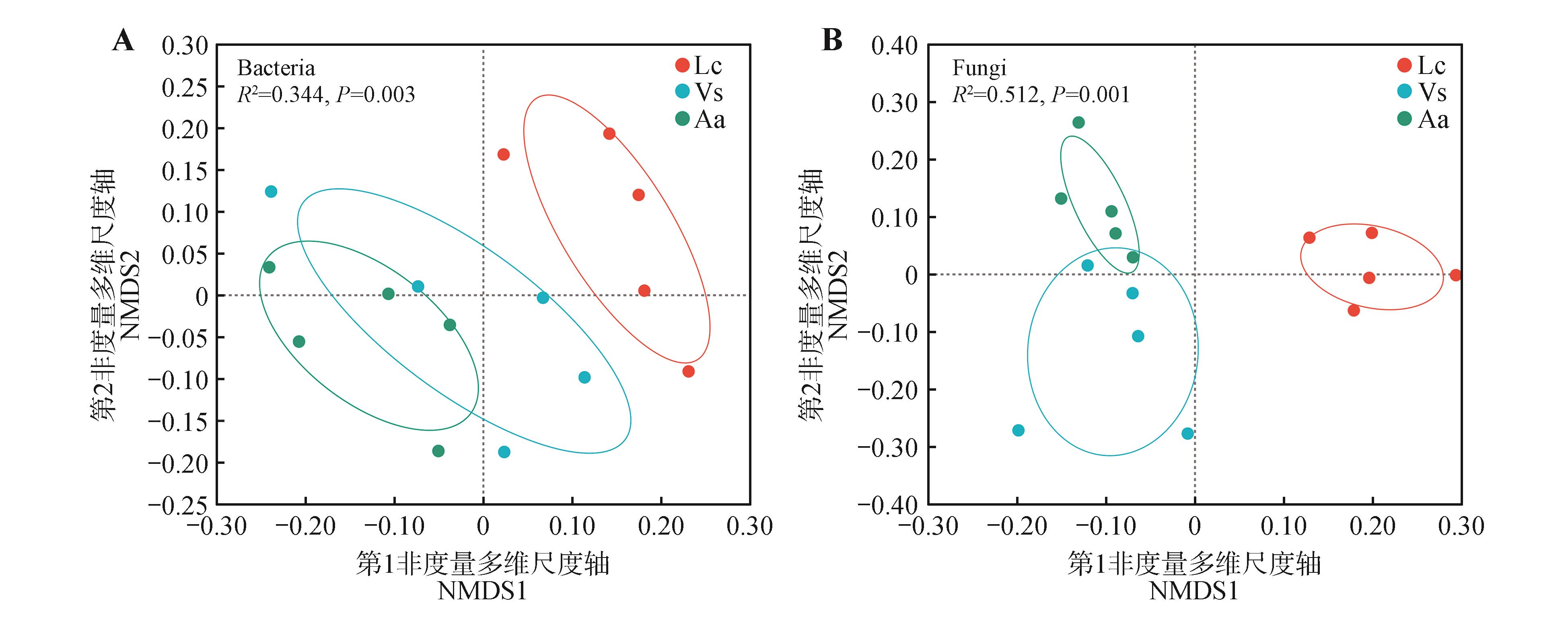
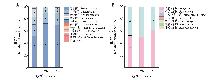
Fig.3
The phylum-level community composition of phyllospheric bacteria and fungi of different speciesA. Bacteria; B. Fungi; Lc, Vs and Aa represented Leymus chinensis, Vicia sativa, and Aster altaicus, respectively. Different lowercase letters indicated significant differences among species(P<0.05).
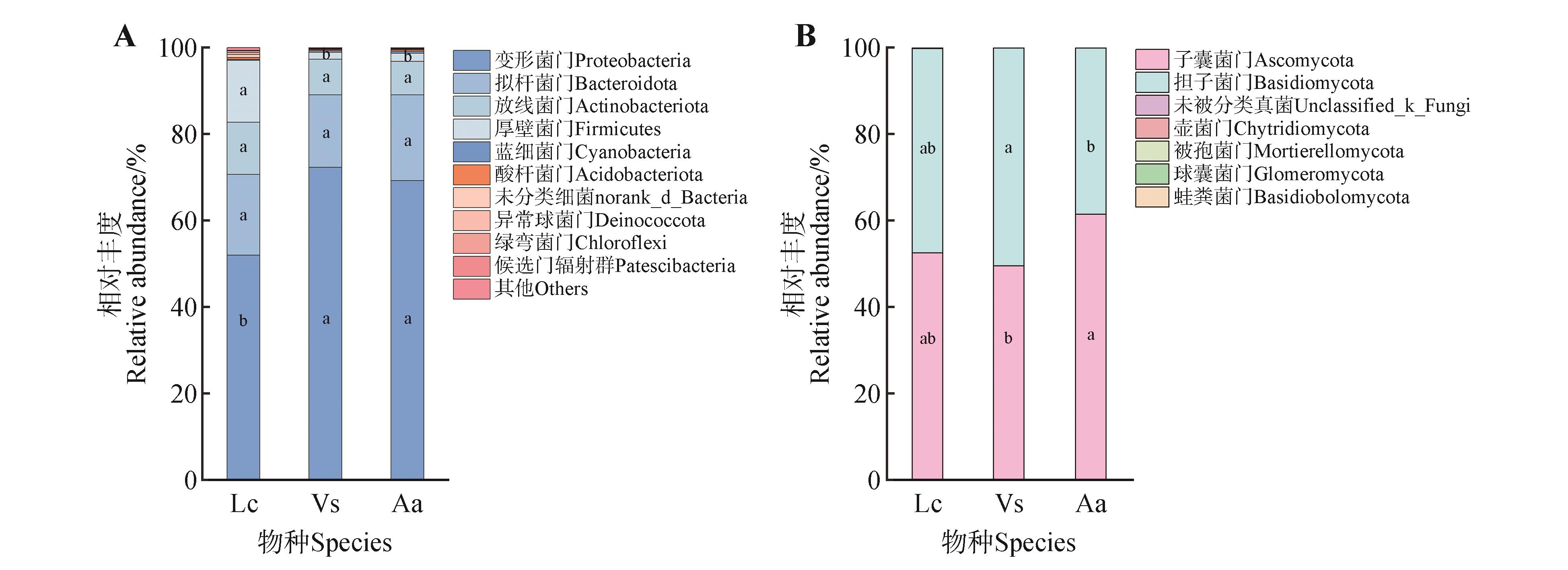
Fig.4
Relative abundance of phyllospheric bacteria at the genus level of different plant speciesLc, Vs and Aa represented Leymus chinensis, Vicia sativa, and Aster altaicus, respectively. Different lowercase letters indicated significant differences among species(P<0.05). About Methylobacterium-Methylorubrum, as suggested by recent taxonomic revisions, this group was defined to include the traditional genera Methylobacterium and Methylorubrum, and the taxonomic separation of the two genera is still disputed.
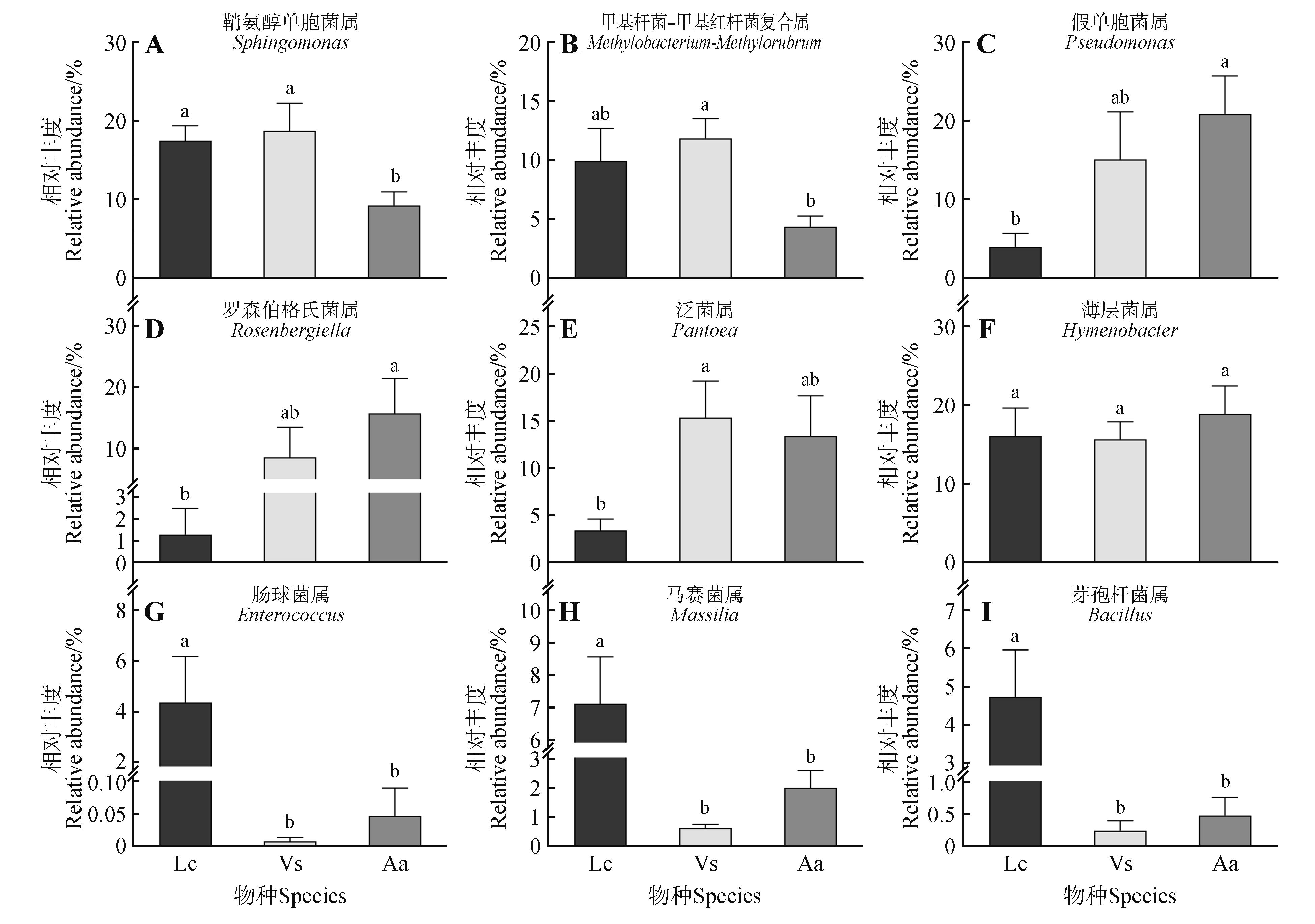

Fig.5
Relative abundance of phyllospheric fungi at the genus level of different plant speciesLc, Vs and Aa represented Leymus chinensis, Vicia sativa, and Aster altaicus, respectively. Different lowercase letters indicated significant differences among species(P<0.05).

Fig.6
Characteristics of nutrient traits of leaves from different plant speciesLc, Vs and Aa represented Leymus chinensis, Vicia sativa, and Aster altaicus, respectively. Different lowercase letters indicated significant differences among species(P < 0.05).
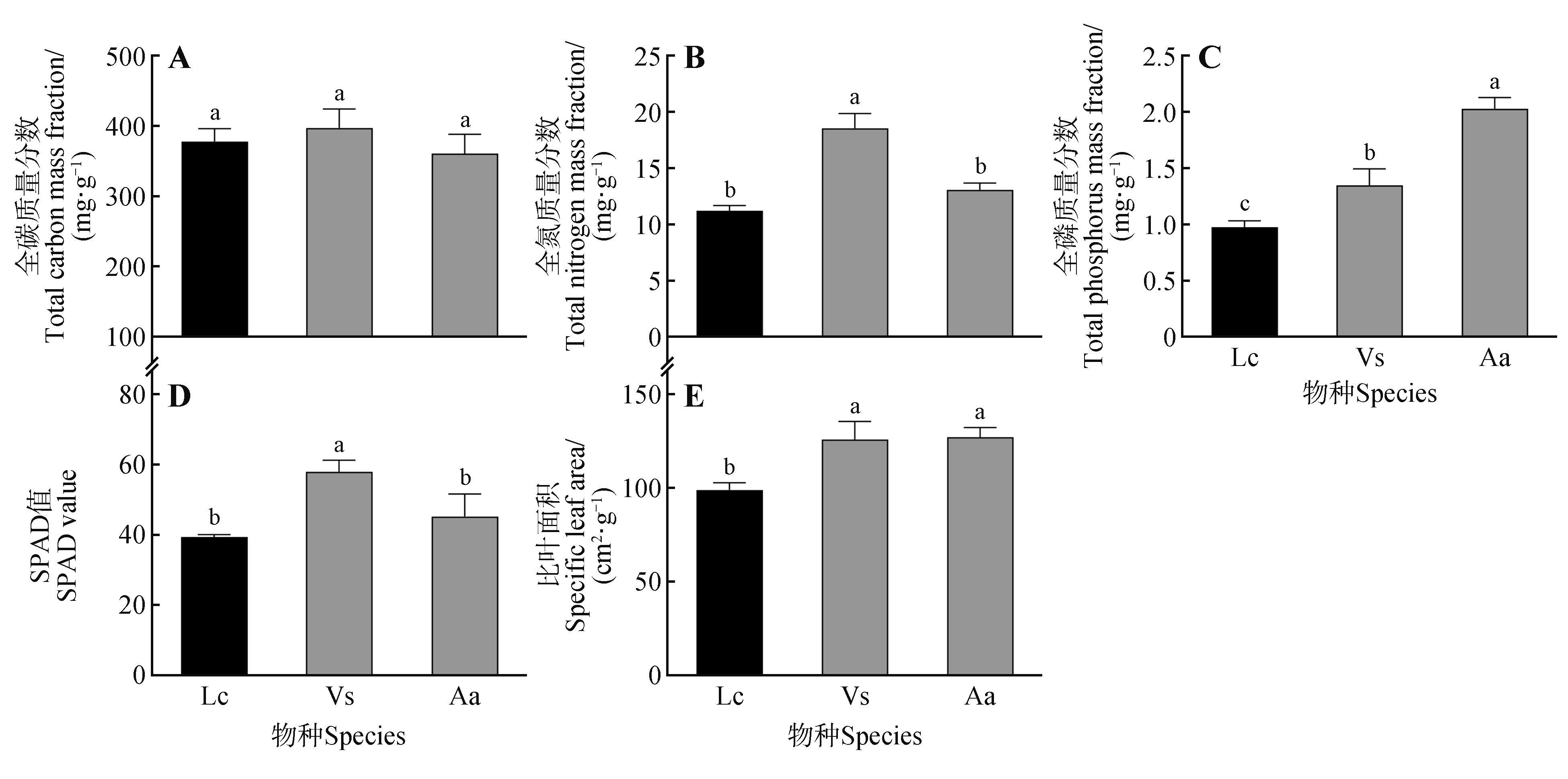

Fig.7
Redundancy analysis(RDA)of bacteria and fungal community composition(dominant genus-level data)A. Bacterial communities; B. Fungal communities; Lc, Vs and Aa represented Leymus chinensis, Vicia sativa, and Aster altaicus, respectively.
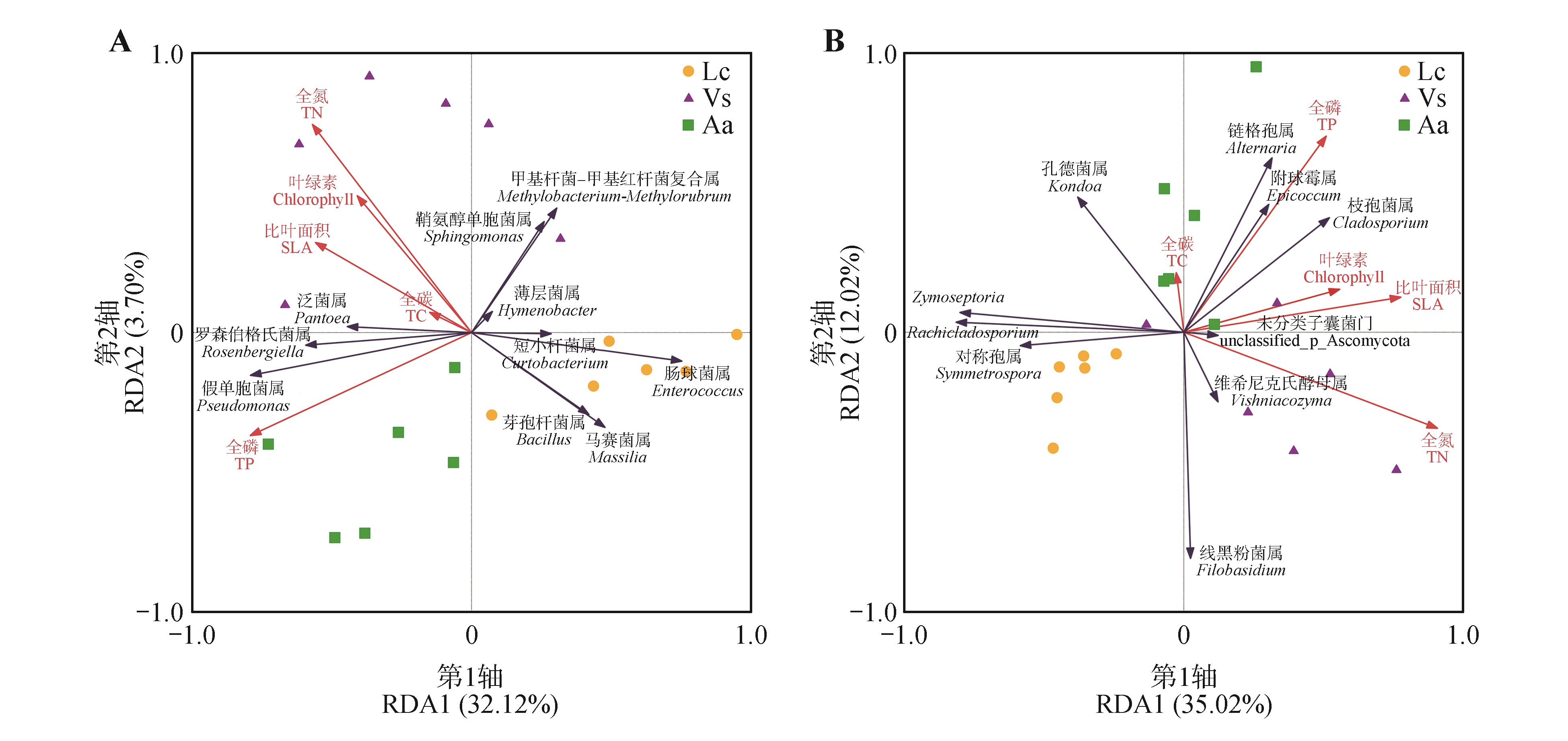
Table 1
Assessment on the significance of environmental factors on phyllosphere bacterial/fungal communities by the Monte Carlo permutation test
环境因子 Environmental factors | 细菌 Bacteria | 真菌 Fungi | ||||
|---|---|---|---|---|---|---|
解释度 Explains/% | 伪F Pseudo-F | P | 解释度 Explains/% | 伪F Pseudo-F | P | |
全磷 TP | 21.2 | 4.3 | 0.014 | 15.7 | 3.0 | 0.040 |
全氮 TN | 12.7 | 2.3 | 0.082 | 30.4 | 7.0 | 0.002 |
比叶面积 Specific leaf area | 11.9 | 2.2 | 0.094 | 22.1 | 4.5 | 0.008 |
叶绿素 Chlorophyll | 6.7 | 1.1 | 0.302 | 12.3 | 2.2 | 0.076 |
全碳 TC | 2.1 | 0.3 | 0.862 | 2.6 | 0.4 | 0.816 |
| [1] | HUYGHE C.New utilizations for the grassland areas and the forage plants:what matters[J].Fourrages,2010,134(203):213-219. |
| [2] | 赵同谦,欧阳志云,贾良清,等.中国草地生态系统服务功能间接价值评价[J].生态学报,2004,24(6):1101-1110. |
| ZHAO T Q, OUYANG Z Y, JIA L Q,et al.Ecosystem services and their valuation of China grassland[J].Acta Ecologica Sinica,2004,24(6):1101-1110. | |
| [3] | 刘兴元,牟月亭.草地生态系统服务功能及其价值评估研究进展[J].草业学报,2012,21(6):286-295. |
| LIU X Y, MU Y T.Research progress in the ecosystem services function and value of grasslands[J].Acta Prataculturae Sinica,2012,21(6):286-295. | |
| [4] | LIU H W, BRETTELL L E, SINGH B.Linking the phyllosphere microbiome to plant health[J].Trends in Plant Science,2020,25(9):841-844. |
| [5] | ROMERO F M, MARINA M, PIECKENSTAIN F L.Novel components of leaf bacterial communities of field-grown tomato plants and their potential for plant growth promotion and biocontrol of tomato diseases[J].Research in Microbiology,2016,167(3):222-233. |
| [6] | MU M Q, TULUHONG M, JIANG J W,et al.Role of the beneficial phyllosphere microbiome in the defense against red clover anthracnose caused by Colletotrichum americae-borealis [J].Microbiological Research,2025,297:128184. |
| [7] | WANG Z H, PENG D Y, FU C W,et al.Pan-metagenome reveals the abiotic stress resistome of cigar tobacco phyllosphere microbiome[J].Frontiers in Plant Science,2023,14:1248476. |
| [8] | LI J, JIN M K, HUANG L J,et al.Assembly and succession of the phyllosphere microbiome and nutrient-cycling genes during plant community development in a glacier foreland[J].Environment International,2024,187:108688. |
| [9] | VACHER C, HAMPE A, PORTÉ A J,et al.The phyllosphere:microbial jungle at the plant-climate interface[J].Annual Review of Ecology,Evolution,and Systematics,2016,47:1-24. |
| [10] | LAFOREST-LAPOINTE I, PAQUETTE A, MESSIER C,et al.Leaf bacterial diversity mediates plant diversity and ecosystem function relationships[J].Nature,2017,546(7656):145-147. |
| [11] | 王兰,周迪,薛曌,等.不同生长时期青稞种子内生细菌群落动态研究[J].植物研究,2025,45(6):965-974. |
| WANG L, ZHOU D, XUE Z,et al.Dynamics of endophytic bacterial communities in highland barley seeds at different growth stages[J].Bulletin of Botanical Research,2025,45(6):965-974. | |
| [12] | TRIVEDI P, DELGADO-BAQUERIZO M, TRIVEDI C,et al.Keystone microbial taxa regulate the invasion of a fungal pathogen in agro-ecosystems[J].Soil Biology and Biochemistry,2017,111:10-14. |
| [13] | REISBERG E E, HILDEBRANDT U, RIEDERER M,et al.Distinct phyllosphere bacterial communities on Arabidopsis wax mutant leaves[J].PLoS One,2013,8(11):e78613. |
| [14] | GIRI S, PATI B R.A comparative study on phyllosphere nitrogen fixation by newly isolated Corynebacterium sp.& Flavobacterium sp. and their potentialities as biofertilizer[J].Acta Microbiologica et Immunologica Hungarica,2004,51(1/2):47-56. |
| [15] | DONG C J, WANG L L, LI Q,et al.Bacterial communities in the rhizosphere,phyllosphere and endosphere of tomato plants[J].PLoS One,2019,14(11):e0223847. |
| [16] | 周育,乔雄梧,王静,等.植物叶际微生物提取方法研究[J].植物研究,2006,26(2):2233-2237. |
| ZHOU Y, QIAO X W, WANG J,et al.Extraction methods of microorganisms from phyllosphere[J].Bulletin of Botanical Research,2006,26(2):2233-2237. | |
| [17] | BODENHAUSEN N, HORTON M W, BERGELSON J.Bacterial communities associated with the leaves and the roots of Arabidopsis thaliana [J].PLoS One,2013,8(2):e56329. |
| [18] | XU N, TAN G C, WANG H Y,et al.Effect of biochar additions to soil on nitrogen leaching,microbial biomass and bacterial community structure[J].European Journal of Soil Biology,2016,74:1-8. |
| [19] | ADAMS R I, MILETTO M, TAYLOR J W,et al.Dispersal in microbes:fungi in indoor air are dominated by outdoor air and show dispersal limitation at short distances[J].The ISME Journal,2013,7(7):1262-1273. |
| [20] | WALKLEY A, BLACK I A.An examination of the degtjareff method for determining soil organic matter,and a proposed modification of the chromic acid titration method[J].Soil Science,1934,37(1):29-38. |
| [21] | 鲍士旦.土壤农化分析[M].3版.北京:中国农业出版社,2000. |
| BAO S D.Soil and agricultural chemistry analysis[M]. 3rd ed.Beijing:China Agriculture Press,2000. | |
| [22] | MARKWELL J, OSTERMAN J C, MITCHELL J L.Calibration of the Minolta SPAD-502 leaf chlorophyll meter[J].Photosynthesis Research,1995,46(3):467-472. |
| [23] | LIU J Y, ZHANG W X, LIU Y T,et al.Differences in phyllosphere microbiomes among different Populus spp.in the same habitat[J].Frontiers in Plant Science,2023,14:1143878. |
| [24] | 王彤,李西良,唐士明,等.温性典型草原优势植物叶际微生物群落对放牧的响应[J].中国草地学报,2025,47(6):21-33. |
| WANG T, LI X L, TANG S M,et al.Responses of phyllosphere microbial community of dominant plant to grazing in temperate typical steppe[J].Chinese Journal of Grassland,2025,47(6):21-33. | |
| [25] | 李聪聪,朱秉坚,徐琳,等.高寒草甸优势植物叶内、根内与土壤原核微生物群落的分异[J].生态学报,2020,40(14):4942-4953. |
| LI C C, ZHU B J, XU L,et al.Differentiations of prokaryotic communities in leaf and root endosphere of dominant plants and bulk soils in Alpine meadows[J].Acta Ecologica Sinica,2020,40(14):4942-4953. | |
| [26] | VORHOLT J A.Microbial life in the phyllosphere[J].Nature Reviews Microbiology,2012,10(12):828-840. |
| [27] | INNEREBNER G, KNIEF C, VORHOLT J A.Protection of Arabidopsis thaliana against leaf-pathogenic Pseudomonas syringae by Sphingomonas strains in a controlled model system[J].Applied and Environmental Microbiology,2011,77(10):3202-3210. |
| [28] | DELMOTTE N, KNIEF C, CHAFFRON S,et al.Community proteogenomics reveals insights into the physiology of phyllosphere bacteria[J].Proceedings of the National Academy of Sciences of the United States of America,2009,106(38):16428-16433. |
| [29] | GREEN P N, ARDLEY J K.Review of the genus Methylobacterium and closely related organisms:a proposal that some Methylobacterium species be reclassified into a new genus,Methylorubrum gen.nov.[J].International Journal of Systematic and Evolutionary Microbiology,2018,68(9):2727-2748. |
| [30] | ZHU Y G, PENG J J, CHEN C,et al.Harnessing biological nitrogen fixation in plant leaves[J].Trends in Plant Science,2023,28(12):1391-1405. |
| [31] | KUMARAVEL S, THANKAPPAN S, RAGHUPATHI S,et al.Draft genome sequence of plant growth-promoting and drought-tolerant Bacillus altitudinis FD48,isolated from rice phylloplane[J].Genome Announcements,2018, 6(9):e00019-e00018. |
| [32] | 陈翔.人工湿地污水处理系统马赛菌(Massilia)组成、分布特征及影响因素研究[D].青岛:青岛理工大学,2021. |
| CHEN X.Study on the composition,distribution characteristics and influencing factors of Massilia in constructed wetland wastewater treatment system[D].Qingdao:Qingdao University of Technology,2021. | |
| [33] | 李宏彬,刘辉.附球菌在植物病害生物防治中的应用研究进展[J].现代农业科技,2024(19):73-80. |
| LI H B, LIU H.Research progress on application of Epicoccum in plant disease biocontrol[J].Modern Agricultural Science and Technology,2024(19):73-80. | |
| [34] | LIU Q W, WANG S X, LI K,et al.Responses of soil bacterial and fungal communities to the long-term monoculture of grapevine[J].Applied Microbiology and Biotechnology,2021,105(18):7035-7050. |
| [35] | 张美玲,朱博,李旭,等.不同地理环境下野豌豆根瘤菌的遗传多样性与共生进化研究[J].西北农林科技大学学报(自然科学版),2008,36(12):192-198. |
| ZHANG M L, ZHU B, LI X,et al.Genetic diversity and co-evolution of Vicia rhizobia in different geographical environments[J].Journal of Northwest A&F University (Natural Science Edition),2008,36(12):192-198. | |
| [36] | 高英志,任健.植物根瘤共生固氮研究进展与展望[J].中国科学:生命科学,2025,55(1):131-145. |
| GAO Y Z, REN J.Advances and prospects in plant root nodule symbiotic nitrogen fixation[J].Scientia Sinica:Vitae,2025,55(1):131-145. | |
| [37] | 宋毅,陈航航,崔鑫,等.钾营养状况介导的油菜叶片生长及其对叶际微生物的影响[J].植物学报,2024,59(1):54-65. |
| SONG Y, CHEN H H, CUI X,et al.Potassium nutrient status-mediated leaf growth of oilseed rape (Brassica napus) and its effect on phyllosphere microorganism[J].Chinese Bulletin of Botany,2024,59(1):54-65. | |
| [38] | YADAV R K P, KARAMANOLI K, VOKOU D.Bacterial colonization of the phyllosphere of Mediterranean perennial species as influenced by leaf structural and chemical features[J].Microbial Ecology,2005,50(2):185-196. |
| [1] | Hanshi WANG, Xiao LI, Zhongyi PANG, Yanhui PENG, Ruixue WANG, Taijin ZHANG, Yang LIU, Xiyang ZHAO, Chunli ZHAO, Luping JIANG. Screening of Superior Poplar Clones Based on Multi-Trait Comprehensive Evaluation [J]. Bulletin of Botanical Research, 2026, 46(2): 378-392. |
| [2] | Kaile MAI, Xiangjun ZHANG, Zhenge HE, Meihua LIANG, Guangjie LAO, Yujiao TAO. Plant Diversity and Its Driving Mechanisms in Exbucklandia populnea Communities in China [J]. Bulletin of Botanical Research, 2026, 46(1): 167-180. |
| [3] | Jingyifan ZHANG, Yi LI, Xinyi BI, Ji DE, Jifeng ZHANG, Xiaofang GUO. Diversity and Environmental Responses of the Rhizosphere Bacterial Community in Phragmites australis from the Lhalu Wetland, Xizang [J]. Bulletin of Botanical Research, 2026, 46(1): 181-194. |
| [4] | Shanshan ZHANG, Sunmei RUAN, Wenzhong YANG. Genetic Diversity Evaluation and Core Germplasm Construction of Camellia fascicularis [J]. Bulletin of Botanical Research, 2025, 45(6): 909-918. |
| [5] | Lan WANG, Di ZHOU, Zhao XUE, Dongxu WANG, Xiaofang GUO, Ji DE. Dynamics of Endophytic Bacterial Communities in Highland Barley Seeds at Different Growth Stages [J]. Bulletin of Botanical Research, 2025, 45(6): 965-974. |
| [6] | Hongchao BAI, Ximing ZHAO, Rui DENG, Yuning LIU, Yuxiao DU, Baojiang ZHENG. Species Diversity and Distribution Patterns of Wild Ribes in China [J]. Bulletin of Botanical Research, 2025, 45(6): 975-983. |
| [7] | Nian CEN, Liuyi REN, Xinxiang BAI, Meijun LI. Species Diversity and Geographical Distribution of Wild Impatiens in Sichuan Province [J]. Bulletin of Botanical Research, 2025, 45(6): 984-996. |
| [8] | Ziyu LONG, Zhicheng WANG, Rui ZHAO, Bing LIU, Gongxi CHEN. Herbaceous Plant Diversity in the Karst River Valley Headwater Waterfalls of Dehang Geopark [J]. Bulletin of Botanical Research, 2025, 45(5): 707-721. |
| [9] | Jiaying TANG, Jinkun ZHANG, Jiwen HU, Fude WANG, Peiyao XIN, Wenjun MA. Phenotypic Diversity Analysis of Natural Herbaceous Peony Populations in Great Khingan Mountains [J]. Bulletin of Botanical Research, 2025, 45(2): 299-314. |
| [10] | Zhiyuan GAO, Mengxin SI, Biao WANG, Heping MA. Diversity and Flora of Bryophytes in Typical Areas of Linzhi [J]. Bulletin of Botanical Research, 2024, 44(6): 890-900. |
| [11] | Xiting ZHANG, Jianyu ZHANG, Zhaoliang ZHONG, Wenjie WANG. Characteristics of Plant Diversity in Chuona River Reserve, Daxing'anling Mountains [J]. Bulletin of Botanical Research, 2024, 44(5): 730-737. |
| [12] | Hong HUANG, Yumin SHUI, Zhiming ZHANG, Jiawang LUO, Deming HE, Chong YANG, Wei WANG, Wenhong CHEN. Species Composition and Community Characteristics of Summit Mossy Dwarf Forests of Bozhu Mountain, Wenshan County, Yunnan Province, China [J]. Bulletin of Botanical Research, 2024, 44(5): 738-752. |
| [13] | Douwen QIN, Weiqiang LIU, Jiting TIAN, Nan TANG, Xiuting JU. Genetic Diversity Analysis of Tulip Based on SRAP Markers [J]. Bulletin of Botanical Research, 2024, 44(5): 783-792. |
| [14] | Huadong DU, Penghui FAN, Yinli BI, Shanshan XIE, Yan LIU, Yunlong LIU. Plant Community Characteristics and Their Relationship with Environmental Factors in Different Geomorphic Units in Arid Gravel Desert [J]. Bulletin of Botanical Research, 2024, 44(3): 459-469. |
| [15] | Zhiwen ZHANG, Hongchao BAI, Zheng LIU, Wenguang LI, Gang YANG, Baojiang ZHENG. Species Diversity and Distribution Pattern of Wild Ribes in Northeast China [J]. Bulletin of Botanical Research, 2024, 44(2): 192-199. |
| Viewed | ||||||
|
Full text |
|
|||||
|
Abstract |
|
|||||