Bulletin of Botanical Research ›› 2026, Vol. 46 ›› Issue (3): 434-448.doi: 10.7525/j.issn.1673-5102.2026.03.005
• Original Paper • Previous Articles Next Articles
Pingan BAO1,2,3, Boxin LIU1,2,3, Yaxin HE1, Pengyue FU1,2,4, Shuo YU1,2,3, Jingshuang SUN2,3, Wenjun MA2,4, Guanzheng QU1, Junhui WANG2,4, Ruiyang HU2,3( )
)
Received:2026-01-25
Online:2026-05-20
Published:2026-06-01
Contact:
Ruiyang HU
E-mail:hury@caf.ac.cn
CLC Number:
Pingan BAO, Boxin LIU, Yaxin HE, Pengyue FU, Shuo YU, Jingshuang SUN, Wenjun MA, Guanzheng QU, Junhui WANG, Ruiyang HU. Identification of NAC Gene Family and Screening of Cold Stress-Responsive Genes in Catalpa bungei[J]. Bulletin of Botanical Research, 2026, 46(3): 434-448.
Add to citation manager EndNote|Ris|BibTeX
URL: https://bbr.nefu.edu.cn/EN/10.7525/j.issn.1673-5102.2026.03.005
Fig.1
Distribution of physicochemical properties of NAC gene family members in C. bungeiA-F represented the frequency distribution of the number of amino acids(A),relative molecular mass(B),theoretical pI(C),instability index(D),aliphatic index(E),and grand average of hydropathicity(F) of 65 NAC gene family members in C. bungei. The x-axis indicated the numerical range of each physicochemical property, and the y-axis indicated the number of genes within that specific range.
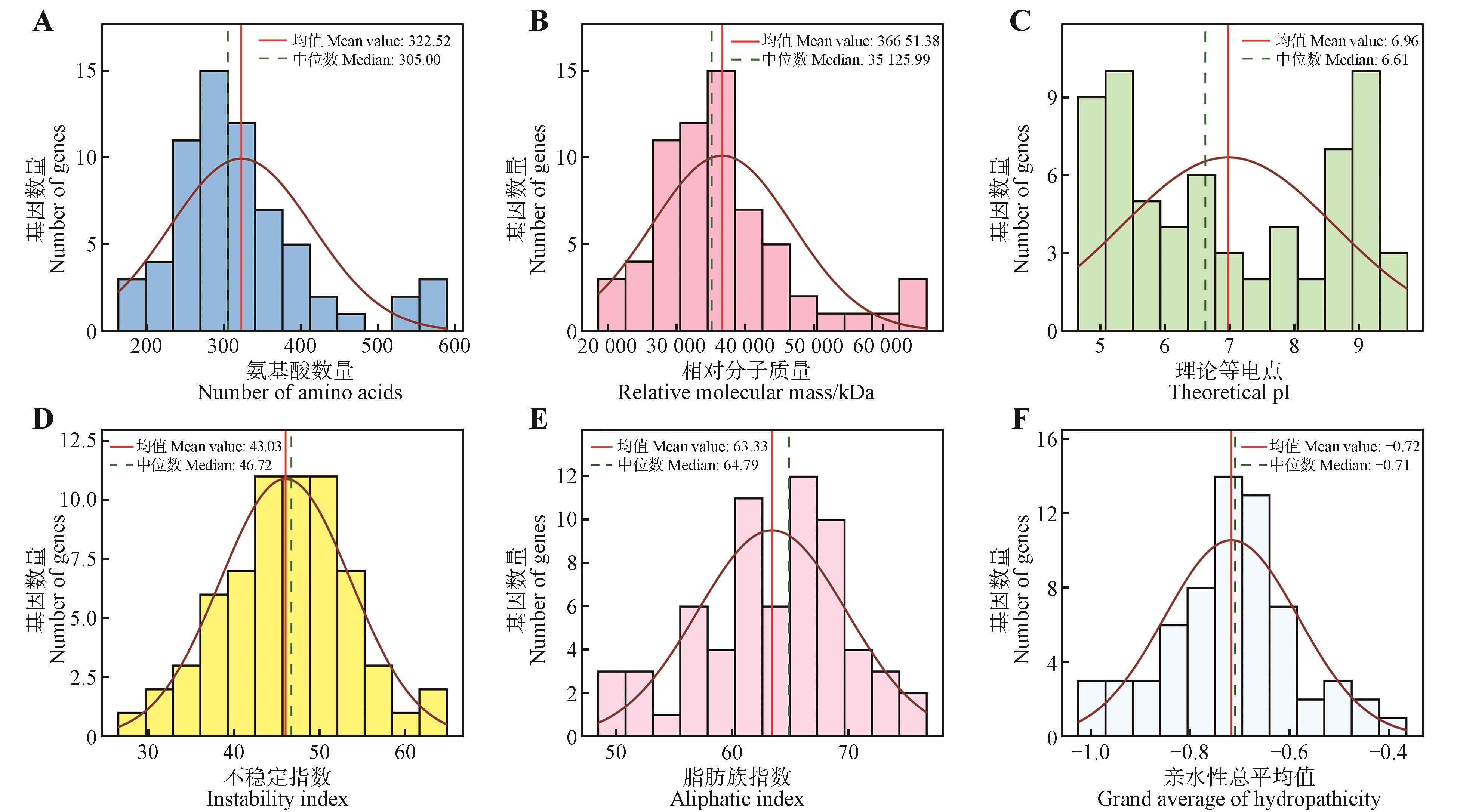
Fig.2
Phylogenetic tree of theNAC gene family in C. bungeiDifferent colors in the outer circle represented the four different subfamilies(Group 1-Group 4). The numbers on the branches were bootstrap values.
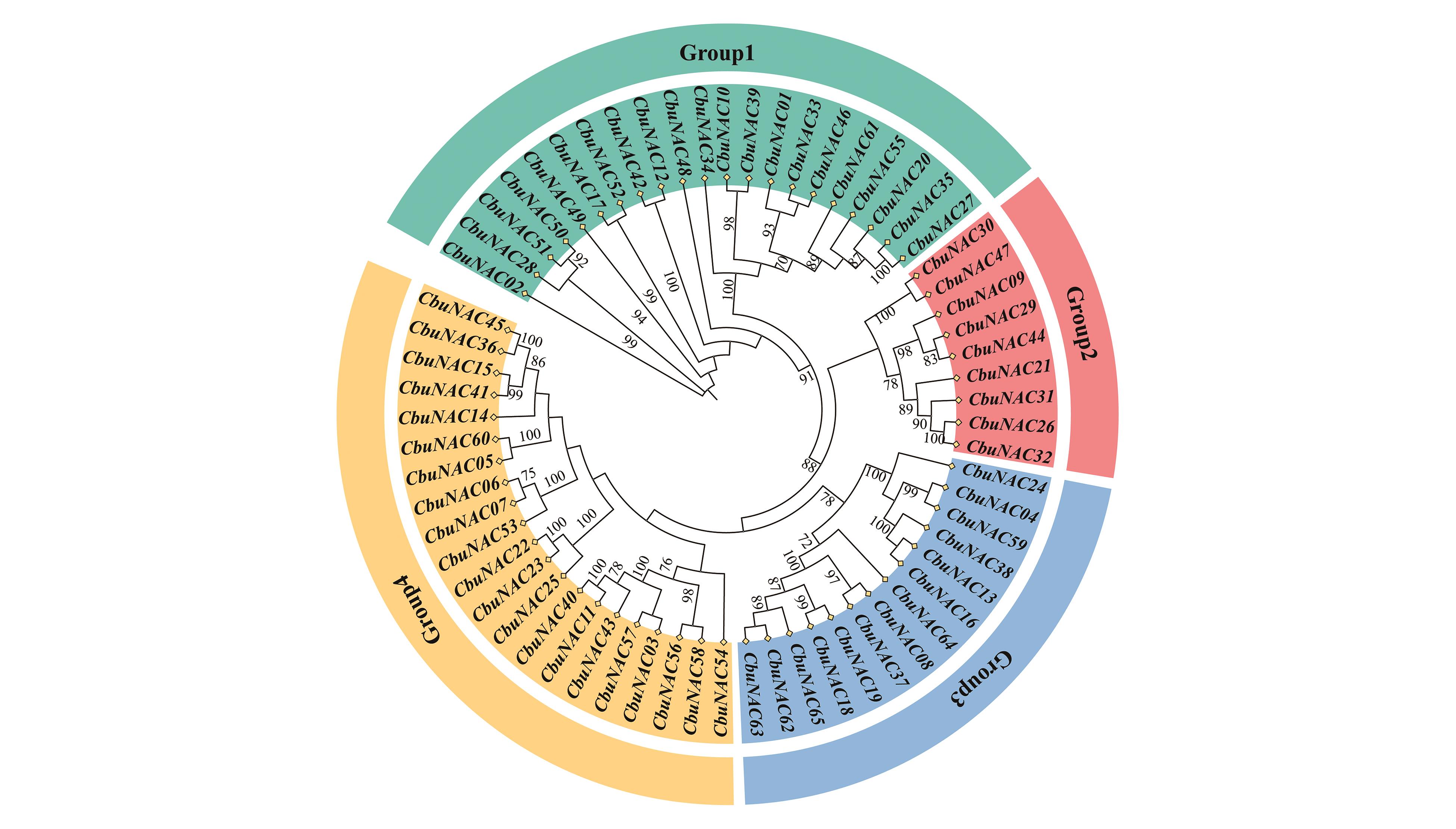
Fig.3
Phylogenetic relationships and structural characteristics of the NAC gene family in C. bungeiA. Phylogenetic relationships; B. Conserved motifs; C. Conserved protein domains; D. Gene structures.
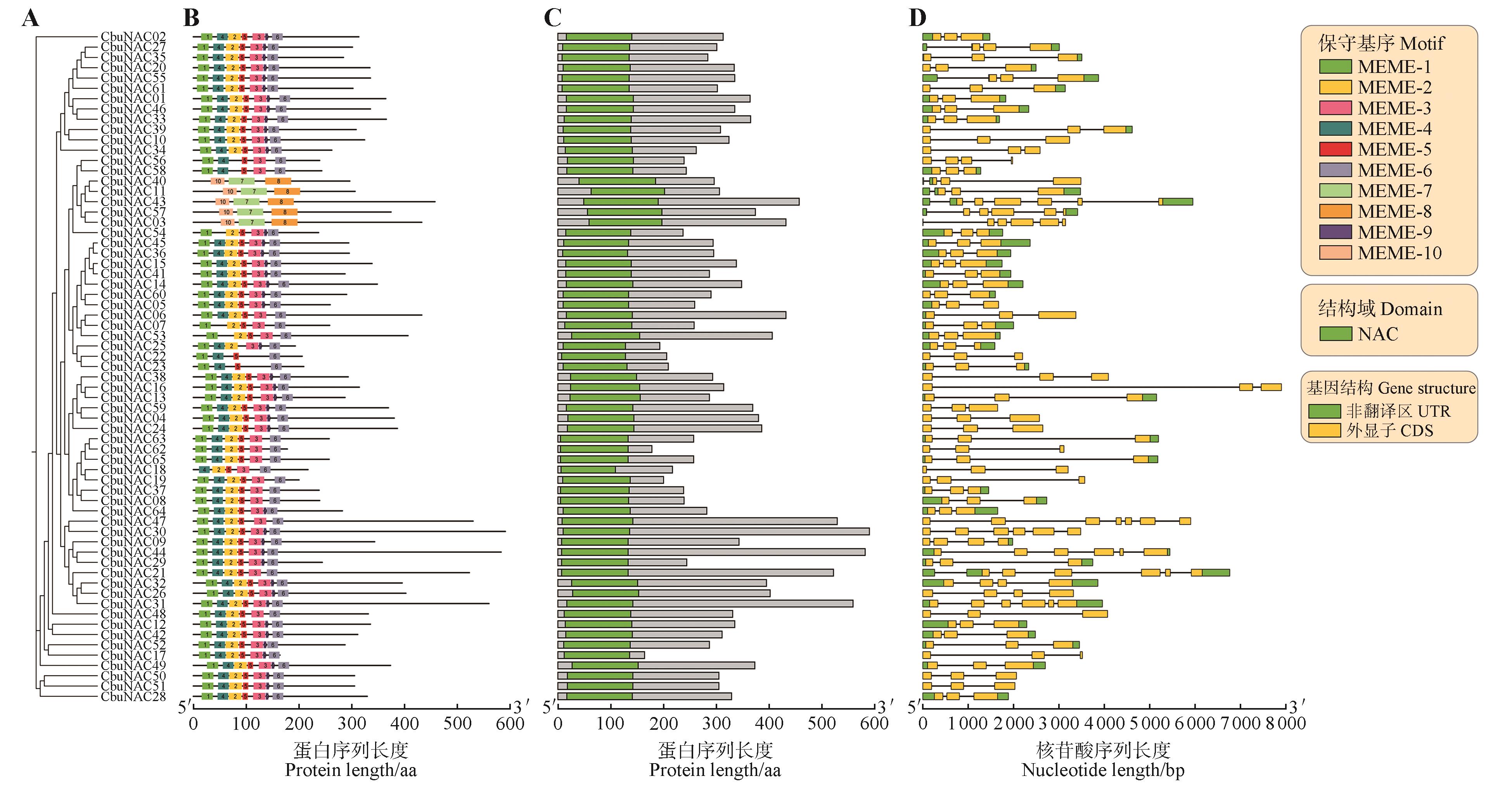
Fig.4
Cis-acting elements of the NAC gene family in C. bungeiThe bottom panel displayed the phylogenetic tree constructed based on the full-length amino acid sequences of CbuNAC proteins. The middle heatmap illustrated the number of identified cis-acting elements in the promoter region of each CbuNAC gene, with distinct colors representing different count ranges (light blue, 0-3; dark green, 4-6; orange, 7-9; pink, 10-11; yellow, 12-13). The left side of the heatmap categorized the elements into four major functional modules: environment (including light and low temperature), phytohormone (including abscisic acid, auxin, gibberellin, MeJA, salicylic acid, and zein metabolism), transcription factor binding sites (TF, primarily MYB binding site), and tissue-specific expression (tissue, including meristem and endosperm). The top percentage stacked bar chart represented the proportion of these four major categories within each CbuNAC gene.
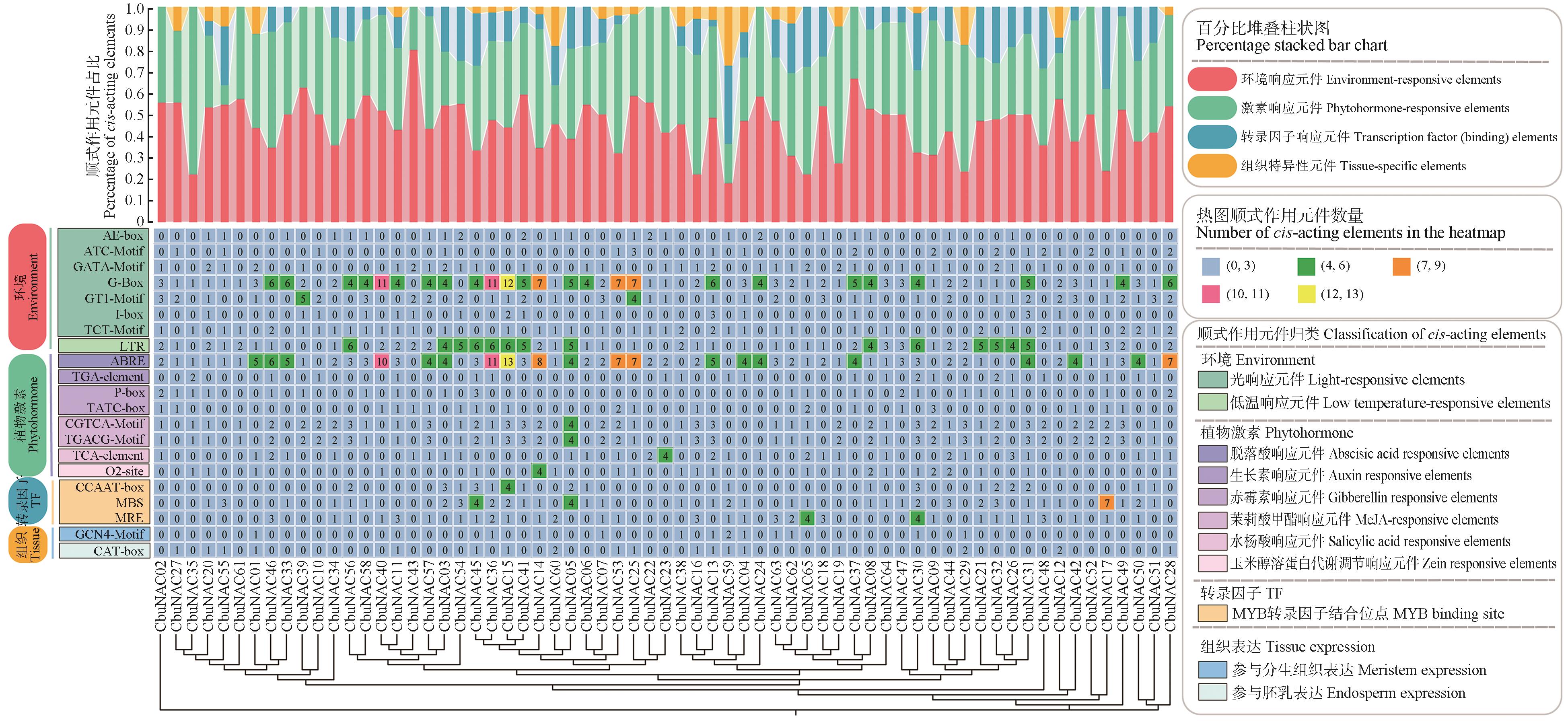
Fig.5
Chromosomal localization of theNAC gene family in C. bungeiColor gradient within chromosome bars represented the genomic gene density.
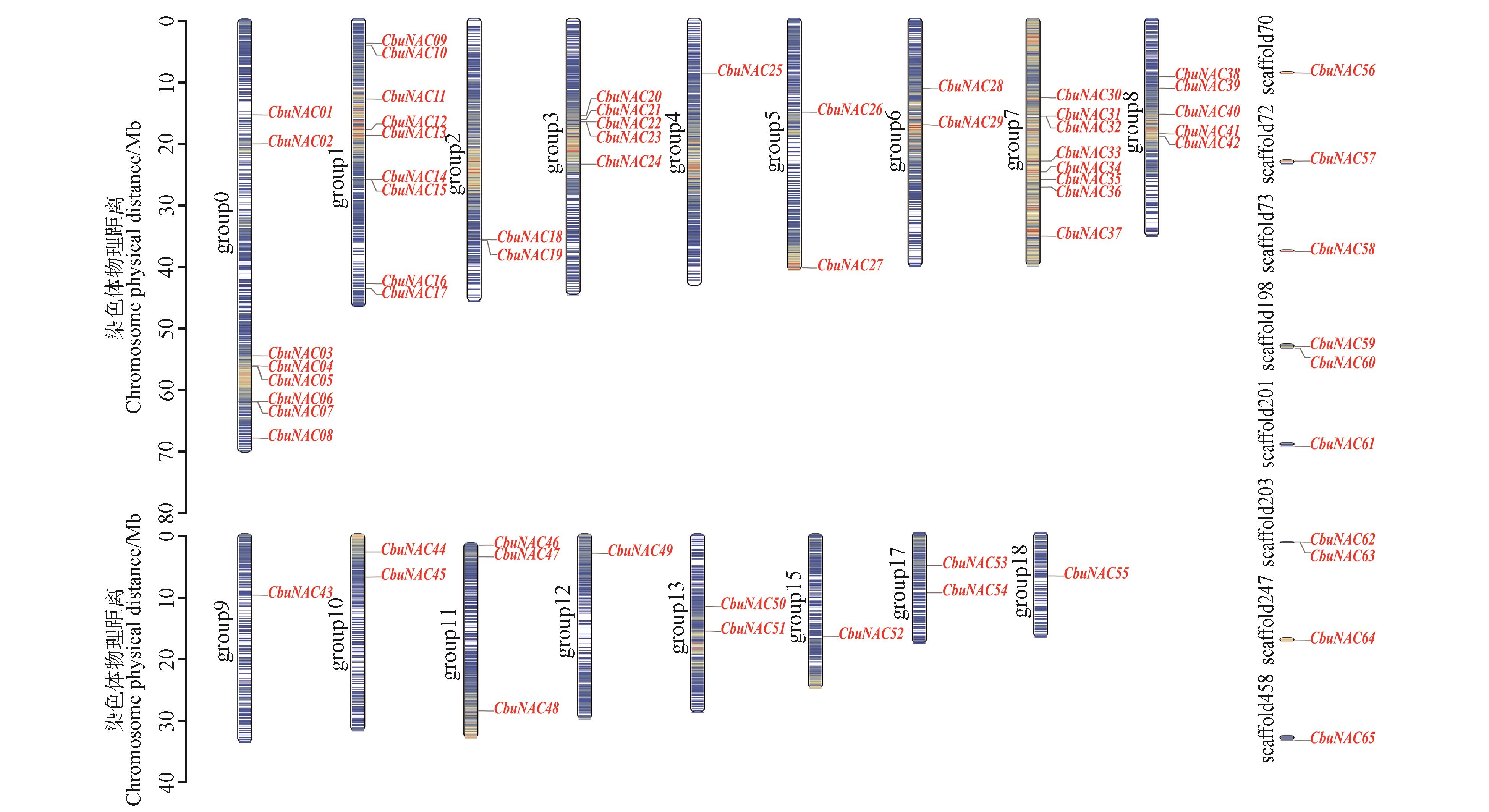
Fig.6
Collinearity analysis of the NAC gene family in C. bungeiGrey lines represented all syntenic gene pairs in the C. bungei genome; red lines represented segmentally duplicated gene pairs of the NAC gene family in C. bungei; the outermost colored blocks represented different chromosomes; the inner red line chart and blue-red heatmap both represented the gene density on the chromosomes.
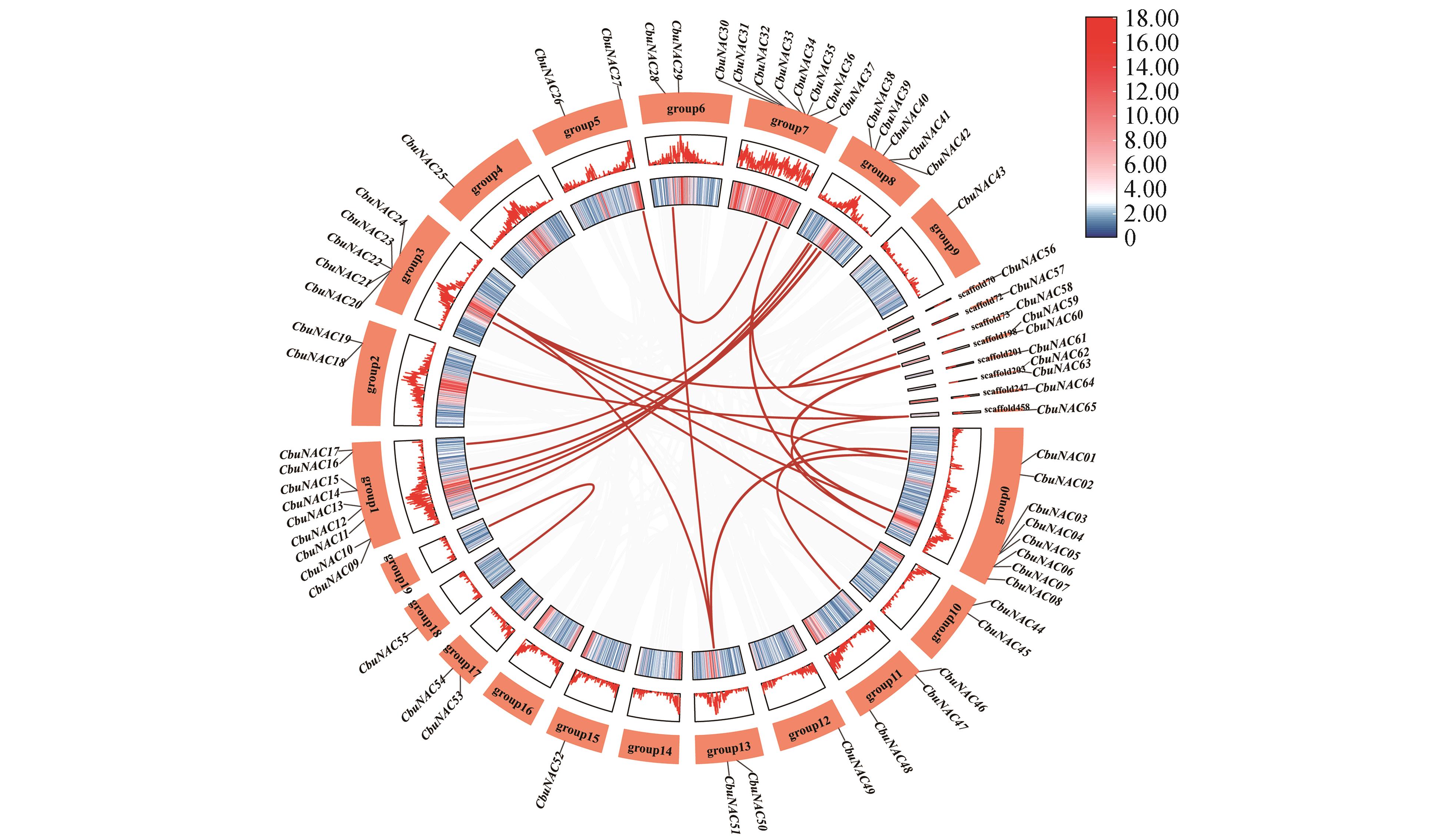
Fig.7
Collinearity analysis of the NAC gene family among C. bungei, P. trichocarpa, A. thalianaGrey lines represented all syntenic blocks between the genomes; blue lines represented syntenic NAC gene pairs between C. bungei and A. thaliana, P. trichocarpa; red inverted triangles represented NAC genes in C. bungei.
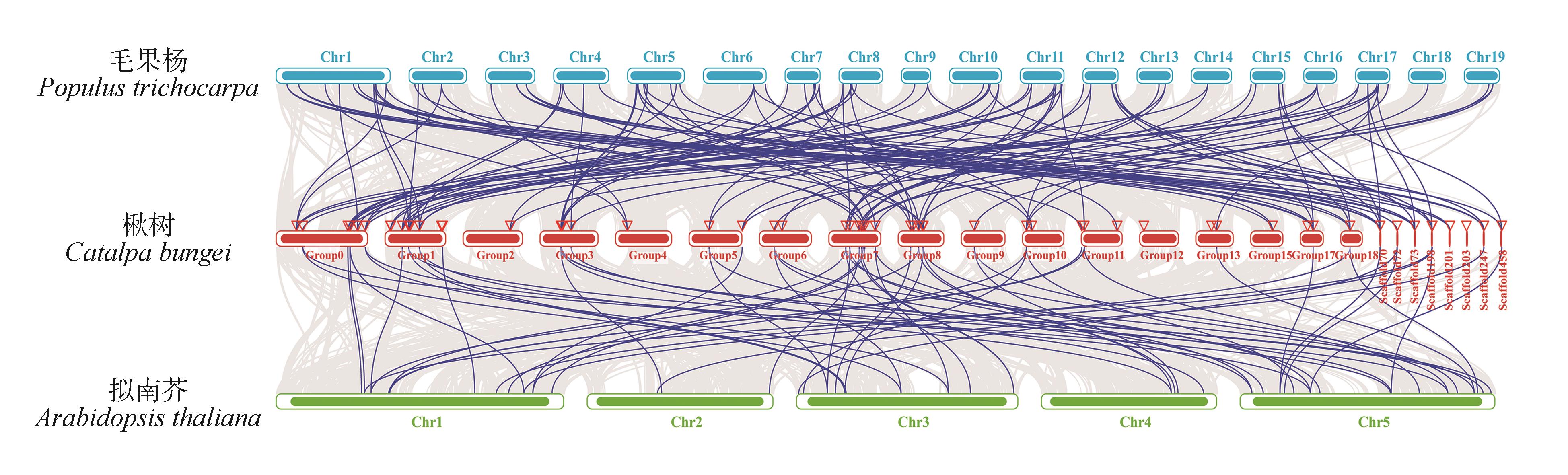
Fig.8
Expression profiles of NACgene family in C. bungei under cold stressThe color scale (0-11.00) represented the relative gene expression level, with green indicating low expression and red indicating high expression; red stars indicating key candidate genes.
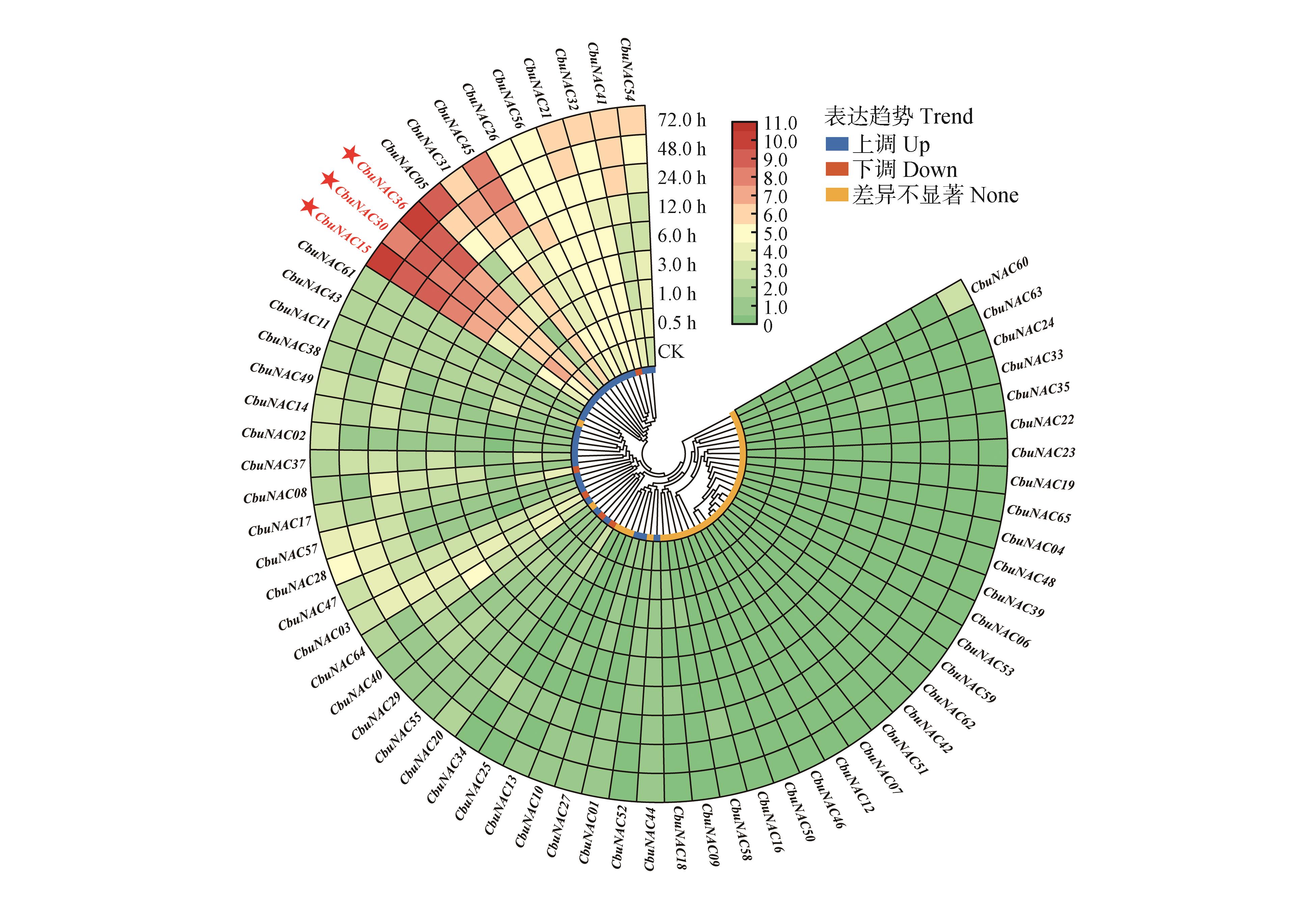
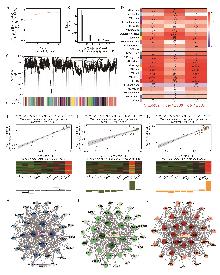
Fig.9
WGCNA of theNAC gene family in C. bungeiA. Soft threshold screening; B. The scale-free network topology check; C. The gene clustering dendrogram; D. The heatmap of correlation between modules and core gene expression; E-G. Scatter plots of module membership versus gene significance and expression patterns in different modules for CbuNAC15, CbuNAC30, and CbuNAC36; H-J. Co-expression interaction networks of CbuNAC15, CbuNAC30, and CbuNAC36.
| [1] | 李银梅,贠慧玲,杨海裕,等.二十九个楸树无性系苗期年生长规律分析[J].南方农业,2024,18(15):9-14. |
| LI Y M, YUN H L, YANG H Y,et al.Analysis on the annual growth law of twenty-nine Catalpa bungei clones at seedling stage[J].South China Agriculture,2024,18(15):9-14. | |
| [2] | 彭方仁,郝明灼,梁有旺,等.我国楸树种质资源现状及开发利用策略[J].林业科技开发,2011,25(6):1-5. |
| PENG F R, HAO M Z, LIANG Y W,et al.Current status and strategies for exploitation and utilization of Catalpa bungei germplasm resources in China[J].China Forestry Science and Technology,2011,25(6):1-5. | |
| [3] | 赵鲲,王军辉,麻文俊,等.杂交新品种“百日花”楸树选育与栽培试验研究[J].安徽林业科技,2020,46(6):15-18. |
| ZHAO K, WANG J H, MA W J,et al.Study on breeding and cultivation experiment of the new hybrid cultivar “Bairihua” of Catalpa bungei [J].Anhui Forestry Science and Technology,2020,46(6):15-18. | |
| [4] | MAUGARNY-CALÈS A, GONÇALVES B, JOUANNIC S,et al.Apparition of the NAC transcription factors predates the emergence of land plants[J].Molecular Plant,2016,9(9):1345-1348. |
| [5] | FUERTES-AGUILAR J, MATILLA A J.Transcriptional control of seed life:new insights into the role of the NAC family[J].International Journal of Molecular Sciences,2024,25(10):5369. |
| [6] | XIONG H Y, HE H D, CHANG Y,et al.Multiple roles of NAC transcription factors in plant development and stress responses[J].Journal of Integrative Plant Biology,2025,67(3):510-538. |
| [7] | XU P P, MA W, FENG H F,et al.The NAC056 transcription factor confers freezing tolerance by positively regulating expression of CBFs and NIA1 in Arabidopsis [J].Plant Communications,2024,5(7):100923. |
| [8] | HAO Y J, WEI W, SONG Q X,et al.Soybean NAC transcription factors promote abiotic stress tolerance and lateral root formation in transgenic plants[J].The Plant Journal,2011,68(2):302-313. |
| [9] | QUACH T N, TRAN L S P, VALLIYODAN B,et al.Functional analysis of water stress-responsive soybean GmNAC003 and GmNAC004 transcription factors in lateral root development in Arabidopsis [J].PLoS One,2014,9(1):e84886. |
| [10] | YANG X F, KIM M Y,HA J,et al.Overexpression of the soybean NAC gene GmNAC109 increases lateral root formation and abiotic stress tolerance in transgenic Arabidopsis plants[J].Frontiers in Plant Science,2019,10:1036. |
| [11] | YARRA R, WEI W.The NAC-type transcription factor GmNAC20 improves cold,salinity tolerance,and lateral root formation in transgenic rice plants[J].Functional & Integrative Genomics,2021,21(3/4):473-487. |
| [12] | WANG F, CHEN Y, YANG R S,et al.Identification of ZmSNAC06,a maize NAC family transcription factor with multiple transcripts conferring drought tolerance in Arabidopsis [J].Plants,2025,14(1):12. |
| [13] | 孔洁玙,杨妮,罗微,等.茶树NAC转录因子CsNAC79和CsNAC9的鉴定及对非生物胁迫的响应分析[J].西北植物学报,2024,44(4):572-581. |
| KONG J Y, YANG N, LUO W,et al.Identification and response to different abiotic stress of NAC transcription factors CsNAC79 and CsNAC9 in tea plants[J].Acta Botanica Boreali-Occidentalia Sinica,2024,44(4):572-581. | |
| [14] | 邹霈怡,刘美艳,王颖,等.狗枣猕猴桃AkNAC2的克隆及功能研究[J].中国农业科学,2025,58(19):3985-3999. |
| ZOU P Y, LIU M Y, WANG Y,et al.Cloning and functional study of AkNAC2 from Actinidia kolomikta [J].Scientia Agricultura Sinica,2025,58(19):3985-3999. | |
| [15] | 李畅,牛薪雅,彭金铭,等.黑壳楠低温响应关键基因LmNAC19克隆与功能分析[J].植物生理学报,2025,61(11):1534-1544. |
| LI C, NIU X Y, PENG J M,et al.Cloning and functional analysis of LmNAC19,a key cold responsive gene in Lindera megaphylla [J].Plant Physiology Journal,2025,61(11):1534-1544. | |
| [16] | 林海育.水曲柳FmNACs基因克隆及耐低温功能研究[D].沈阳:沈阳农业大学,2025. |
| LIN H Y.Cloning and functional study on low-temperature resistance of FmNACs gene in Fraxius mandshurica [D].Shenyang:Shenyang Agricultural University,2025. | |
| [17] | WANG Q, ZHOU L, YUAN M,et al.Genome-wide identification of NAC gene family members of tree peony (Paeonia suffruticosa Andrews) and their expression under heat and waterlogging stress[J].International Journal of Molecular Sciences,2024,25(17):9312. |
| [18] | TIAN A G, WANG J, CUI P,et al.Characterization of soybean genomic features by analysis of its expressed sequence tags[J].Theoretical and Applied Genetics,2004,108(5):903-913. |
| [19] | NIE G, YANG X Y, YANG Z F,et al.Genome-wide investigation of the NAC transcript factor family in perennial ryegrass (Lolium perenne L.) and expression analysis under various abiotic stressor[J].Genomics,2020,112(6):4224-4231. |
| [20] | HAN K, ZHAO Y, LIU J,et al.Genome-wide investigation and analysis of NAC transcription factor family in Populus tomentosa and expression analysis under salt stress[J].Plant Biology,2024,26(5):764-776. |
| [21] | OOKA H, SATOH K,DOI K,et al.Comprehensive analysis of NAC family genes in Oryza sativa and Arabidopsis thaliana [J].DNA Research,2003,10(6):239-247. |
| [22] | NURUZZAMAN M, MANIMEKALAI R, SHARONI A M,et al.Genome-wide analysis of NAC transcription factor family in rice[J].Gene,2010,465(1/2):30-44. |
| [23] | CUTLER S R, RODRIGUEZ P L, FINKELSTEIN R R,et al.Abscisic acid:emergence of a core signaling network[J].Annual Review of Plant Biology,2010,61(1):651-679. |
| [24] | ZHU J K.Abiotic stress signaling and responses in plants[J].Cell,2016,167(2):313-324. |
| [25] | KANG X K, WEI F, CHAI S L,et al.The OST1-HOS1-HAT1 module regulates cold response in Arabidopsis thaliana [J].New Phytologist,2025,247(1):209-223. |
| [26] | AN J P, LI R, QU F J,et al.R2R3-MYB transcription factor MdMYB23 is involved in the cold tolerance and proanthocyanidin accumulation in apple[J].The Plant Journal,2018,96(3):562-577. |
| [27] | JIANG H F, SHI Y T, LIU J Y,et al.Natural polymorphism of ZmICE1 contributes to amino acid metabolism that impacts cold tolerance in maize[J].Nature Plants,2022,8(10):1176-1190. |
| [28] | YANG L, FANG S Y, LIU L,et al.WRKY transcription factors:hubs for regulating plant growth and stress responses[J].Journal of Integrative Plant Biology,2025,67(3):488-509. |
| [29] | ZHANG L H, XU Y, LV L,et al.MbbHLH93,a transcription factor associated with cold and drought tolerance in Malus baccata [J].Fruit Research,2024,4:e038. |
| [30] | EVANS K V, RANSOM E, NAYAKOTI S,et al.Expression of the Arabidopsis redox-related LEA protein,SAG21 is regulated by ERF,NAC and WRKY transcription factors[J].Scientific Reports,2024,14(1):7756. |
| [31] | KOVACS D, KALMAR E, TOROK Z,et al.Chaperone activity of ERD10 and ERD14,two disordered stress-related plant proteins[J].Plant Physiology,2008,147(1):381-390. |
| [32] | RUIZ-CASTILLO A C, BONILLA-CÓRDOBA D J, CISNEROS-HERNÁNDEZ I,et al.The tps5,tps10 and tps11 class II trehalose phosphate synthase mutants alter carbon allocation to starch and organic and amino acids at two different photoperiods in Arabidopsis [J].Planta,2025,261(6):122. |
| [33] | YANG G H, CHEN Y X, YU H,et al.Raspberry (Rubus idaeus L.) NCED1 gene enhances high salinity and cold tolerance in Arabidopsis [J].In Vitro Cellular & Developmental Biology - Plant,2021,57(5):811-819. |
| [34] | ZHAO Y, XING L, WANG X G,et al.The ABA receptor PYL8 promotes lateral root growth by enhancing MYB77-dependent transcription of auxin-responsive genes[J].Science Signaling,2014,7(328):ra53. |
| [35] | BAO P A, SUN J S, QU G Z,et al.Identification and expression analysis of CCCH gene family and screening of key low temperature stress response gene CbuC3H24 and CbuC3H58 in Catalpa bungei [J].BMC Genomics,2024,25(1):779. |
| [1] | Kaiyue WEI, Xu SU, Yuping LIU, Jieqiong LEI, Yang LÜ, Yinghui ZHENG, Zhaxi CAIRANG, Xuanlin GAO, Xu FENG. Cloning and Functional Analysis of a Glutathione S-Transferase Gene (MiGST) from Meconopsis integrifolia [J]. Bulletin of Botanical Research, 2026, 46(3): 425-433. |
| [2] | Xinyi YU, Huiyue JI, Pingping LU, Jiayu ZHOU, Hai LIAO. The Bioinformatic Analysis on the Plant Isopentenyl Pyrophosphate Isomerase [J]. Bulletin of Botanical Research, 2024, 44(5): 774-782. |
| [3] | Wenyu CAO, Junhui WANG, Yanhong YANG, Wenjun MA, fang LI, Linzhao ZHOU, Xingyue XIONG, Xiaoliang Hu, Guanyang MA, Kun ZHAO. Analysis on Variation of Floral Organ Traits in Distant Hybrids of Catalpa bungei [J]. Bulletin of Botanical Research, 2024, 44(2): 220-231. |
| [4] | Haonan ZHANG, Shanshan CHEN, Jianmin XU, Ping LUO, Xiaoping WANG, Zhiru XU, Chunjie FAN. Cloning and Functional Analysis of EgrWAT1 Gene in Eucalyptus grandis [J]. Bulletin of Botanical Research, 2023, 43(4): 601-611. |
| [5] | Denggao LI, Rui LIN, Qinghui MU, Na ZHOU, Yanru ZHANG, Wei BAI. Identification and Analysis of the Potato StCRKs Gene Family and Expression Patterns in Response to Stress Signals [J]. Bulletin of Botanical Research, 2022, 42(6): 1033-1043. |
| [6] | Hongpeng WANG, Yidan LI, Yao WANG, Xiaoyu TAN, Chengbin CHEN, Lipeng ZHANG. Gene Cloning and Interaction Proteins Screening of DcPMK in Dioscorea composite [J]. Bulletin of Botanical Research, 2022, 42(5): 855-865. |
| [7] | Qian Sun, Yuhang Wu, Yaxuan Zhang, Jingdan Cao, Jingjing Shi, Chao Wang. Bioinformatic Analysis and Expression Pattern of LTP Family Genes in Populus davidiana × P. alba var. pyramidalis [J]. Bulletin of Botanical Research, 2022, 42(2): 211-223. |
| [8] | Jiaming Zhao, Erqin Fan, Yi Liu, Zhi Wang, Junhui Wang, Guanzheng Qu. Cloning and Bioinformatics Analysis of CbuATX1,CbuATX1-like and CbuATX2 Genes from Catalpa bungei [J]. Bulletin of Botanical Research, 2022, 42(1): 47-61. |
| [9] | Shuang Ma, Boya Wang, Ying Cao, Shanglian Hu, Zhimin Gao. Identification and Expression Analysis of Expansin Genes in Moso Bamboo (Phyllostachys edulis) [J]. Bulletin of Botanical Research, 2022, 42(1): 29-38. |
| [10] | Meng-Xuan REN, Yang ZHANG, Shuang WANG, Rui-Qi WANG, Cong LIU, Zhi-Gang WEI. Genome-wide Identification and Expression Analysis GATA Family of Populus trichocarpa [J]. Bulletin of Botanical Research, 2021, 41(1): 107-118. |
| [11] | LIU Jia-Xin, LIU Hui-Zi, SHI Jing-Jing, YU Ying, WANG Chao. Expression of MYB Genes of Birch in Response to Hormones,Salt and Drought [J]. Bulletin of Botanical Research, 2020, 40(5): 743-750. |
| [12] | MA Wen-Jun, YANG Gui-Juan, WANG Jun-Hui, ZHAO Kun. Flower Characters Variation of Different Individuals of Catalpa bungei [J]. Bulletin of Botanical Research, 2020, 40(3): 386-393. |
| [13] | WANG Shuang, ZHANG Yang, REN Meng-Xuan, LIU Ying-Ying, WEI Zhi-Gang. Genome-Wide Analysis of the WOX Family Reveals Their Involvement in Stem Growth of Populus trichocarpa [J]. Bulletin of Botanical Research, 2019, 39(4): 568-577. |
| [14] | LI Hui-Ping, LI Bang-Yong, HU Shang-Lian, CAO Ying. Cloning and Expression Analysis of Two NAC Transcription Factors in Bambusa emeiensis [J]. Bulletin of Botanical Research, 2016, 36(6): 895-901. |
| [15] | GUAN Qing-Jie1,2;WANG Zhen-Juan1;ZHENG Heng1;LIU Guang-Tao3;LIU Shen-Kui3. OsLOL2 Gene Clone of Rice and the Salt Resistance Analysis of Overexpression Arabidopsis thaliana [J]. Bulletin of Botanical Research, 2015, 35(2): 259-269. |
| Viewed | ||||||
|
Full text |
|
|||||
|
Abstract |
|
|||||