Bulletin of Botanical Research ›› 2026, Vol. 46 ›› Issue (3): 425-433.doi: 10.7525/j.issn.1673-5102.2026.03.004
• Original Paper • Previous Articles Next Articles
Kaiyue WEI1,2, Xu SU1,2,3, Yuping LIU1,2,3( ), Jieqiong LEI1,2, Yang LÜ1,2, Yinghui ZHENG1,2, Zhaxi CAIRANG1,2, Xuanlin GAO1,2, Xu FENG1,2
Received:2026-02-14
Online:2026-05-20
Published:2026-06-01
Contact:
Yuping LIU
E-mail:lyp8527970@126.com
CLC Number:
Kaiyue WEI, Xu SU, Yuping LIU, Jieqiong LEI, Yang LÜ, Yinghui ZHENG, Zhaxi CAIRANG, Xuanlin GAO, Xu FENG. Cloning and Functional Analysis of a Glutathione S-Transferase Gene (MiGST) from Meconopsis integrifolia[J]. Bulletin of Botanical Research, 2026, 46(3): 425-433.
Add to citation manager EndNote|Ris|BibTeX
URL: https://bbr.nefu.edu.cn/EN/10.7525/j.issn.1673-5102.2026.03.004
Table 1
PCR amplification system
组分 Component | 体积 Volume/µL |
|---|---|
| PrimeSTAR Max DNA Polymerase | 12.5 |
| 引物F | 1.0 |
| 引物R | 1.0 |
| cDNA | 2.0 |
| ddH2O | Up to 25.0 |
Table 2
Primer sequences for genetic transformation of Arabidopsis thaliana
引物名称 Primer name | 引物序列(5′→3′) Primer sequence(5′→3′) | 用途 Purpose |
|---|---|---|
| At-MiGST-F | CTTTCGCGAGCTCGGTACCATGGAGAGGTACGAACAGCTC | 拟南芥遗传 |
| At-MiGST-R | GGTCGACTCTAGAGGATCCTCAGCTGATATGGAACTCACCG | 转化同源臂 |
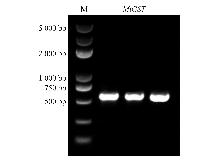
Fig.1
Amplification electrophoresis map of MiGST geneM. DL5 000 DNA marker; MiGST. Target bands (702 bp).
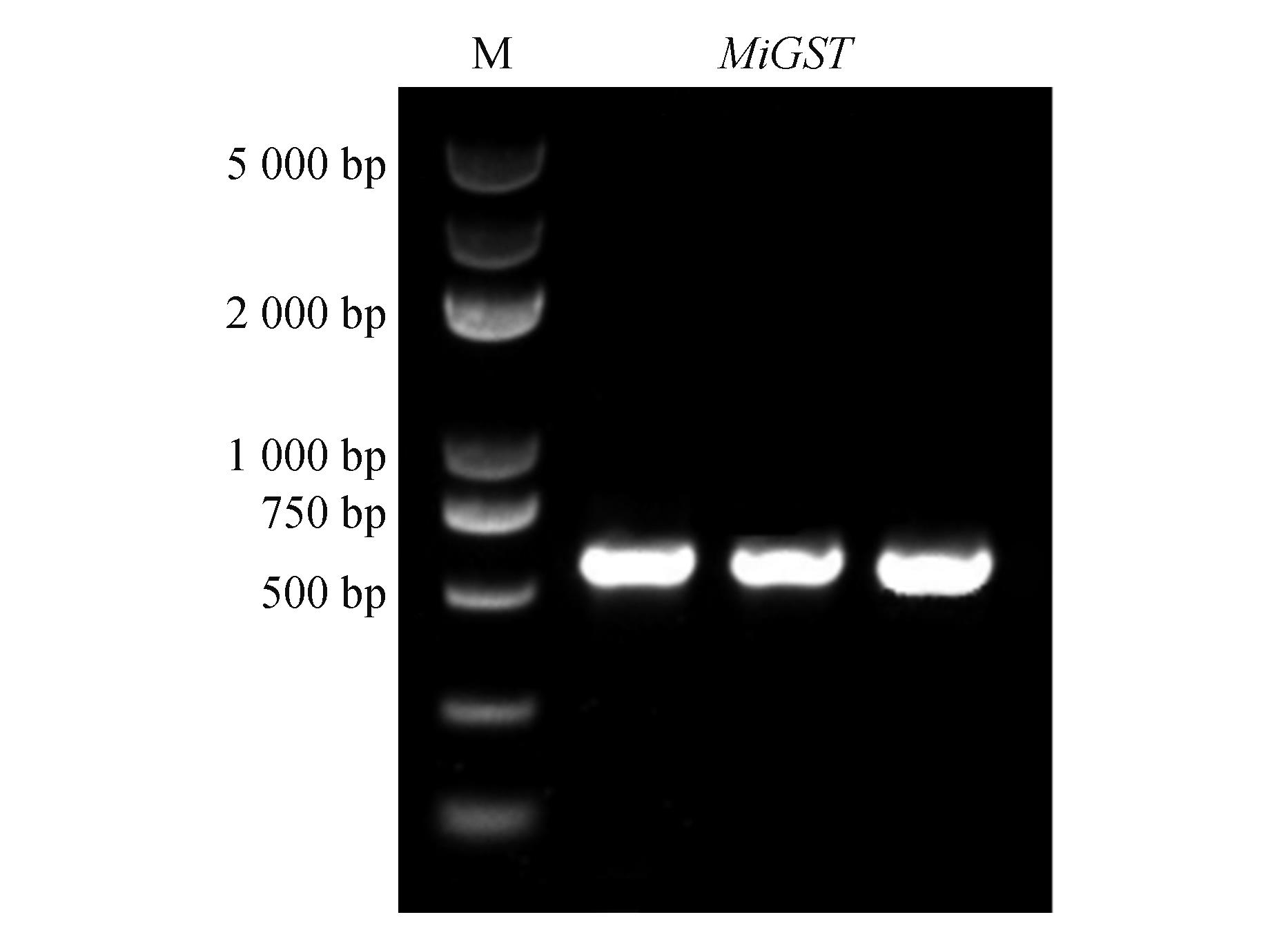
Table 3
Characteristics of MiGST protein
基因名称 Gene name | 基因长度 Length/bp | 氨基酸数目 Number of amino acids | 相对分子质量 Relative molecular mass/Da | 等电点 pI | 不稳定系数 Instability index | 脂溶系数 Aliphatic index | 亲疏水性 GRAVY |
|---|---|---|---|---|---|---|---|
| MiGST | 702 | 234 | 25 861.91 | 5.84 | 32.42 | 80.00 | -3.022 |
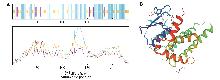
Fig.2
Prediction of secondary(A) and tertiary structure(B) of MiGST protein
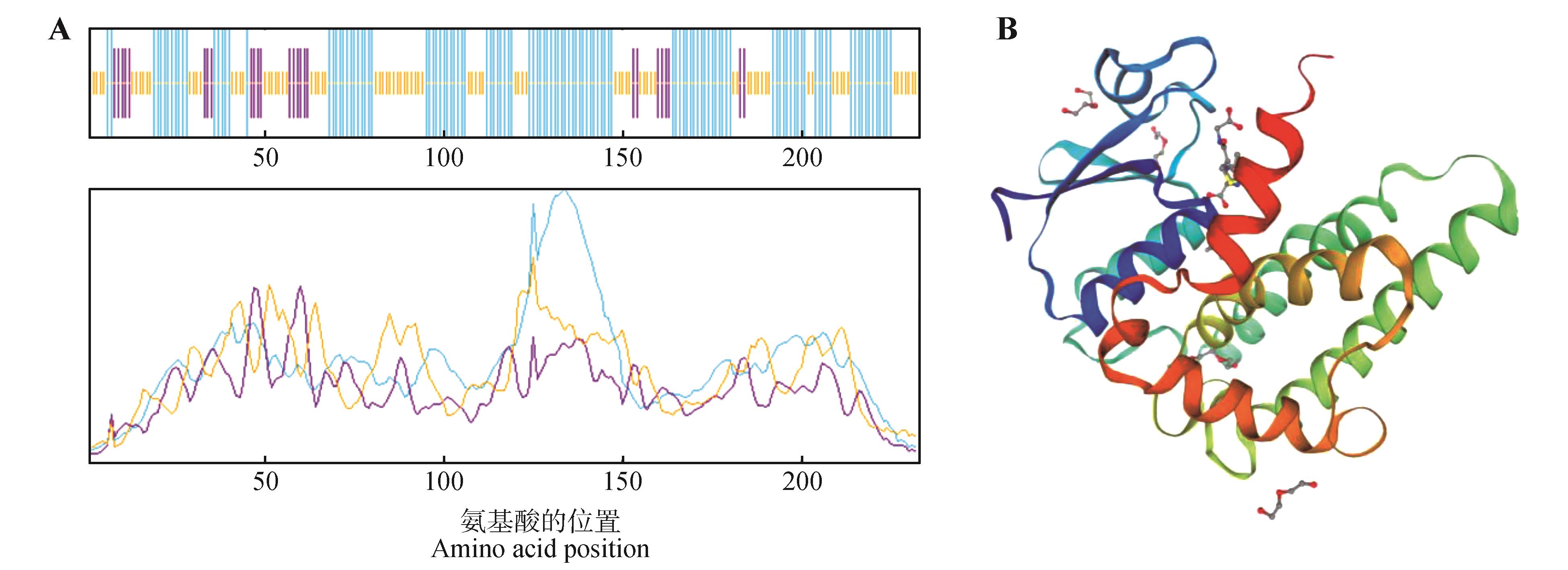
Fig.3
Sequence alignment analysis of the MiGST protein with GSTs from various species
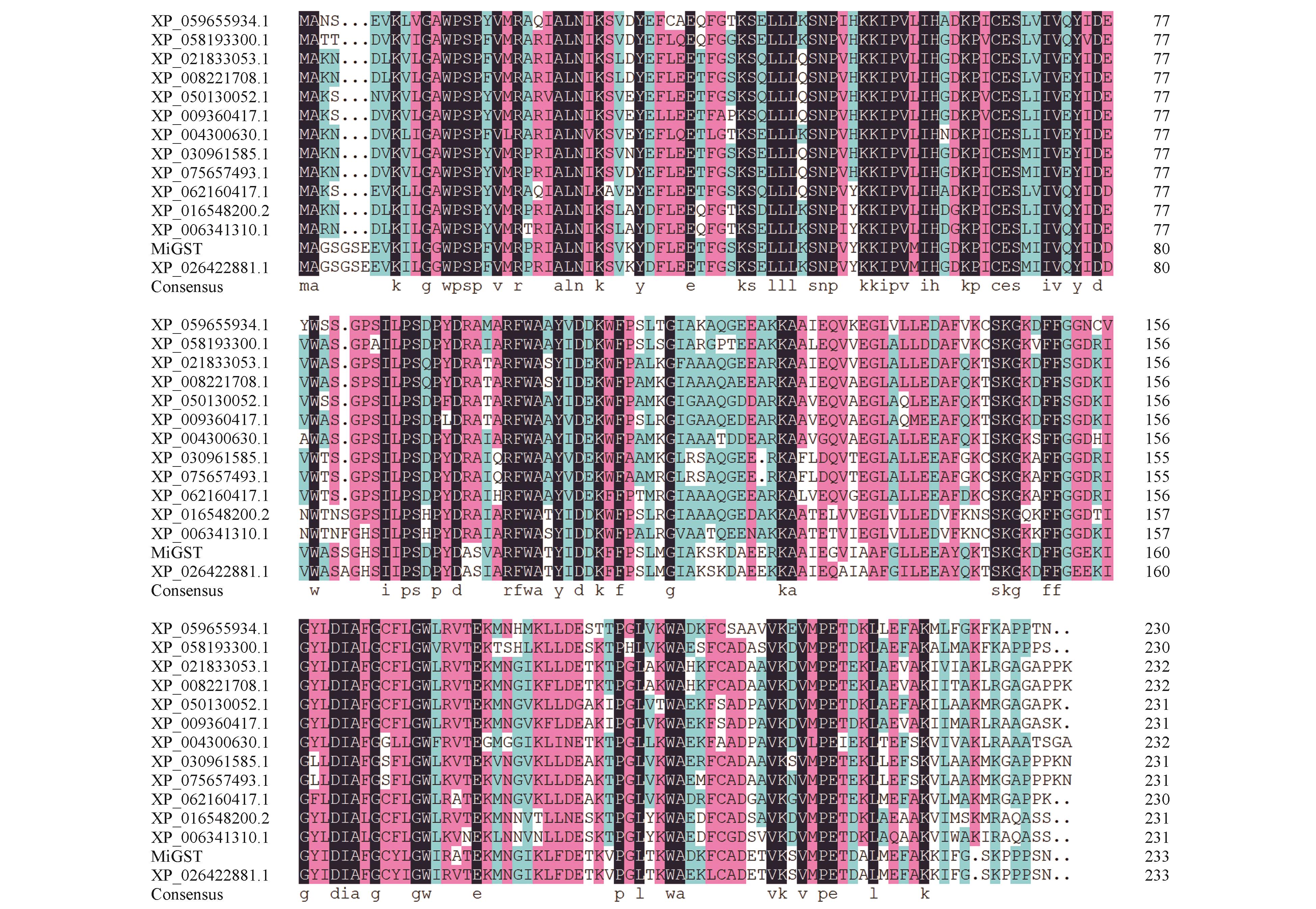
Fig.4
Phylogenetic tree of the MiGST protein from Meconopsis integrifolia and its homologous proteins from other species
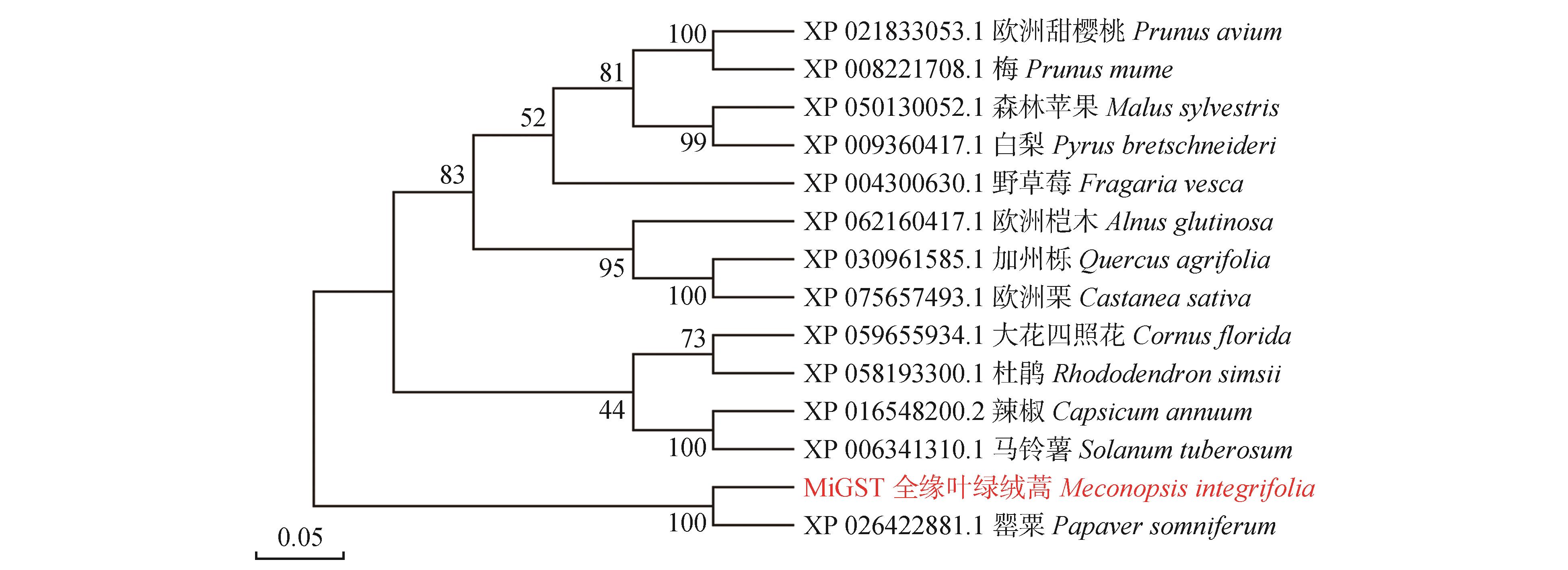
Fig.5
Expression of MiGST genet and total flavonoids mass fraction in different tissues of Meconopsis integrifoliaCompared with stem tissue, different lowercase letters indicated significant differences(P<0.05).
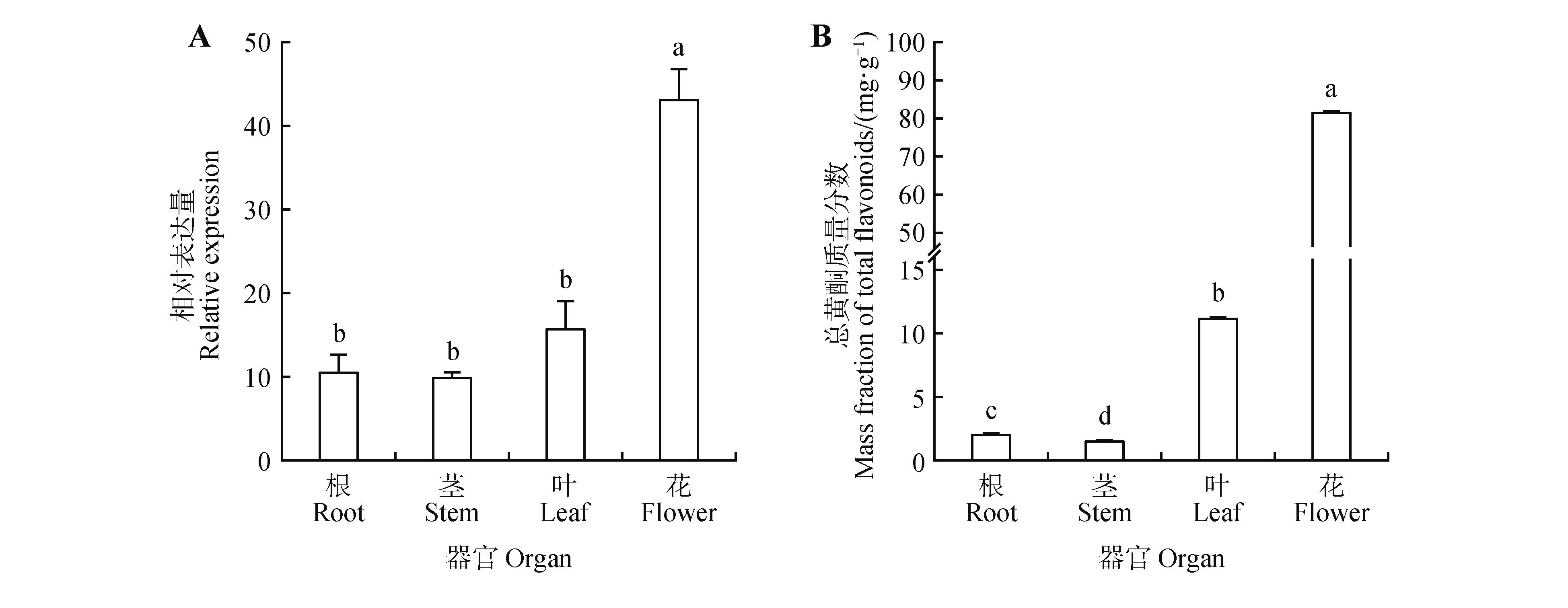
Fig.6
Phenotypes and MiGST relative expression of wild type and transgenic Arabidopsis thalianaDifferent lowercase letters indicated significant differences at 0.05 levels.
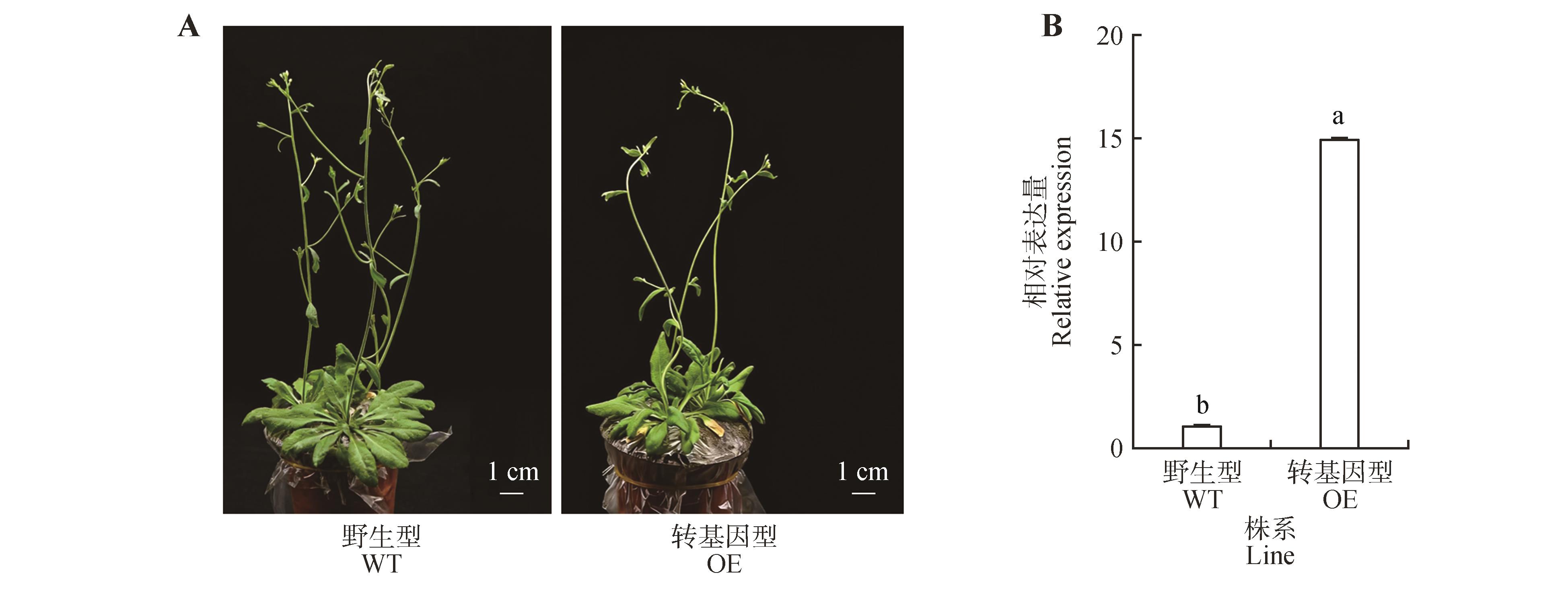

Fig.7
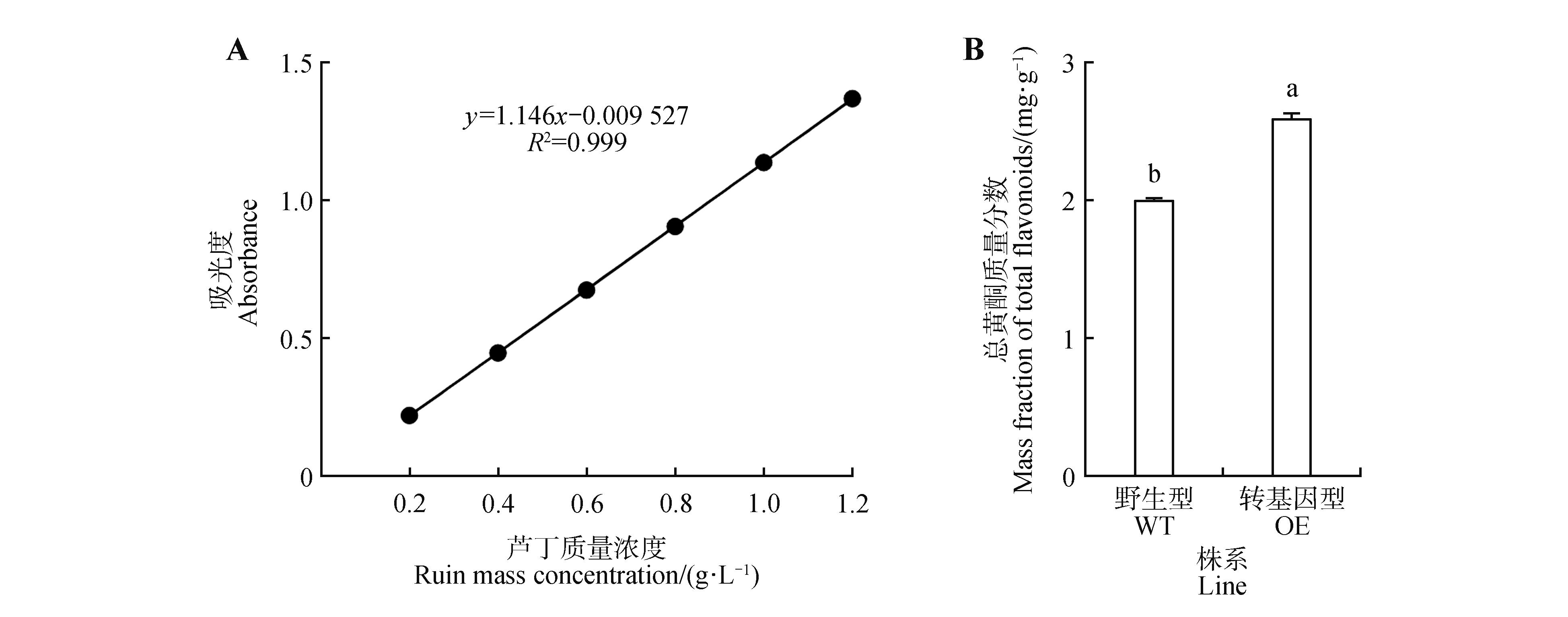
Effect of MiGST overexpression on the total flavonoid mass fraction in Arabidopsis thalianaA. Standard curve of rutin; B. Total flavonoid contents in wild-type and transgenic MiGST Arabidopsis thaliana; different lowercase letters indicated significant differences at 0.05 levels.
| [1] | 帝玛尔·丹增彭措.晶珠本草[M].上海:上海科学技术出版社,1986:114-115. |
| DIMAR T P.Crysta materia medica[M].Shanghai:Shanghai Science & Technology Press,1986:114-115. | |
| [2] | 中国科学院西北高原生物研究所.藏药志[M].西宁:青海人民出版社,1991:294-295. |
| Northwest Institute of Plateau Biology,Chinese Academy of Sciences.Tibetan medicine annals[M].Xining:Qinghai People’s Publishing House,1991:294-295. | |
| [3] | 陈晓涓,王海菊,王富敏,等.基于WGCNA鉴定全缘叶绿绒蒿类黄酮合成途径关键基因[J].中国农业科学,2024,57(15):3053-3070. |
| CHEN X J, WANG H J, WANG F M,et al.Identification of key genes in the flavonoid synthesis pathway of Meconopsis integrifolia based on WGCNA[J].Scientia Agricultura Sinica,2024,57(15):3053-3070. | |
| [4] | 屈燕,区智.绿绒蒿属植物国内外研究进展[J].北方园艺,2012,1(2):191-194. |
| QU Y, OU Z.The research advancement on the genus Meconopsis [J].Northern Horticulture,2012,1(2):191-194. | |
| [5] | 王富敏,罗军,陈晓涓,等.全缘叶绿绒蒿不同部位类黄酮及金属元素含量的分析[J/OL].分子植物育种,(2023-05-09)[2026-02-04].. |
| WANG F M, LUO J, CHEN X J,et al.Analysis of flavonoid and metal elements contents in different parts of Meconopsis integrifolia [J/OL].Molecular Plant Breeding,(2023-05-09) [2026-02-04].. | |
| [6] | 向海燕,黄艳菲,李伯超,等.藏药材全缘叶绿绒蒿总黄酮的富集纯化工艺研究[J].中华中医药杂志,2017,32(9):4269-4272. |
| XIANG H Y, HUANG Y F, LI B C,et al.Enrichment and purification of total flavonoids of Meconopsis integrifolia (Maxim.) Franch in Tibetan herbs with microporous resins[J].Traditional Chinese Medicine and Pharmacy,2017,32(9):4269-4272. | |
| [7] | 于瑞雪,张玉佩,吴楠,等.藏药五脉绿绒蒿总生物碱的抗炎作用研究[J].中药新药与临床药理,2021,32(4):461-466. |
| YU R X, ZHANG Y P, WU N,et al.Study on anti-inflammatory effects of total alkaloids extracted from Meconopsis quintuplinervia regel[J].Traditional Chinese Drug Research and Clinical Pharmacology,2021,32(4):461-466. | |
| [8] | GUO Q, BAI R, ZHAQ B,et al.An ethnopharmacological,phytochemical and pharmacological review of the genus Meconopsis [J].American Journal of Chinese Medicine,2016,44(3):439-462. |
| [9] | ZHOU G, CHEN Y X, LIU S,et al.In vitro and in vivo hepatoprotective and antioxidant activity of ethanolic extract from Meconopsis integrifolia (Maxim.) Franch[J].Journal of Ethnopharmacology,2013,148(2):664-670. |
| [10] | CHENG P Z, GAN R X, WANG C,et al.Comparative evaluation of the chemical components and anti-inflammatory potential of yellow- and blue-flowered Meconopsis species:M.integrifolia and M.betonicifolia [J].Metabolites,2024,14(10):563. |
| [11] | 郑永兴.谷胱甘肽合成关键基因GST1参与小麦幼苗铜胁迫响应的分子机制[D].郑州:河南农业大学,2020. |
| ZHENG Y X.Molecular mechanism on the GST1 gene encoding the key enzyme of glutathione synthesis in wheat seedlings response to copper stress[D].Zhengzhou:Henan Agricultural University,2020. | |
| [12] | KULUEV B R, ERMOSHIN A A, MIKHAYIOVA E V.Overexpression of the glutathione S-transferase ATGSTF11 gene improves growth and abiotic stress tolerance of tobacco transgenic plants[J].Russian Journal of Plant Physiology,2022,69(7):148. |
| [13] | JHA B, SHARMA A, MISHRA A.Expression of SbGSTU (tau class glutathione S-transferase) gene isolated from Salicornia brachiata in tobacco for salt tolerance[J].Molecular Biology Reports,2011,38(7):4823-4832. |
| [14] | SHARMA R, SAHOO A, DEVENDRAN R,et al.Over-expression of a rice tau class glutathione S-transferase gene improves tolerance to salinity and oxidative stresses in Arabidopsis [J].PLoS One,2014,9(3):e92900. |
| [15] | VAISH S, GUPTA D, MEHROTRA R,et al.Glutathione-s-transferase:a versatile protein family[J].3 Biotech,2020,10(7):321. |
| [16] | MARTÍNEZ-MÁRQUEZ A, MARTÍNEZ-ESTESO M J, VILELLA-ANTÓN M T,et al.A tau class glutathione-S-transferase is involved in trans-resveratrol transport out of grapevine cells[J].Frontier in Plant Science,2017,8(1):1457. |
| [17] | EDWARDS R, DIXON D P.Plant glutathione transferases[J].Methods in Enzymology,2005,401(1):169-186. |
| [18] | 张亚真,张芬,王丽鸳,等.植物谷胱甘肽转移酶在类黄酮累积中的作用[J].植物生理学报,2015,51(11):1815-1820. |
| ZHANG Y Z, ZHANG F, WANG L Y,et al.Plant glutathione S-transferases:roles in flavonoid accumulation[J].Plant Physiology Journal,2015,51(11):1815-1820. | |
| [19] | 黄颖,遇文婧,刘雪峰,等.山新杨谷胱甘肽转移酶基因的生物信息学与表达模式分析[J].生物技术通报,2025,41(2):248-256. |
| HUANG Y, YU W J, LIU X F,et al.Bioinformatics and expression pattern analysis of glutathione S-transferase genes in Populus davidiana × P.bolleana [J].Biotechnology Bulletin,2025,41(2):248-256. | |
| [20] | LÜ W Y, JIANG H, CAO Q H,et al.A tau class glutathione S-transferase in tea plant,CsGSTU45,facilitates tea plant susceptibility to Colletotrichum camelliae infection mediated by jasmonate signaling pathway[J].The Plant Journal,2024,117(5):1356-1376. |
| [21] | 张永艳,郭思健,李晶,等.蓝莓花青素相关VcGSTF19基因的克隆及功能研究[J].生物技术通报,2025,41(9):139-146. |
| ZHANG Y Y, GUO S J, LI J,et al.Gene cloning and functional analysis of the anthocyanin-related VcGSTF19 gene in blueberry (Vaccinium corymbosum L.)[J].Biotechnology Bulletin,2025,41(9):139-146. | |
| [22] | 刘栩,陈媛媛,蒙娟,等.‘美人’梅PmMGST81基因克隆及其对花青素积累的调控功能研究[J/OL].南京林业大学学报(自然科学版),(2025-07-24)[2026-02-04].. |
| LIU X, CHEN Y Y, MENG J,et al.Cloning of the PmMGST81 and regulatory function study on anthocyanin accumulation in Prunus mume ‘Meiren’[J/OL].Journal of Nanjing Forestry University(Natural Science Edition),(2025-07-24) [2026-02-04].. | |
| [23] | 郭杰,李康,叶本贵,等.全缘叶绿绒蒿化学成分及体外抗肝癌活性研究[J].中南药学,2026,24(1):125-129. |
| GUO J, LI K, YE B G,et al.Chemical constituents of Meconopsis integrifolia and their in vitro anti-liver cancer activity[J].Central South Pharmacy,2026,24(1):125-129. | |
| [24] | 吴小可,陈静华,于瑞涛.全缘叶绿绒蒿石油醚提取物的GC-MS分析[J].中国野生植物资源,2024,43():32-38. |
| WU X K, CHEN J H, YU R T.GC-MS analysis of petroleum ether extracts of Meconopsis integrifolia [J].Chinese Wild Plant Resources,2024,43(Sup.1):32-38. | |
| [25] | 余迎香,王岩,刘明珠,等.全缘叶绿绒蒿总黄酮和总生物碱的提取工艺研究[J].种业导刊,2021,1(4):3-7. |
| YU Y X, WANG Y, LIU M Z,et al.Extraction technology of total flavonoids and alkaloids from Meconopsis integrifolia (Maxim.) Franch.[J].Journal of Seed Industry Guide,2021,1(4):3-7. | |
| [26] | 黄艳菲,蔡旭,冉波,等.基于谱效关系的藏药材全缘叶绿绒蒿全草(非花入药部位)抗氧化质量标志物初步研究[J].中草药,2020,51(17):4521-4530. |
| HUANG Y F, CAI X, RAN B,et al.Preliminary discovery of quality marker of herb Meconopsis integrifolia (non-flower parts) based on spectrum-effect relationship[J].Chinese Traditional and Herbal Drugs,2020,251(17):4521-4530. | |
| [27] | 向海燕,黄艳菲,金乾,等.UPLC测定全缘叶绿绒蒿花中3种黄酮类成分[J].中国实验方剂学杂志,2018,24(1):51-55. |
| XIANG H Y, HUANG Y F, JIN Q,et al.Determination of three flavonoids in flower of Meconopsis integrifolia by UPLC[J].Chinese Journal of Experimental Traditional Medical Formulae,2018,24(1):51-55. | |
| [28] | 黄艳菲,冯协和,王凯顺,等.藏医临床常用绿绒蒿药材的鉴别研究[J].西南大学学报(自然科学版),2016,38(10):8-16. |
| HUANG Y F, FENG X H, WANG K S,et al.Authentication of common Tibetan medical species of Meconopsis [J].Journal of Southwest University (Natural Science Edition),2016,38(10):8-16. | |
| [29] | 吕扬,刘玉萍,苏旭,等.青藏高原绿绒蒿属植物研究现状及展望[J].青海科技,2025,32(4):55-63,161. |
| LÜ Y, LIU Y P, SU X,et al.Research status and prospects of Meconopsis plants on the Qinghai-Tibet Plateau[J].Qinghai Science and Technology,2025,32(4):55-63,161. | |
| [30] | 赵莹,杨欣宇,赵晓丹,等.植物类黄酮化合物生物合成调控研究进展[J].食品工业科技,2021,42(21):454-463. |
| ZHAO Y, YANG X Y, ZHAO X D,et al.Research progress on regulation of plant flavonoids biosynthesis[J].Science and Technology of Food Industry,2021,42(21):454-463. | |
| [31] | 尹雨钦,徐欢欢,唐丽萍,等.不结球白菜GST基因家族的全基因组鉴定及花青素相关基因BcGSTF6的功能分析[J].中国农业科学,2024,57(16):3234-3249. |
| YIN Y Q, XU H H, TANG L P,et al.Genome-wide identification of GST gene family and functional analysis of the BcGSTF6 gene related to anthocyanin in pak choi[J].Scientia Agricultura Sinica,2024,57(16):3234-3249. | |
| [32] | DIXON D P, SKIPSEY M, EDWARDS R.Roles for glutathione transferases in plant secondary metabolism[J].Phytochemistry,2010,71(1):338-350. |
| [33] | 周麟,李拓键,屈燕.两种花色绿绒蒿MiUGT79B1和MpUGT79B1基因的克隆及表达分析[J].华北农学报,2024,39(4):102-109. |
| ZHOU L, LI T J, QU Y.Cloning and expression analysis of MiUGT79B1 and MpUGT79B1 genes from two varieties of Meconopsis [J].Acta Agriculturae Boreali-Sinica,2024,39(4):102-109. |
| [1] | Mengqiao GUO, Xuanyu CHEN, Senrong HONG, Jiao LI, Jie FAN, Xinyu CHENG. The Correlation Between Leaf Phenotype Diversity and Total Flavonoids Content of Overground Part of Tetrastigma hemsleyanum Diels & Gilg [J]. Bulletin of Botanical Research, 2022, 42(5): 876-885. |
| [2] | Yong-Mei MIAO, Yuan Tong, Da Fang, Yu-Hao Wang. Effects of Rare Earth Element Lanthanum on Adventitious Buds Induction, Plantlets Growth and Synthesis of Secondary Metabolites of Dendrobium officinale [J]. Bulletin of Botanical Research, 2020, 40(6): 839-845. |
| [3] | TANG Nan, LI Miao-Miao, TANG Dao-Cheng. Characteristics of Leaf Epidermis of Meconopsis integrifolia under Different Altitudes in the Qinghai-Tibet Plateau [J]. Bulletin of Botanical Research, 2019, 39(2): 161-168. |
| [4] | ZHANG Yuan-Yuan, MENG Yong-Bin, XU Lei, JIA Nan, MENG Qing-Huan, XIANG Feng-Ying, LU Qi. Homogenate Extraction Process in Total Flavonoids from Elaeagnus angustifolia Fruit [J]. Bulletin of Botanical Research, 2018, 38(4): 625-631. |
| [5] | LI Hui-Ping, LI Bang-Yong, HU Shang-Lian, CAO Ying. Cloning and Expression Analysis of Two NAC Transcription Factors in Bambusa emeiensis [J]. Bulletin of Botanical Research, 2016, 36(6): 895-901. |
| [6] | LUO Meng, HU Jiao-Yang, SONG Zhuo-Yue, MU Fan-Song, YU Xue-Ying, QIAO Qi, RUAN Xin, YANG Xuan, ZU Yuan-Gang. Seasonal Variation of Total Flavonoids from Crataegus pinnatifida and Correlation Analysis of Climatic Factors [J]. Bulletin of Botanical Research, 2016, 36(3): 476-480. |
| [7] | LUO Meng1,2;SONG Zhuo-Yue1,2;HU Jiao-Yang1,2;MU Fan-Song1,2*;QIAO Qi1,2;ZU Yuan-Gang1,2. Optimization of Ultrasonic-assisted Extraction of Total Flavonoids from Crataegus pinnatifida Leaves and Its Antioxidant Activities [J]. Bulletin of Botanical Research, 2015, 35(4): 632-637. |
| [8] | JIANG Hua-Jun;LIN Yong;CHANG Qiu;WANG Ying-Zi;HUANG Zhi-Qiang;LIU Zhong-Hua*. Analysis of the Contents of Total and Three Major Flavonoids in Different Tissues of Mosla chinensis [J]. Bulletin of Botanical Research, 2013, 33(2): 252-256. |
| [9] | WANG Qiu-Xue;GU Cheng-Bo;*;FU Li-Nan;LI Wang;YUAN Xiao-Han;ZU Yuan-Gang;FU Yu-Jie;. Optimization of Cellulase-assisted Extraction Process of Total Flavonoids from Pigeon Pea Leaves Using Response Surface Methodology [J]. Bulletin of Botanical Research, 2012, 32(6): 765-769. |
| [10] | ZHAO En-Ze;JIN Shi;WEI Zuo-Fu;WEI Wei;FU Yu-Jie;*. Comparison of the Determination Methods for Total Flavonoids in Pigeon Pea Leaves [J]. Bulletin of Botanical Research, 2011, 31(4): 499-502. |
| [11] | GUO Cai-Zhen;XUE Dan;HOU Xue-Min;ZHANG Zhi-Feng;YAN Gui-Qin*. Optimization of Enzyme-assisted Extraction of Total Flavonoids from Elaeagnus mollis Diels Leaves by Using Response Surface Methodology [J]. Bulletin of Botanical Research, 2011, 31(3): 371-376. |
| [12] | SUI Yu-Xiang;ZHANG Jia-Ming;MU Nan;DU Zhen;YAN Gui-Qin*. Separation and Purification Process of Total Flavonoids from Elaeagnus mollis Leaves [J]. Bulletin of Botanical Research, 2010, 30(3): 373-378. |
| [13] | LIN Ping;ZHANG Ying;ZU Yuan-Gang*;WANG Wen-Jie. Optimum Extraction Process of Total Flavonoids in Juglans mandshurica Leaves [J]. Bulletin of Botanical Research, 2007, 27(5): 616-618. |
| [14] | LI Chun-Ying, WANG Wei, ZHAO Chun-Jian, LIU Xiao-Na, WANG Yan-Bing, ZHAO Bo, ZU Yuan-Gang. Comparison and determination of total flavonoids in different parts of Hippophae rhamnoides [J]. Bulletin of Botanical Research, 2005, 25(4): 453-456. |
| Viewed | ||||||
|
Full text |
|
|||||
|
Abstract |
|
|||||