Bulletin of Botanical Research ›› 2026, Vol. 46 ›› Issue (5): 866-879.doi: 10.7525/j.issn.1673-5102.2026.05.008
• Original Paper • Previous Articles Next Articles
Wenguang FAN, Hengyu XIAN, Peng BAI, Bolu SUN, Haiwei REN, Yaqin TIAN( )
Received:2026-05-07
Online:2026-08-28
Published:2026-10-10
Contact:
Yaqin TIAN
E-mail:tianyaqin19920902@126.com
CLC Number:
Wenguang FAN, Hengyu XIAN, Peng BAI, Bolu SUN, Haiwei REN, Yaqin TIAN. High-concentration CO2 Treatment Inhibits the Accumulation of Anthocyanins in the Bulbs of Lilium davidii var. unicolor[J]. Bulletin of Botanical Research, 2026, 46(5): 866-879.
Add to citation manager EndNote|Ris|BibTeX
URL: https://bbr.nefu.edu.cn/EN/10.7525/j.issn.1673-5102.2026.05.008
Fig.1
Phenotypic changes in Lilium davidii var. unicolor during storage under different treatment conditionsA. Appearance changes of L. davidii var. unicolor during storage under different treatments; B-E. Changes in color difference (L*, a*, b*) and browning degree of L. davidii var. unicolor during storage under different treatments; F-G. Changes in anthocyanin mass fraction of L. davidii var. unicolor during storage under different treatments; CK. Blank control; CD. High CO2; * indicated that differences among samples at the same storage duration are statistically significant at the P<0.05 level; ** indicated that differences among samples at the same storage duration are statistically significant at the P<0.01 level; the same as below.
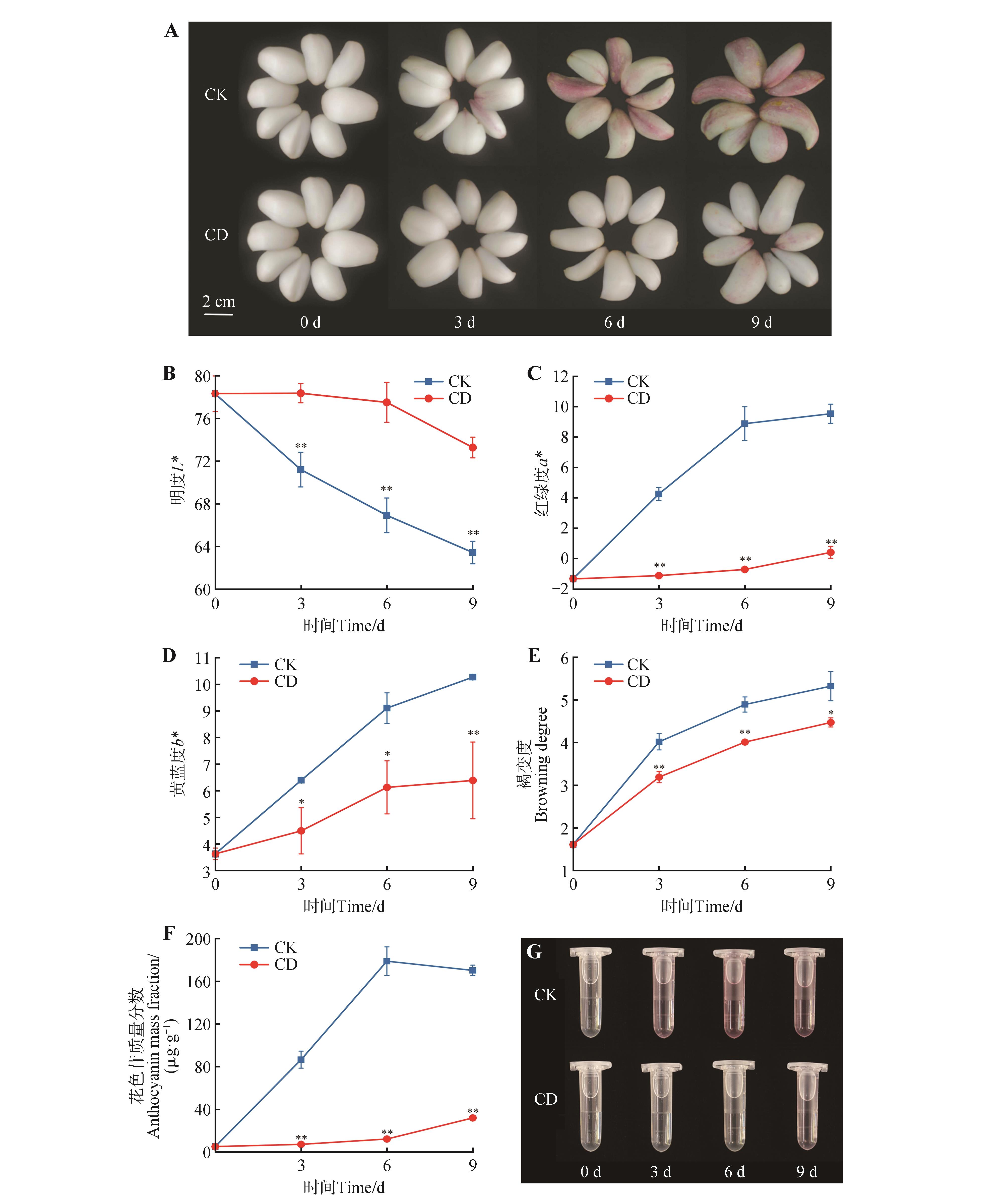
Fig.2
Changes in physiological activities of Lilium davidii var. unicolor during storage under different treatments
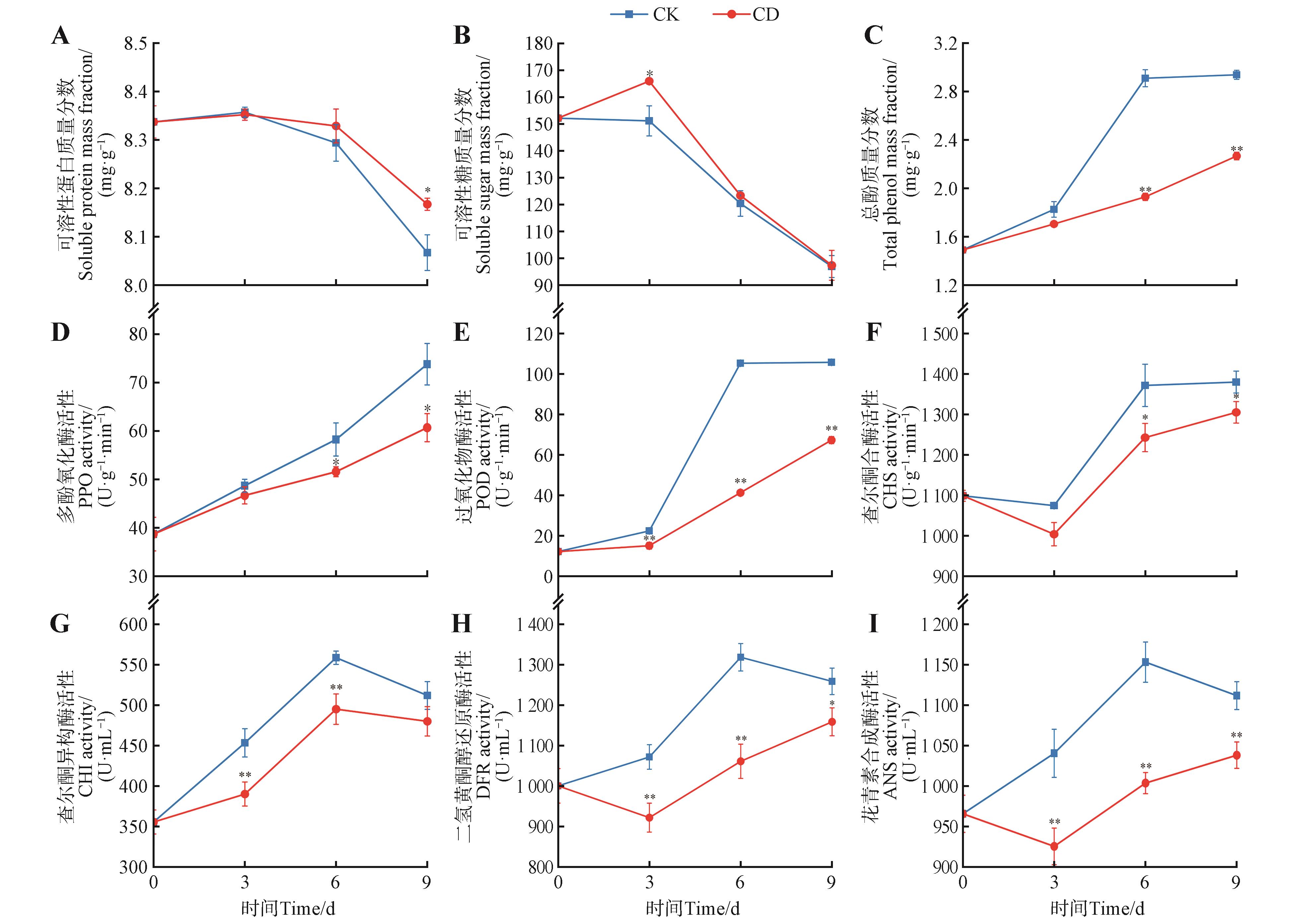
Fig.3
Transcriptome data of Lilium davidii var. unicolor under different conditionsA. Box plots showing gene expression distribution in the samples; B. Comparison of FPKM density distributions; C. Heatmap of correlation-based clustering for all samples; D. PCA analysis. CK0, CK1, CK2, CK3 represented L. davidii var. unicolor samples at 0, 3, 6, and 9 days under normal air conditions; CD1, CD2, CD3 represented L. davidii var. unicolor samples at 3, 6, and 9 days under high CO2; the same as below.
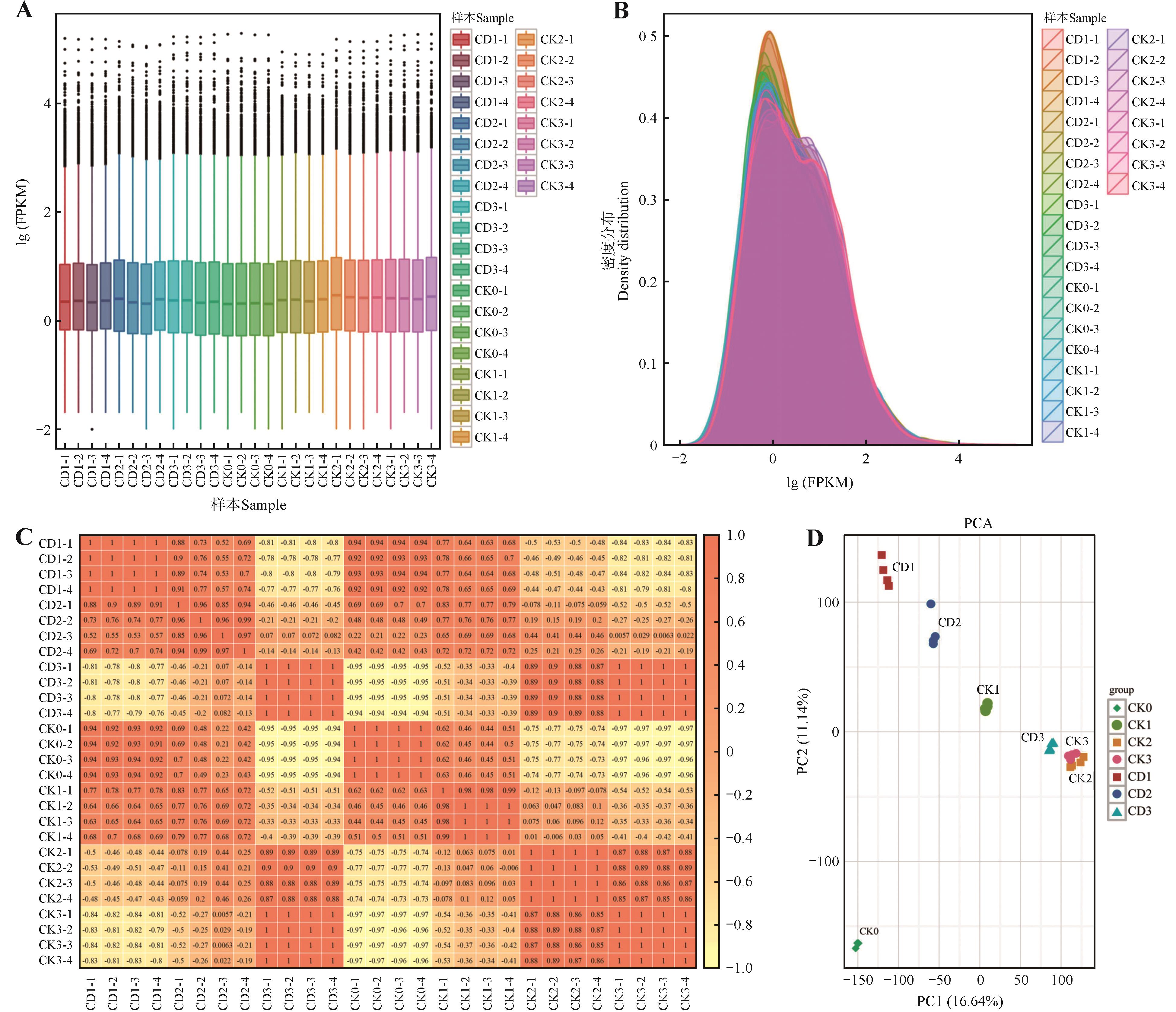
Fig.4
Differential gene GO analysis of Lilium davidii var. unicolor under different conditionsA-C represented numbers of the differential expression genes in the functional groups between CK1 and CD1 treatments, between CK2 and CD2 treatments, between CK3 and CD3 treatments, respectively.
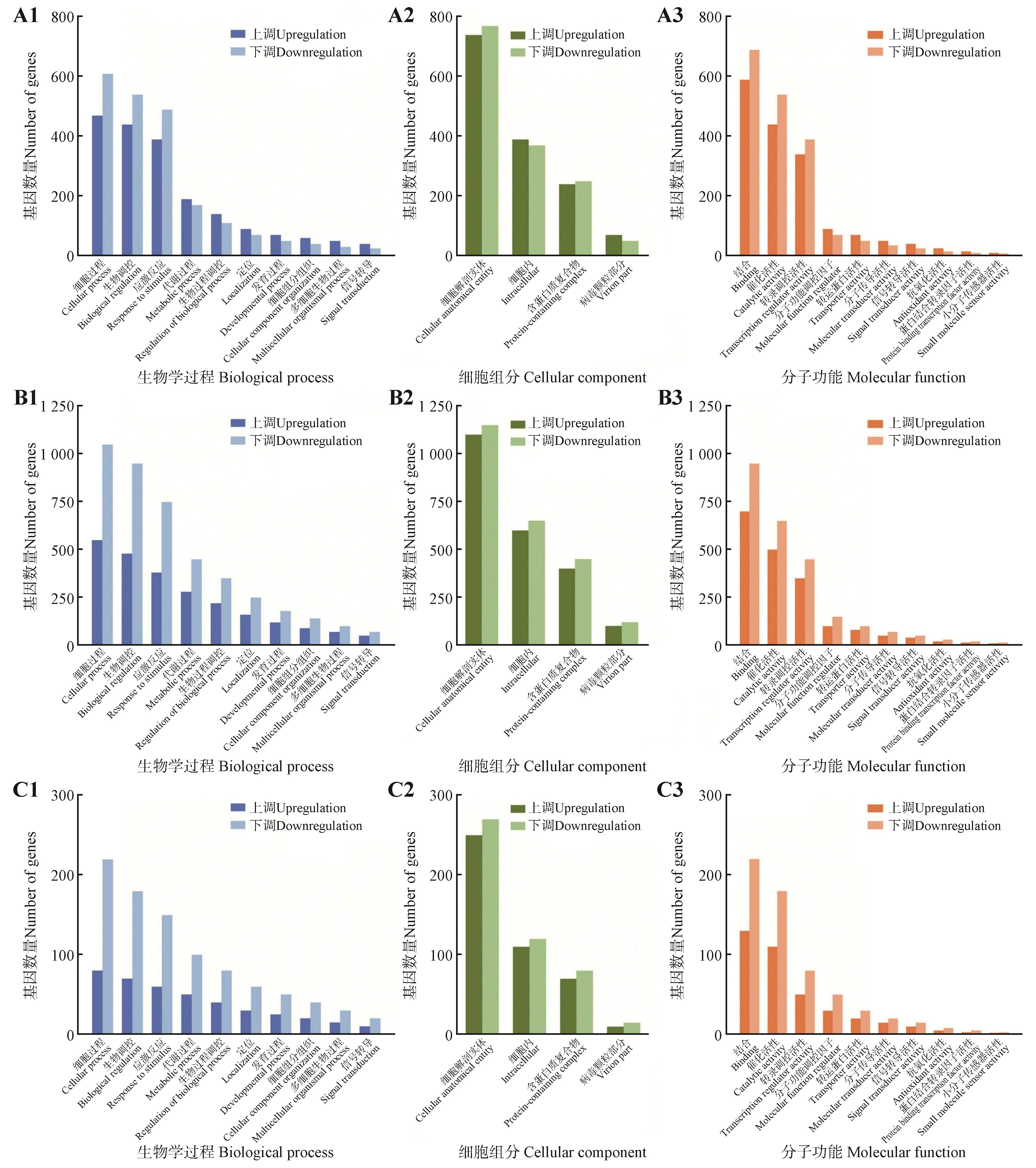
Fig.5
Differential gene KEGG analysis of Lilium davidii var. unicolor under different conditionsAC. KEGG pathway enrichment analysis; GO enrichment analysis lists the top 10 significant biological functions.
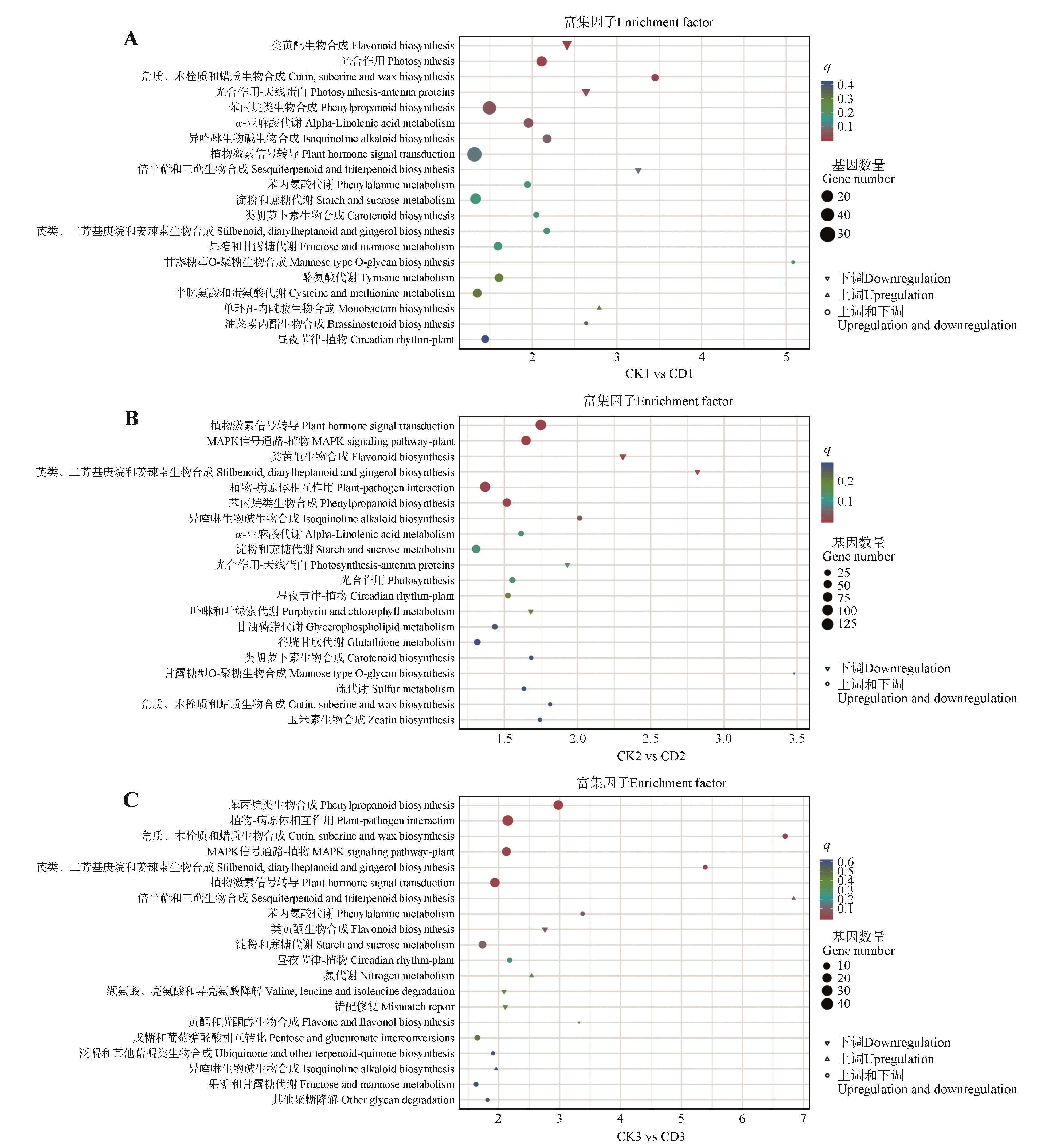
Fig.6
Heatmap of differentially expressed genes in the phenylpropanoid biosynthesis pathway
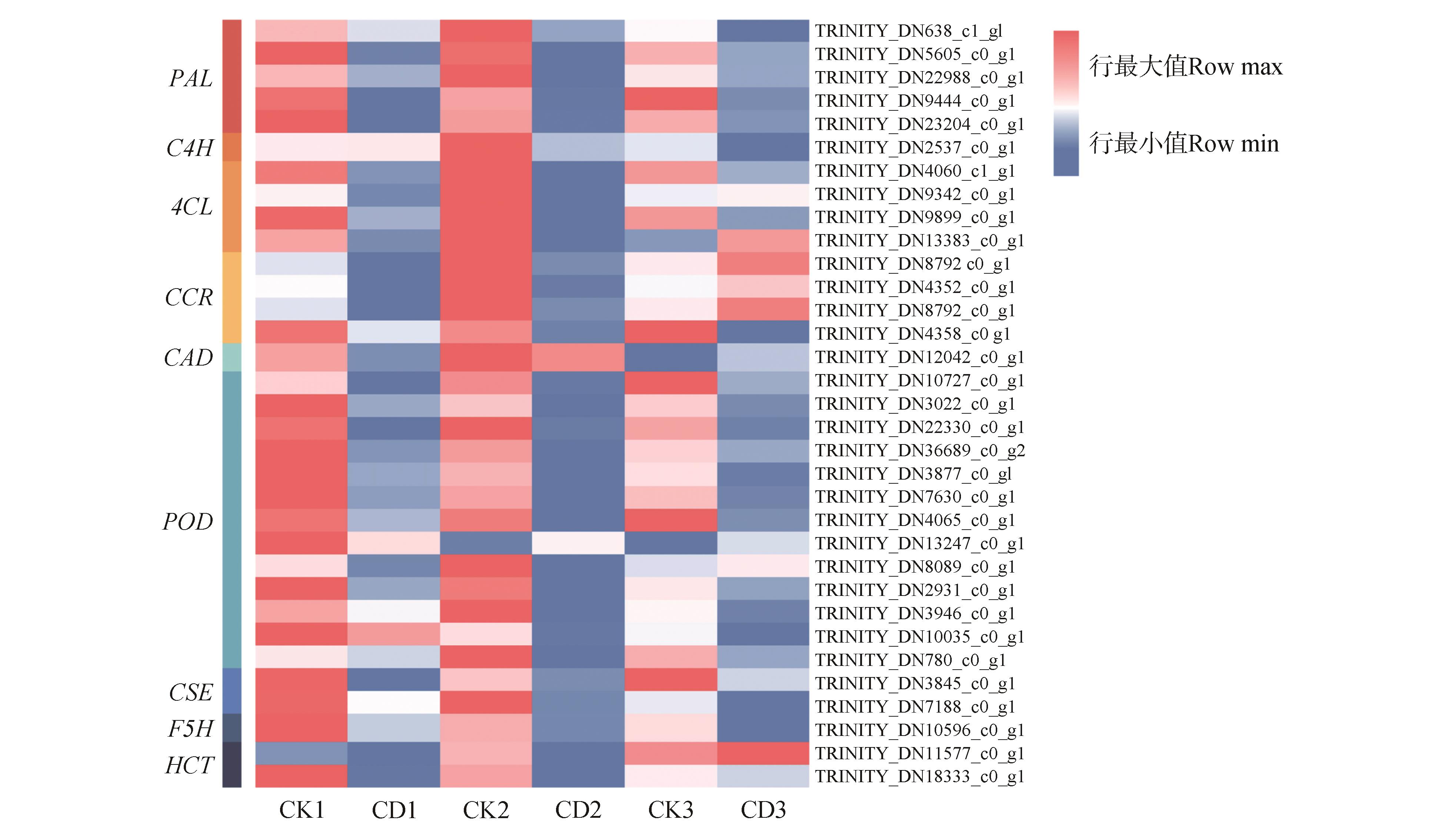
Fig.7
Heatmap of differentially expressed genes in the flavonoid biosynthesis pathway
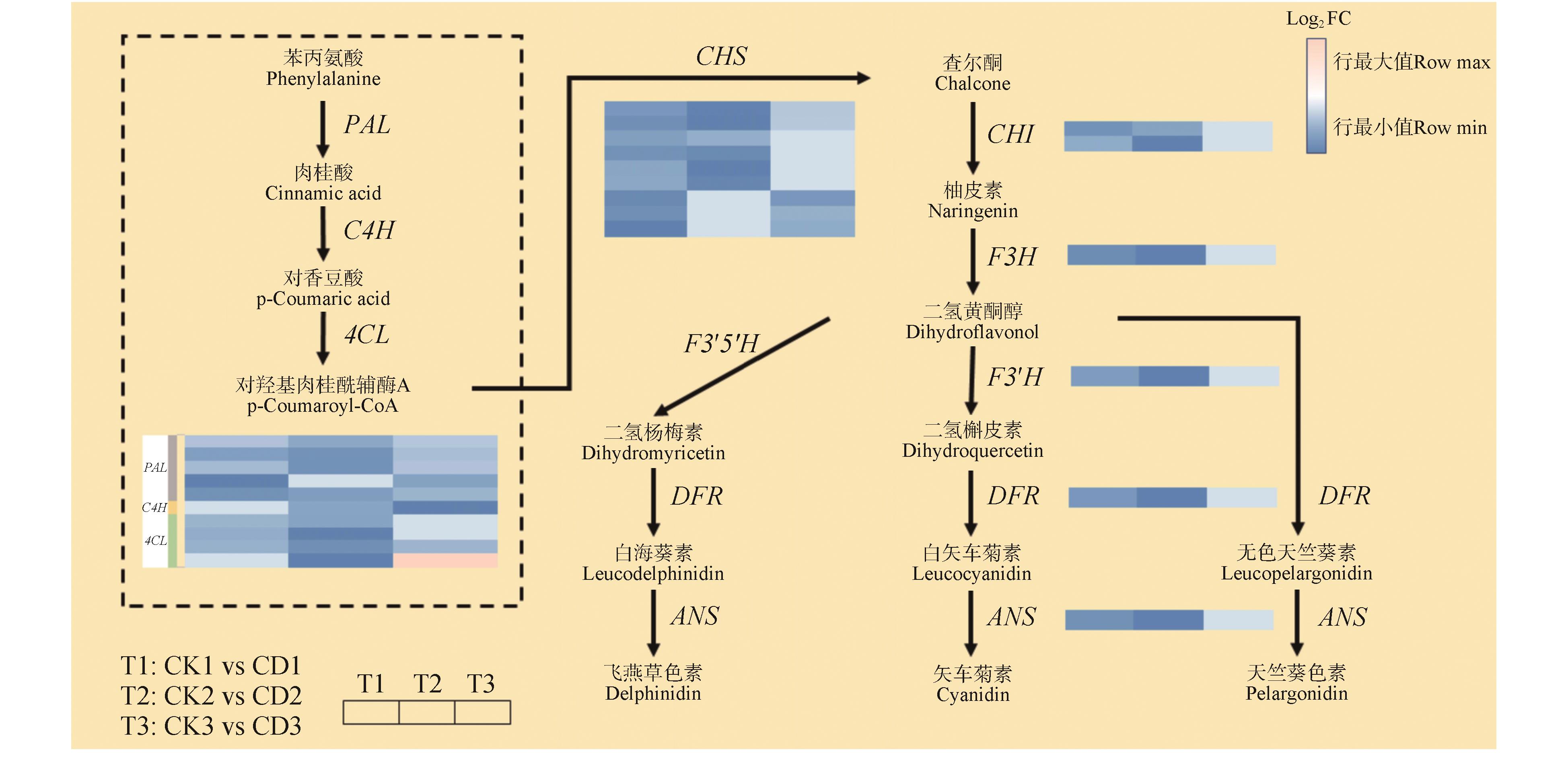
Fig.8
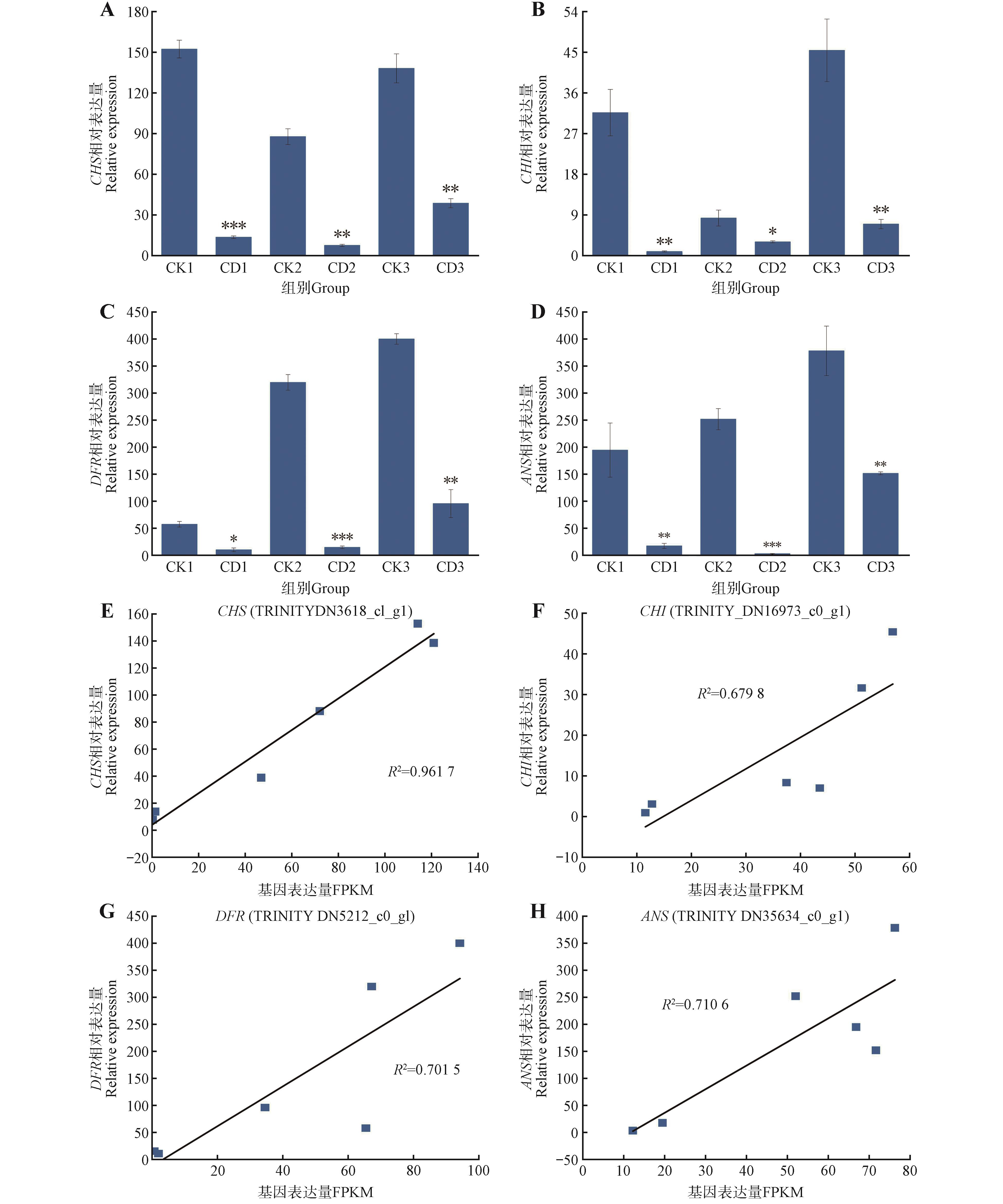
qRT-PCR analysis of the candidate genes in Lilium davidii var. unicolor bulbsA-D. Differentially expressed gene qRT-PCR results; E-H. Correlation analysis between qRT-PCR results and FPKM obtained from transcriptome sequencing; * indicated that differences in gene relative expression level between samples at the same storage duration were statistically significant at the P<0.05 level; ** indicated that differences in gene relative expression level between samples at the same storage duration were statistically significant at the P<0.01 level; *** indicated that differences in gene relative expression level between samples at the same storage duration were statistically significant at the P<0.001 level.
| [1] | 郎利新,窦晓莹,孔滢,等.不同(品)种及产地的百合鳞茎营养成分分析[J].食品工业科技,2022,43(10):339-350. |
| Lang Lixin, Dou Xiaoying, Kong Ying,et al.Analysis of nutrient components of lily bulbs from different origins[J].Science and Technology of Food Industry,2022,43(10):339-350. | |
| [2] | Li W M, Wang Y J, Wei H L,et al.Structural characterization of Lanzhou lily(Lilium davidii var. unicolor) polysaccharides and determination of their associated antioxidant activity[J].Journal of the Science of Food and Agriculture,2020,100(15):5603-5616. |
| [3] | 张敏敏,王立光,李琦,等.兰州百合采后贮藏保鲜研究进展[J].食品安全质量检测学报,2023,14(3):131-136. |
| Zhang Minmin, Wang Liguang, Li Qi,et al.Research progress on postharvest storage and preservation of Lanzhou lily(Lilium davidii var. unicolor)[J].Journal of Food Safety & Quality,2023,14(3):131-136. | |
| [4] | 韩晨瑞,申靖,刘航,等.鲜切果蔬物理保鲜技术研究进展[J].食品科技,2022,47(11):17-23. |
| Han Chenrui, Shen Jing, Liu Hang,et al.Research progress on physical preservation technologies of fresh-cut fruits and vegetables[J].Food Science and Technology,2022,47(11):17-23. | |
| [5] | Krga I, Milenkovic D.Anthocyanins:from sources and bioavailability to cardiovascular-health benefits and molecular mechanisms of action[J].Journal of Agricultural and Food Chemistry,2019,67(7):1771-1783. |
| [6] | 李栋.高浓度CO2处理调控采后草莓花色苷合成机制研究[D].杭州:浙江大学,2021. |
| Li Dong.The regulation of elevated CO2 on anthocyanin synthesis in postharvest strawberry fruit[D].Hangzhou:Zhejiang University,2021. | |
| [7] | 范文广,柴佳靖,李保豫,等.百合花青苷分子调控研究进展[J].植物遗传资源学报,2023,24(5):1236-1247. |
| Fan Wenguang, Chai Jiajing, Li Baoyu,et al.Advances in molecular regulation of anthocyanin biosynthesis in Lilium [J].Journal of Plant Genetic Resources,2023,24(5):1236-1247. | |
| [8] | Dong T T, Han R P, Yu J W,et al.Anthocyanins accumulation and molecular analysis of correlated genes by metabolome and transcriptome in green and purple asparaguses(Asparagus officinalis L.)[J].Food Chemistry,2019,271:18-28. |
| [9] | Fraser L G, Seal A G, Montefiori M,et al.An R2R3 MYB transcription factor determines red petal colour in an Actinidia(kiwifruit) hybrid population[J].BMC Genomics,2013,14(1):28. |
| [10] | 李栋,占智豪,周心悦,等.高浓度二氧化碳气调抑制鲜切莲藕酶促褐变的机制[J].浙江大学学报(农业与生命科学版),2020,46(1):101-110. |
| Li Dong, Zhan Zhihao, Zhou Xinyue,et al.Mechanism of the inhibition of elevated CO2 atmosphere on enzymatic browning of fresh-cut lotus roots[J].Journal of Zhejiang University(Agriculture and Life Sciences),2020,46(1):101-110. | |
| [11] | 谢晶,王肽,杨胜平.复合保鲜剂结合MAP对鲜切茄子贮藏品质的影响[J].食品与机械,2015,31(4):134-137. |
| Xie Jing, Wang Tai, Yang Shengping.Effect of chitosan compound preservative combined with modified atmosphere packaging on quality of fresh-cut eggplant during storage[J].Food and Machinery,2015,31(4):134-137. | |
| [12] | 党昕,张萍,勉鹏飞,等.盐碱胁迫对兰州百合鳞茎品质与差异代谢物的影响[J].中国食品学报,2026, 26(4):354-365. |
| Dang Xin, Zhang Ping, Pengfei Mian,et al.Effects of saline and alkaline stress on the quality and differential metabolites of Lanzhou lily bulbs[J].Journal of Chinese Institute of Food Science and Technology,2026,26(4):354-365. | |
| [13] | 蒋益虹.影响百合色泽变化因素的研究[J].中国食品学报,2004,4(3):25-28. |
| Jiang Yihong.Studies on factors affecting color change of lily[J].Journal of Chinese Institute of Food Science and Technology,2004,4(3):25-28. | |
| [14] | Kan J, Xie W J, Wan B,et al.Heat-induced tolerance to browning of fresh-cut lily bulbs (Lilium lancifolium Thunb.) under cold storage[J].Journal of Food Biochemistry,2019,43(5):e12816. |
| [15] | Li M L, Li X A, Han C,et al.Physiological and metabolomic analysis of cold plasma treated fresh-cut strawberries[J].Journal of Agricultural and Food Chemistry,2019,67(14):4043-4053. |
| [16] | Zhang H S, Wu X T, Liu X J,et al.Hydrogen gas improves the postharvest quality of Lanzhou lily(Lilium davidii var. unicolor) bulbs[J].Plants,2023,12(4):946. |
| [17] | 丁胜华,王蓉蓉,张菊华,等.‘金丝小枣’在生长与成熟过程中活性成分及抗氧化活性变化规律研究[J].食品工业科技,2017,38(3):74-79. |
| Ding Shenghua, Wang Rongrong, Zhang Juhua,et al.Changes of bioactive compounds and antioxidant capacities of jujube(Zizyphus jujuba) fruit cv ‘Jinsixiaozao’ during different growth/ripening stages of growth[J].Science and Technology of Food Industry,2017,38(3):74-79. | |
| [18] | 张朝阳.兰州百合保鲜过程中酶活性研究[D].兰州:西北师范大学,2018. |
| Zhang Chaoyang.Study on enzyme activity in the fresh-keeping process of Lilium davidii var.[D].Lanzhou:Northwest Normal University,2018. | |
| [19] | 谢君,代钰,王宏勋,等.高浓度二氧化碳气调包装通过调节酚代谢抑制鲜切莲藕的酶促褐变[J].现代食品科技,2018,34(7):168-174. |
| Xie Jun, Dai Yu, Wang Hongxun,et al.High concentration CO2 modified-atmosphere packaging inhibits enzymatic browning of fresh-cut lotus root slices by regulating phenolic metabolism[J].Modern Food Science and Technology,2018,34(7):168-174. | |
| [20] | Li D, Zhang X C, Li L,et al.Elevated CO2 delayed the chlorophyll degradation and anthocyanin accumulation in postharvest strawberry fruit[J].Food Chemistry,2019,285:163-170. |
| [21] | Liu Y, Tikunov Y, Schouten R E,et al.Anthocyanin biosynthesis and degradation mechanisms in solanaceous vegetables:a review[J].Frontiers in Chemistry,2018, 6:52. |
| [22] | Zhao H D, Liu B D, Zhang W L,et al.Enhancement of quality and antioxidant metabolism of sweet cherry fruit by near-freezing temperature storage[J].Postharvest Biology and Technology,2019,147:113-122. |
| [23] | 罗耀华,王馨雨,陈晟,等.7种百合内外鳞片营养品质及抗氧化特性评价[J].食品工业科技,2021,42(24):247-255. |
| Luo Yaohua, Wang Xinyu, Chen Sheng,et al.Evaluation of nutritional quality and antioxidant properties of inner and outer scales of 7 species of lilies[J].Science and Technology of Food Industry,2021,42(24):247-255. | |
| [24] | Blanch M, Rosales R, Palma F,et al.CO2-driven changes in energy and fermentative metabolism in harvested strawberries[J].Postharvest Biology and Technology,2015,110:33-39. |
| [25] | 王馨雨,杨绿竹,王婷,等.植物多酚氧化酶的生理功能、分离纯化及酶促褐变控制的研究进展[J].食品科学,2020,41(9):222-237. |
| Wang Xinyu, Yang Lüzhu, Wang Ting,et al.Recent progress toward understanding the physiological function,purification,and enzymatic browning control of plant polyphenol oxidases[J].Food Science,2020,41(9):222-237. | |
| [26] | 李金金,李春媛,谷佰宇,等.微环境气调保鲜箱对葡萄采后贮藏品质的影响[J].食品科技,2023,48(4):47-54. |
| Li Jinjin, Li Chunyuan, Gu Baiyu,et al.Effects of micro-environmental modified atmosphere preservation box on postharvest storage quality of grape[J].Food Science and Technology,2023,48(4):47-54. | |
| [27] | Xu W J, Dubos C, Lepiniec L.Transcriptional control of flavonoid biosynthesis by MYB-bHLH-WDR complexes[J].Trends in Plant Science,2015,20(3):176-185. |
| [28] | Allan A C, Hellens R P, Laing W A.MYB transcription factors that colour our fruit[J].Trends in Plant Science,2008,13(3):99-102. |
| [29] | Hichri I, Barrieu F, Bogs J,et al.Recent advances in the transcriptional regulation of the flavonoid biosynthetic pathway[J].Journal of Experimental Botany,2011,62(8):2465-2483. |
| [30] | Li Y, Xu P B, Chen G Q,et al.FvbHLH9 functions as a positive regulator of anthocyanin biosynthesis by forming a HY5-bHLH9 transcription complex in strawberry fruits[J].Plant and Cell Physiology,2020,61(4):826-837. |
| [31] | Nakatsuka A, Yamagishi M, Nakano M,et al.Light-induced expression of basic helix-loop-helix genes involved in anthocyanin biosynthesis in flowers and leaves of Asiatic hybrid lily[J].Scientia Horticulturae,2009,121(1):84-91. |
| [1] | Wenjun LI, Sha LUO, Qianqian SHI. Epidermal Cell Changes and Anthocyanin Accumulation Patterns during Paeonia rockii Blotch Formation [J]. Bulletin of Botanical Research, 2026, 46(4): 764-776. |
| [2] | Xin HAN, Ruonan WU, Xin LI, Yunyao YANG, Minmin CHEN, Yongchun ZHANG, Liuyan YANG. Protoplast Isolation, Purification and Application of Lilium davidii var. unicolor [J]. Bulletin of Botanical Research, 2024, 44(6): 936-944. |
| [3] | Zhiyuan CHENG, Yanjiang ZHANG, Yue SHEN, Guang LI, Qin CHEN, Jie LI, Yanhong XING. Metabolomics Analysis of Lilium davidii var. unicolor in Response to Autotoxicity Stress [J]. Bulletin of Botanical Research, 2024, 44(5): 793-804. |
| [4] | Nan LI, Xiaoxia TIAN, Peichun MAO, Mingli ZHENG, LIN MENG, Lan YUN. Phenotype and Pigment Analysis of Flower Organs of Iris lactea var. chinensis [J]. Bulletin of Botanical Research, 2024, 44(1): 51-61. |
| [5] | Zhezhe LI, Yidan ZHANG, Bo WANG, Zhenghao WANG, Lu WANG, Beibei CHENG. Changes and Influencing Factors of Anthocyanins in Hibiscus syriacus During Flowering [J]. Bulletin of Botanical Research, 2023, 43(4): 550-561. |
| [6] | PENG Chun-Xue, CUI Xue-Mei, LIU Chun-Ping, YANG Ling, WANG Qiu-Shui, SHEN Hai-Long. Physiological Analysis of Three Anti-Browning Agents Affecting Somatic Embryogenesis in Fraxinus mandshurica [J]. Bulletin of Botanical Research, 2019, 39(2): 252-258. |
| [7] | YU Ting-Ting, NI Xiu-Zhen, GAO Li-Hong, HAN Guo-Jun, ZHU Chang-Fu, SHENG Yan-Min. Advances in Study of Dihydroflavonol 4-Reductase(DFR) Genes of Higher Plants [J]. Bulletin of Botanical Research, 2018, 38(4): 632-640. |
| [8] | XU Meng-Ke, LI Dan, MENG Lai-Sheng, JIANG Ji-Hong. Arabidopsis thaliana Transcription Factor Ethylene-insensitive3(EIN3) Inhibits the Synthesis of Anthocyanins [J]. Bulletin of Botanical Research, 2018, 38(1): 148-154. |
| [9] | SHI Shao-Chuan;GAO Yi-Ke*;ZHANG Xiu-Hai;SUN Jia-Qi;ZHAO Ling-Li;WANG Ye. Progress on Plant Genes Involved in Biosynthetic Pathway of Anthocyanins [J]. Bulletin of Botanical Research, 2011, 31(5): 633-640. |
| Viewed | ||||||
|
Full text |
|
|||||
|
Abstract |
|
|||||