植物研究 ›› 2026, Vol. 46 ›› Issue (3): 399-410.doi: 10.7525/j.issn.1673-5102.2026.03.002
张恺欣, 余心泽, 高恺阳, 程晨, 韩雪莹, 史倩倩( )
)
收稿日期:2026-01-23
出版日期:2026-05-20
发布日期:2026-06-01
通讯作者:
史倩倩
E-mail:shiqianqian2005@163.com
作者简介:张恺欣(2004—),男,本科,主要从事栽培技术研究。
基金资助:
Kaixin ZHANG, Xinze YU, Kaiyang GAO, Chen CHENG, Xueying HAN, Qianqian SHI()
Received:2026-01-23
Online:2026-05-20
Published:2026-06-01
Contact:
Qianqian SHI
E-mail:shiqianqian2005@163.com
摘要:
为探索陕西羽叶报春(Primula filchnerae)多倍体诱导技术,本研究分别采用种子浸泡法和生长点棉球滴加法进行秋水仙素处理,比较不同浓度与处理时间对发芽率、死亡率及四倍体诱导率的影响,并通过流式细胞术与根尖染色体计数进行倍性检测与验证。结果表明:秋水仙素处理总体抑制种子萌发并提高幼苗死亡率,但在适宜浓度下可显著提高四倍体诱导率。种子处理组中,0.02 g⋅L-1、24 h处理组的种子发芽率最高,为(77.67±3.51)%;0.05 g⋅L-1、24 h处理组的幼苗死亡率最低,为(2.16±0.93)%,且四倍体诱导率最高,为(30.12±4.02)%。生长点处理组中,0.05 g⋅L-1处理效果最佳,四倍体诱导率为(40.00±10.00)%。流式细胞术检测结果表明,四倍体材料的G₀/G₁主峰较二倍体明显偏移;染色体计数进一步验证,二倍体染色体数为2n=2x=24,四倍体染色体数为2n=4x=48。形态学和细胞学比较分析表明,四倍体植株的叶片及花朵相关指标显著优于二倍体,生长势更强,观赏价值更高。此外,四倍体植株的气孔尺寸增大、气孔密度降低,符合多倍体植株的典型细胞学特征。综上所述,本研究建立了高效的陕西羽叶报春秋水仙素诱导与倍性鉴定技术体系,为该物种多倍体育种及种质创新提供了技术支撑。
中图分类号:
张恺欣, 余心泽, 高恺阳, 程晨, 韩雪莹, 史倩倩. 陕西羽叶报春四倍体诱导、鉴定与性状分析[J]. 植物研究, 2026, 46(3): 399-410.
Kaixin ZHANG, Xinze YU, Kaiyang GAO, Chen CHENG, Xueying HAN, Qianqian SHI. Induction, Identification, and Trait Analysis of Tetraploid Primula filchnerae[J]. Bulletin of Botanical Research, 2026, 46(3): 399-410.
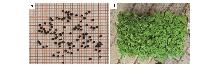
图1
多倍体诱导试验所用材料A.浸泡处理所用种子;B.生长点处理所用植株。
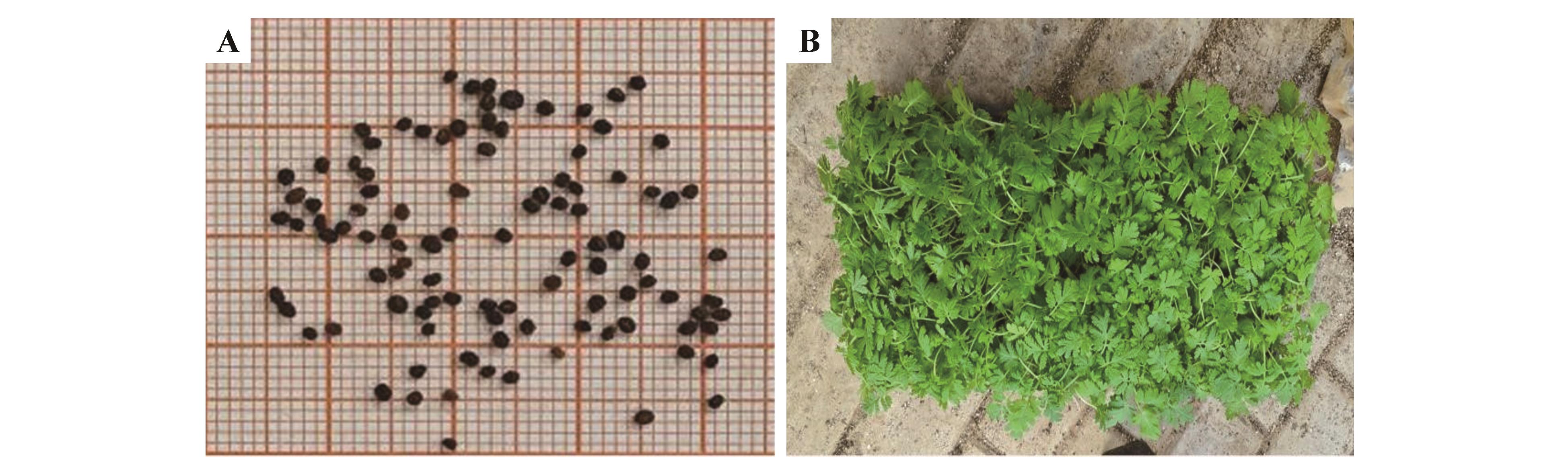
表1
种子处理组处理
秋水仙素质量浓度 Colchicine mass concentration/(g⋅L-1) | 浸泡时间 Soaking time/h | 种子数量 Number of seeds |
|---|---|---|
| CK | 12 | 300 |
| 24 | 300 | |
| 48 | 300 | |
| 0.02 | 12 | 300 |
| 24 | 300 | |
| 48 | 300 | |
| 0.05 | 12 | 300 |
| 24 | 300 | |
| 48 | 300 | |
| 0.10 | 12 | 300 |
| 24 | 300 | |
| 48 | 300 |
表2
生长点处理组处理
秋水仙素质量浓度 Colchicine mass concentration/(g⋅L-1) | 处理时间 Treatment time/h | 幼苗数量 Number of seedlings |
|---|---|---|
| CK | 48 | 30 |
| 0.02 | 48 | 30 |
| 0.05 | 48 | 30 |
| 0.10 | 48 | 30 |
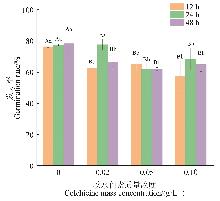
图2
秋水仙素处理对陕西羽叶报春种子发芽率的影响不同小写字母表示在相同质量浓度不同浸泡时间之间在P<0.05水平上差异显著,不同大写字母表示在相同浸泡时间不同质量浓度处理之间在P<0.05水平上差异显著。
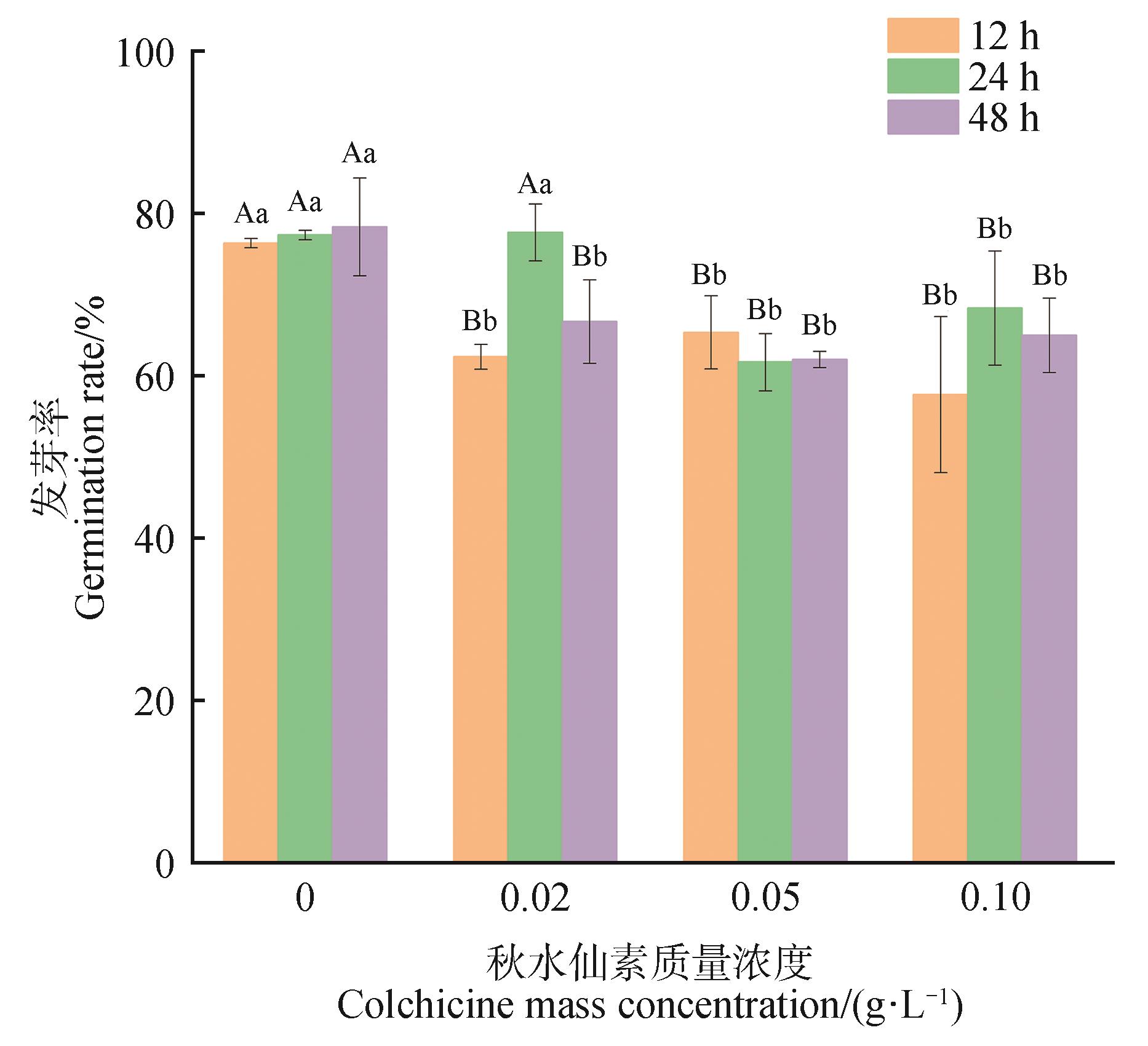
表3
秋水仙素质量浓度及浸泡时间对陕西羽叶报春种子萌发率的双因素分析
变异来源 Source of variation | 自由度 df | 发芽率 Germination rate | |
|---|---|---|---|
| F | P | ||
浸泡时间 Soaking time | 2 | 127.370 | <0.001 |
秋水仙素质量浓度 Colchicine mass concentration | 3 | 204.765 | <0.001 |
浸泡时间×秋水仙素质量浓度 Soaking time×Colchicine mass concentration | 6 | 80.870 | <0.001 |
图3
秋水仙素处理对陕西羽叶报春幼苗死亡率的影响不同小写字母表示在相同质量浓度不同浸泡时间处理之间在P<0.05水平上差异显著;不同大写字母表示在相同浸泡时间不同质量浓度处理之间在P<0.05水平上差异显著。
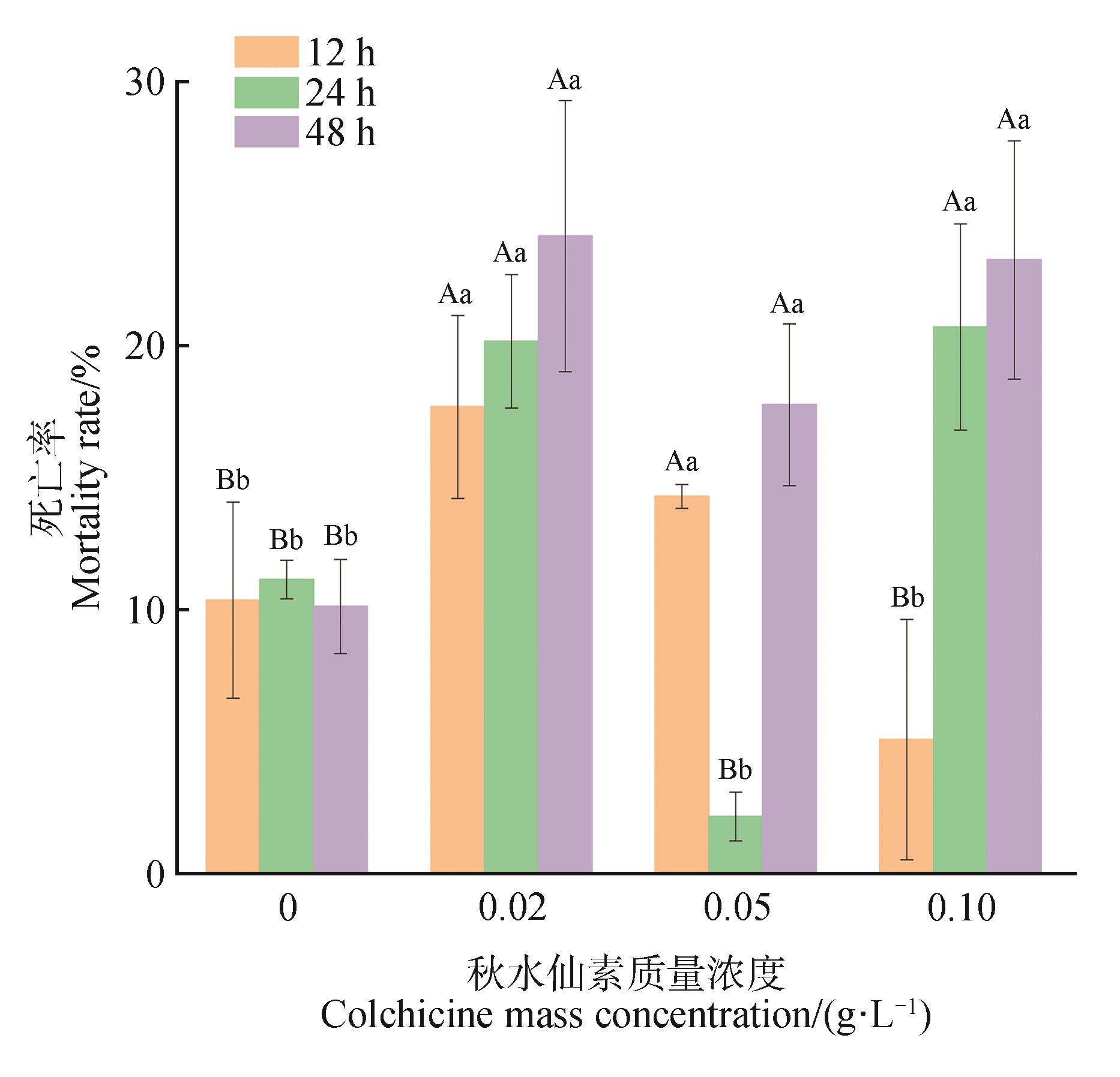
表4
秋水仙素质量浓度及浸泡时间对陕西羽叶报春幼苗死亡率的双因素分析
变异来源 Source of variation | 自由度 df | 死亡率 Mortality rate | |
|---|---|---|---|
| F | P | ||
浸泡时间 Soaking time | 2 | 18.856 | <0.001 |
秋水仙素质量浓度 Colchicine mass concentration | 3 | 20.100 | <0.001 |
浸泡时间×秋水仙素质量浓度 Soaking time×Colchicine mass concentration | 6 | 13.303 | <0.001 |
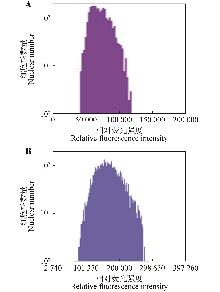
图4
二倍体和疑似四倍体的流式细胞术分析直方图A.二倍体;B.疑似四倍体。
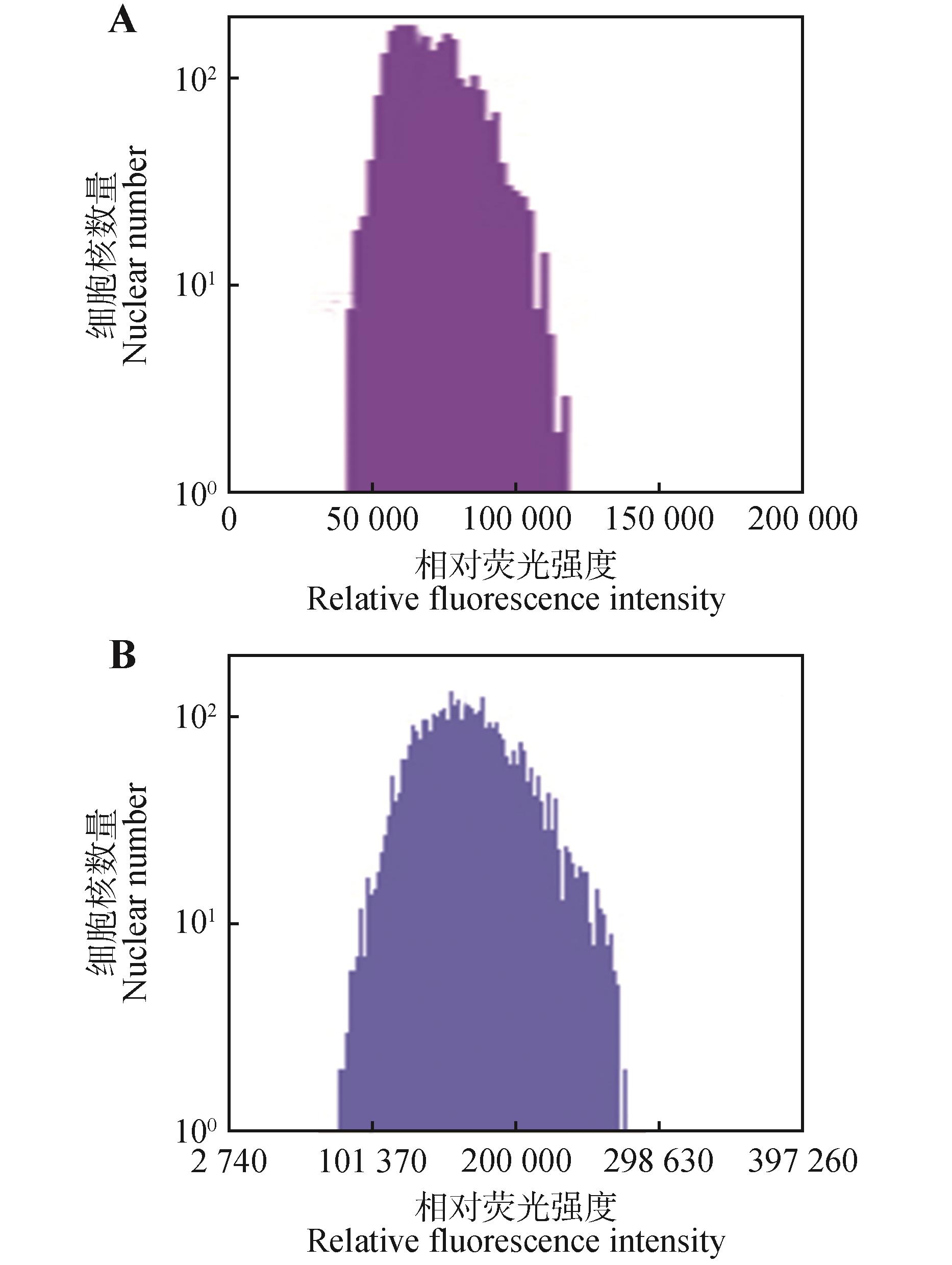
图5
根尖染色体A.二倍体;B.四倍体。
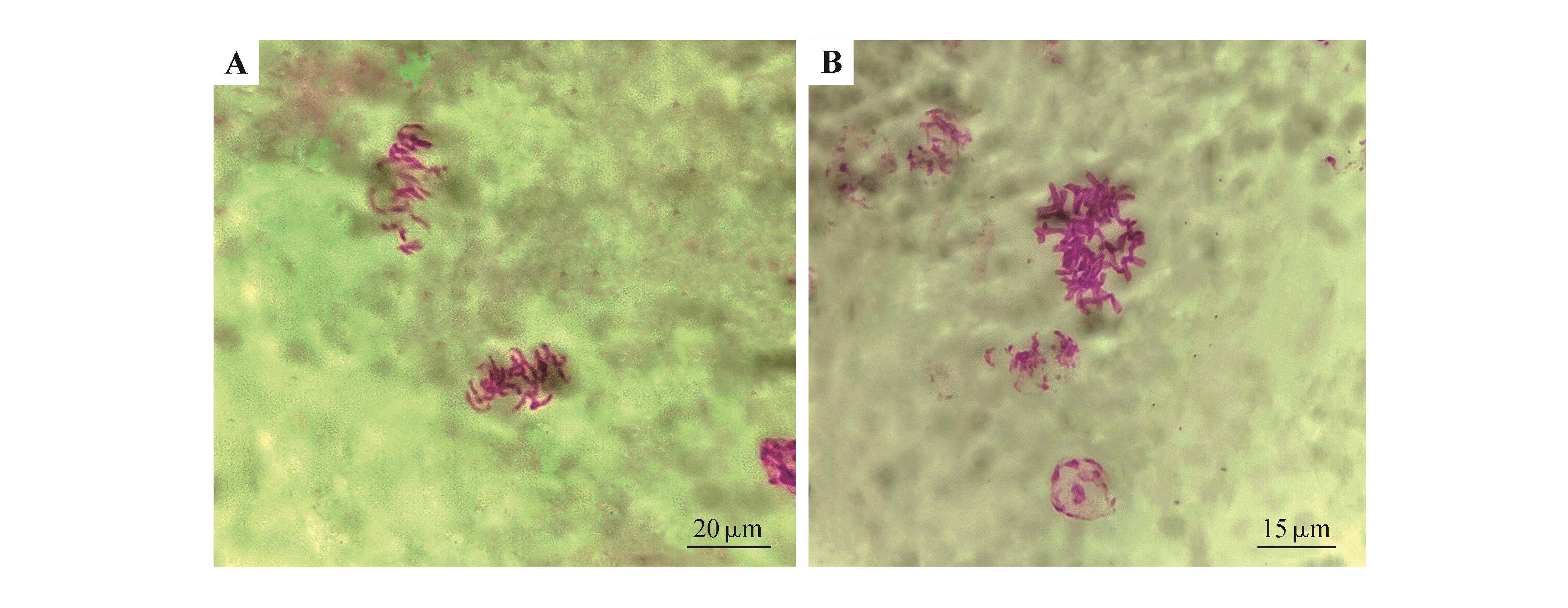
图6
秋水仙素处理对陕西羽叶报春四倍体诱导率的影响不同小写字母表示在相同质量浓度不同浸泡时间处理之间在P<0.05水平上差异显著,不同大写字母表示在相同浸泡时间不同质量浓度处理之间在P<0.05水平上差异显著。

表5
秋水仙素质量浓度及浸泡时间对陕西羽叶报春诱导率的双因素分析
变异来源 Source of variation | 自由度 df | 诱导率 Induction rate | |
|---|---|---|---|
| F | P | ||
浸泡时间 Soaking time | 2 | 63.194 | <0.001 |
秋水仙素质量浓度 Colchicine mass concentration | 3 | 43.045 | <0.001 |
浸泡时间×秋水仙素质量浓度 Soaking time×Colchicine mass concentration | 6 | 15.166 | <0.001 |
表6
秋水仙素处理下幼苗死亡率和四倍体诱导率
秋水仙素质量浓度 Colchicine mass concentration/(g⋅L-1) | 死亡率 Mortality rate/% | 诱导率 Induction rate/% |
|---|---|---|
| CK | 0a | 0c |
| 0.02 | 6.67±5.77a | 33.33±5.77ab |
| 0.05 | 3.33±5.77a | 40.00±10.00a |
| 0.10 | 0a | 26.67±5.77b |
表7
秋水仙素处理下幼苗死亡率和四倍体诱导率的单因素分析
变异来源 Source of variation | 死亡率Mortality rate | 诱导率Induction rate | ||||
|---|---|---|---|---|---|---|
| df | F | P | df | F | P | |
秋水仙素质量浓度 Colchicine mass concentration | 3 | 1.833 | 0.219 | 3 | 22.133 | <0.001 |

图7
陕西羽叶报春二倍体与四倍体植株对比A1.四倍体种子处理组;A2.二倍体种子处理组;B1.四倍体生长点处理组;B2.二倍体生长点处理组。

表8
陕西羽叶报春二倍体与四倍体的形态指标差异
处理方案 Treatment scheme | 植株类型 Type | 叶面积 Leaf area/cm² | 叶片数量 Number of leaves | 花葶高 Flower stalk height/cm | 花葶数量 Number of flower stalks | 花朵直径 Diameter of the flower/cm | 花朵数量 Number of flowers | 地径 Ground diameter/mm |
|---|---|---|---|---|---|---|---|---|
种子处理 Seed treatment | 二倍体 | 1.03±0.22 | 2.53±0.52 | 3.21±0.52 | 1.33±0.62 | 1.14±0.13 | 1.94±0.57 | 1.13±0.10 |
| 四倍体 | 2.05±0.08** | 5.07±0.70** | 11.14±1.18** | 2.60±0.63** | 1.73±0.14** | 4.25±0.93** | 1.12±0.07 | |
生长点处理 Apical meristem treatment | 二倍体 | 2.08±0.47 | 13.17±2.42 | 23.00±4.03 | 4.60±0.95 | 2.17±0.11 | 27.33±2.14 | 2.50±0.37 |
| 四倍体 | 3.62±0.71** | 16.76±3.10** | 29.90±3.49** | 5.17±1.29** | 2.53±0.30** | 27.78±2.26 | 3.16±0.49** |
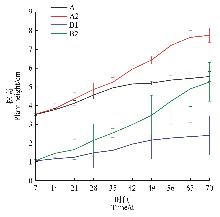
图8
秋水仙素处理下陕西羽叶报春株高变化比较A.生长点处理组;B.种子处理组;A1、B1.二倍体植株;A2、B2.四倍体植株。
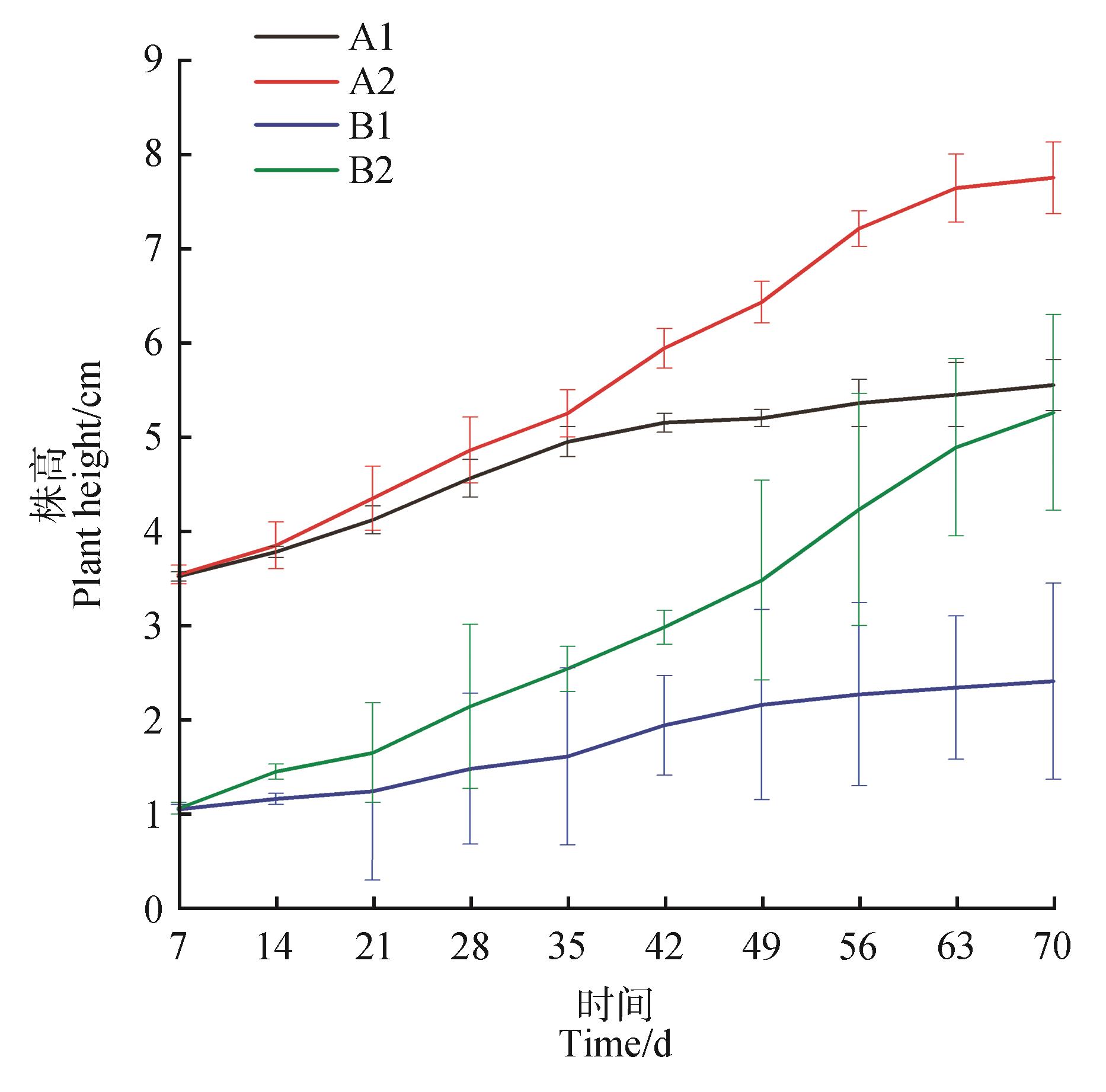
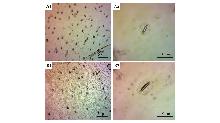
图9
陕西羽叶报春二倍体和四倍体植株气孔对比A1、A2.二倍体植株气孔密度和单个气孔;B1、B2.四倍体植株气孔密度和单个气孔。

表9
陕西羽叶报春二倍体和四倍体植株气孔特征差异
植株类型 Plant type | 气孔长度 Stomata length/μm | 气孔宽度 Stomata width/μm | 气孔密度 Stomata density/ (个·mm-2) |
|---|---|---|---|
二倍体植株 Diploid | 7.5±0.2b | 6.8±0.2b | 58.9±7.8a |
四倍体植株 Tetraploid | 12.2±0.5a | 7.6±0.2a | 33.3±5.0b |
| [1] | 李霖锋,刘宝.植物多倍化与多倍体基因组进化研究进展[J].中国科学:生命科学,2019,49(4):327-337. |
| LI L F, LIU B.Recent advances of plant polyploidy and polyploid genome evolution[J].Science in China:Series C,2019,49(4):327-337. | |
| [2] | 裴芸,虞夏清,赵晓坤,等.多倍化与植物新表型关联性的研究进展[J].园艺学报,2023,50(9):1854-1866. |
| PEI Y, YU X Q, ZHAO X K,et al.Progress in the study of the association of polyploidy with new plant phenotypes[J].Acta Horticulturae Sinica,2023,50(9):1854-1866. | |
| [3] | SINGH B, YUN S, GIL Y,et al.The role of colchicine in plant breeding[J].International Journal of Molecular Sciences,2025,26(14):6743. |
| [4] | TOUCHELL D H, PALMER I E, RANNEY T G. In vitro ploidy manipulation for crop improvement[J].Frontiers in Plant Science,2020,11:722. |
| [5] | BHATTARAI K, KAREEM A, DENG Z N. In vivo induction and characterization of polyploids in gerbera daisy[J].Scientia Horticulturae,2021,282:110054. |
| [6] | REN J, LU X, DUAN Y Y,et al. In vivo tetraploid induction of mono-embryonic citrus genotypes by colchicine treatment[J].Scientia Horticulturae,2024,338:113701. |
| [7] | HA T H, KIM D G, KIM J,et al.Induction of polyploidy and its effect on cannabinoid content in Cannabis sativa L.[J].Industrial Crops and Products,2026,239:122423. |
| [8] | MO L, CHEN J H, LOU X Z,et al.Colchicine-induced polyploidy in Rhododendron fortunei Lindl[J].Plants,2020,9(4):424. |
| [9] | LUO Z N, IAFFALDANO B J, CORNISH K.Colchicine-induced polyploidy has the potential to improve rubber yield in Taraxacum kok-saghyz [J].Industrial Crops and Products,2018,112:75-81. |
| [10] | 季必霞,陈达伟,张晨晨,等.大花蕙兰多倍体的高效诱导[J].植物研究,2011,31(5):558-562. |
| JI B X, CHEN D W, ZHANG C C,et al.High efficient polyploid induction of Cymbidium hybridium [J].Bulletin of Botanical Research,2011,31(5):558-562. | |
| [11] | PRASATH D, NAIR R R, BABU P A.Effect of colchicine induced tetraploids of ginger (Zingiber officinale Roscoe) on cytology,rhizome morphology,and essential oil content[J].Journal of Applied Research on Medicinal and Aromatic Plants,2022,31:100422. |
| [12] | 刘金,夏齐平,王建,等.自花授粉在安徽羽叶报春花色选育中应用的初步研究[J].植物研究,2018,38(2):232-237. |
| LIU J, XIA Q P, WANG J,et al.A preliminary study on the application of self pollination in Primula merrilliana flower color selection[J].Bulletin of Botanical Research,2018,38(2):232-237. | |
| [13] | 吴宪,廖建雄,甘啟良,等.环境因子对陕西羽叶报春种子萌发及成苗的影响[J].植物科学学报,2011,29(2):212-217. |
| WU X, LIAO J X, GAN Q L,et al.Influence of environmental factors on seed germination and seedling formation of Primula filchnerae [J].Plant Science Journal,2011,29(2):212-217. | |
| [14] | 中国科学院动物研究所.中国生物多样性红色名录[EB/OL].(2023-05-19)[2025-12-20].. |
| Institute of Zoology, Chinese Academy of Sciences. Redlist of China’s Biodiversity[EB/OL].(2023-05-19)[2025-12-20]. . | |
| [15] | IUCN 2025. The IUCN Red List of Threatened Species[EB/OL].[2025-12-20]. . |
| [16] | 中华人民共和国生态环境部.濒危特有植物:陕西羽叶报春保护与可持续利用[R/OL]. (2023-06-12)[2025-12-20]. . |
| Ministry of Ecology and Enviroment of the People’s Republic of China. Endemic endangered plant: conservation and sustainable use of Primula filchnerae [R/OL]. (2023-06-12)[2025-12-20]. . | |
| [17] | JIANG X, LIU W J, ZHU Y Z,et al.Impacts of climate changes on geographic distribution of Primula filchnerae,an endangered herb in China[J].Plants,2023,12(20):3561. |
| [18] | 张晓曼,孙晓光,杨建民.田埂报春多倍体诱导及其形态学研究[J].植物遗传资源学报,2010,11(6):789-792. |
| ZHANG X M, SUN X G, YANG J M.Polyploid induction and morphology of Primula forbesii [J].Journal of Plant Genetic Resources,2010,11(6):789-792. | |
| [19] | 张超,李枝林,李佳,等.滇北球花报春多倍体诱导及核型分析[J].西北植物学报,2011,31(2):236-241. |
| ZHANG C, LI Z L, LI J,et al.Polyploid induction and karyomorphological studies of Primula denticulata ssp.sinodenticulata [J].Acta Botanica Boreali-Occidentalia Sinica,2011,31(2):236-241. | |
| [20] | 余道平,李策宏.迎阳报春四倍体诱导及鉴定[J].核农学报,2014,28(6):961-966. |
| YU D P, LI C H.The tetraploid induction and identification of Primula oreodoxa Franch[J].Journal of Nuclear Agricultural Sciences,2014,28(6):961-966. | |
| [21] | NIAZIAN M, NALOUSI A M.Artificial polyploidy induction for improvement of ornamental and medicinal plants[J].Plant Cell,Tissue and Organ Culture,2020,142(3):447-469. |
| [22] | 周慧文,冯斗,严华兵.秋水仙素离体诱导多倍体研究进展[J].核农学报,2015,29(7):1307-1315. |
| ZHOU H W, FENG D, YAN H B.The progress of polyploids induced in vitro via colchicine[J].Journal of Nuclear Agricultural Sciences,2015,29(7):1307-1315. | |
| [23] | DOLEŽEL J, GREILHUBER J, SUDA J.Estimation of nuclear DNA content in plants using flow cytometry[J].Nature Protocols,2007,2(9):2233-2244. |
| [24] | 林晓璇,陈林静,容晨毓,等.铺地黍染色体制片优化及核型分析[J].草业科学,2021,38(1):89-98. |
| LIN X X, CHEN L J, RONG C Y,et al.Optimization of chromosome preparation and karyotype analysis of Panicum repens [J].Pratacultural Science,2021,38(1):89-98. | |
| [25] | MARAVILLA A J, ROSATO M, ROSSELLÓ J A.Preparation of mitotic chromosomes with the squash technique[M]//HEITKAM T,GARCIA S.Plant cytogenetics and cytogenomics:methods and protocols.New York:Springer,2023:141-149. |
| [26] | CHEN C H, CHEN P, WU Z X,et al.Colchicine-induced chromosome doubling in Cinnamomum camphora and its effect on morphological and terpenoid storage structures[J].Industrial Crops and Products,2025,233:121338. |
| [27] | ENG W H, HO W S.Polyploidization using colchicine in horticultural plants:a review[J].Scientia Horticulturae,2019,246:604-617. |
| [28] | NASIRVAND S, ZAKARIA R A, ZARE N,et al.Polyploidy induction in parsley (Petroselinum crispum L.) by colchicine treatment[J].Cytologia,2018,83(4):393-396. |
| [29] | HUY N P, TAM D T T, LUAN V Q,et al. In vitro polyploid induction of Paphiopedilum villosum using colchicine[J].Scientia Horticulturae,2019,252:283-290. |
| [30] | 施春晖,徐兰兰,王晓庆,等.流式细胞仪鉴定猕猴桃倍性技术研究[J].植物研究,2014,34(6):845-849. |
| SHI C H, XU L L, WANG X Q,et al.Identification of kiwifruit ploidy using flow cytometry[J].Bulletin of Botanical Research,2014,34(6):845-849. | |
| [31] | BECKER F W, OBERLANDER K C, TRÁVNÍČEK P,et al.Inconsistent expression of the gigas effect in polyploid Oxalis [J].American Journal of Botany,2022,109(10):1607-1621. |
| [32] | PACEY E K, MAHERALI H, HUSBAND B C.Polyploidy increases storage but decreases structural stability in Arabidopsis thaliana [J].Current Biology,2022,32(18):4057-4063. |
| [33] | SONG M J, POTTER B I, DOYLE J J,et al.Gene balance predicts transcriptional responses immediately following ploidy change in Arabidopsis thaliana [J].The Plant Cell,2020,32(5):1434-1448. |
| [34] | SUN W Q, LI M D, WANG J B.Characteristics of duplicated gene expression and DNA methylation regulation in different tissues of allopolyploid Brassica napus [J].BMC Plant Biology,2024,24(1):518. |
| [35] | KONG D X, LI Y Q, BAI M,et al.A comparative study of the dynamic accumulation of polyphenol components and the changes in their antioxidant activities in diploid and tetraploid Lonicera japonica [J].Plant Physiology and Biochemistry,2017,112:87-96. |
| [36] | KUNENE E N, FANG J Y.Oryzalin-induced autopolyploidy in sweet marjoram (Origanum majorana L.)[J].Scientia Horticulturae,2026,357:114638. |
| [37] | KRUTHIKA H S, RUKMANGADA M S, NAIK V G.Genome size,chromosome number variation and its correlation with stomatal characters for assessment of ploidy levels in a core subset of mulberry (Morus spp.) germplasm[J].Gene,2023,881:147637. |
| [38] | TARATIMA W, ROHMAH K N, PLAIKHUNTOD K,et al.Optimal protocol for in vitro polyploid induction of Cymbidium aloifolium (L.) Sw[J].BMC Plant Biology,2023,23(1):295. |
| [39] | YAO P Q, CHEN J H, MA P F,et al.Stomata variation in the process of polyploidization in Chinese chive (Allium tuberosum)[J].BMC Plant Biology,2023,23(1):595. |
| [40] | WANG J X, RENNINGER H J, MA Q,et al.Measuring stomatal and guard cell metrics for plant physiology and growth using StoManager1[J].Plant Physiology,2024,195(1):378-394. |
| [41] | ŠMARDA P, KLEM K, KNÁPEK O,et al.Growth,physiology,and stomatal parameters of plant polyploids grown under ice age,present-day,and future CO2 concentrations[J].New Phytologist,2023,239(1):399-414. |
| [42] | BERTOLINO L T, CAINE R S, GRAY J E.Impact of stomatal density and morphology on water-use efficiency in a changing world[J].Frontiers in Plant Science,2019,10:225. |
| [1] | 祁奇, 侯文祥, 邱靖, 耿礼阳, 陈昕. 花楸属复叶组植物倍性水平及基因组大小变异[J]. 植物研究, 2024, 44(3): 441-447. |
| [2] | 赵青, 张强, 周鹏, 林峰, 方炎明. 5种木兰科植物的DNA-C值及倍性分析[J]. 植物研究, 2016, 36(6): 853-859. |
| [3] | 李云玲, 田保明, 杨妍, 崔明珠, 郝志达, 位芳. 拟南芥同源四倍体减数分裂过程的分子细胞学分析[J]. 植物研究, 2016, 36(3): 354-359. |
| [4] | 季必霞;陈达伟;张晨晨;闵笛;黄文静;王钰;*. 大花蕙兰多倍体的高效诱导[J]. 植物研究, 2011, 31(5): 558-562. |
| [5] | 张利珍;李前忠*;杨林源;武成艳. 氮离子注入对蒙古黄芪多倍体诱导的影响[J]. 植物研究, 2011, 31(5): 563-568. |
| [6] | 孙鹏;李云*;姜金仲;袁存权;张立玲. 植物同源四倍体花器官及种子变异研究进展[J]. 植物研究, 2011, 31(2): 249-256. |
| [7] | 李志新;李开隆*;李成浩;杨传平;李海涛. 授粉后秋水仙素处理对大青杨子代生长性状的影响[J]. 植物研究, 2008, 28(5): 622-626. |
| [8] | 杨永年, 张海洋, 吴国宜. 中国龙葵复合种细胞学分析和地理分布的研究[J]. 植物研究, 1994, 14(2): 208-213. |
| 阅读次数 | ||||||
|
全文 |
|
|||||
|
摘要 |
|
|||||