植物研究 ›› 2026, Vol. 46 ›› Issue (3): 411-424.doi: 10.7525/j.issn.1673-5102.2026.03.003
潘梦婷, 刘月影, 郑志民( )
)
收稿日期:2026-02-25
出版日期:2026-05-20
发布日期:2026-06-01
通讯作者:
郑志民
E-mail:zmzheng@nefu.edu.cn
作者简介:潘梦婷(2001—),女,硕士研究生,主要从事林木遗传育种研究。
基金资助:
Mengting PAN, Yueying LIU, Zhimin ZHENG()
Received:2026-02-25
Online:2026-05-20
Published:2026-06-01
Contact:
Zhimin ZHENG
E-mail:zmzheng@nefu.edu.cn
摘要:
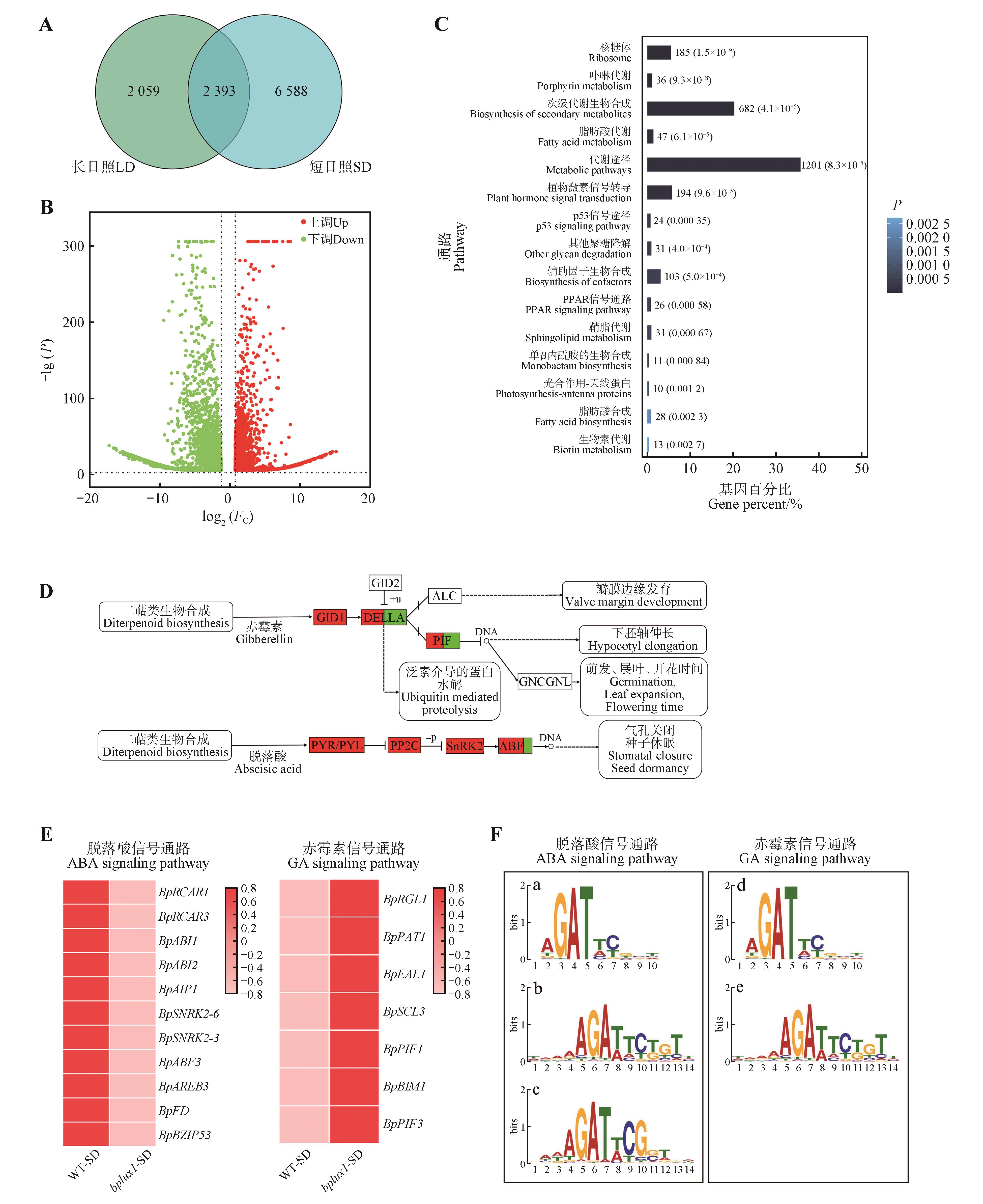
光周期(photoperiod)是调控林木季节性生长与生长停止的关键环境因子。在光周期信号感知和转导过程中,生物钟晚间复合体(evening complex,EC)的核心组件-节律失常蛋白(LUX ARRHYTHMO,LUX)在其中发挥重要作用。本研究在白桦(Betula platyphylla)参考基因组中分析得到47个BpLUXs同源基因。生物信息学分析表明,BpLUX1、BpLUX5和BpLUX18具有典型的Evening Element(EE)顺式作用元件,BpLUX1、BpLUX5和BpLUX18均具有典型的MYB保守结构域,BpLUX1、BpLUX5具有典型的昼夜节律表达模式。通过CRISPR/Cas9技术靶向敲除BpLUX1和BpLUX5,成功创制BpLUX1功能缺失突变体bplux1(BpLUX5基因敲除未成功)。表型分析结果表明,在短日照(short-day,SD)条件下,野生型白桦响应短光周期在第19天开始几乎全部停止生长,而bplux1突变体仍保持活跃生长状态,同时,野生型白桦株高未表现出显著性差异,而bplux1突变体株高显著增高,表现出延迟生长停止表型,表明BpLUX1是白桦响应短日照、诱导生长停止的关键基因。转录组分析进一步揭示,在SD条件下,bplux1突变体中脱落酸(abscisic acid,ABA)信号通路中脱落酸受体调控组分1基因BpRCAR1(Regulatory Component of ABA Receptor 1)等11个差异表达基因下调,赤霉素(gibberellin,GA)信号通路中赤霉素不敏感类似物1基因BpRGL1(RGA-Like 1)等7个差异表达基因上调,并且BpLUX1与ABA和GA信号通路中的关键差异表达基因有潜在的结合位点。这表明BpLUX1基因可能通过影响植物激素信号进一步影响白桦生长停止。综上所述,本研究为解析BpLUX1在光周期调控白桦生长停止的过程中发挥功能提供了一定的理论依据。
中图分类号:
潘梦婷, 刘月影, 郑志民. 白桦BpLUXs基因鉴定与功能验证[J]. 植物研究, 2026, 46(3): 411-424.
Mengting PAN, Yueying LIU, Zhimin ZHENG. Identification and Preliminary Functional Analysis of the BpLUXs Gene in Betula platyphylla Suk.[J]. Bulletin of Botanical Research, 2026, 46(3): 411-424.
表1
BpLUXs 基因qRT-PCR引物
引物名称 Primer name | 引物序列(5′→3′) Primer sequences(5′→3′) |
|---|---|
| BpTUB-F | TCAACCGCCTTGTCTCTCAGG |
| BpTUB-R | TGGCTCGAATGCACTGTTGG |
| BpLUX1-RT-F | GTTCTCTGCCAGCGATAGCTTG |
| BpLUX1-RT-R | CGCGCAGTCGATTCTTCTAGACTT |
| BpLUX5-RT-F | TTGTCTTGGAGAACCTGCTTCGT |
| BpLUX5-RT-R | TGACAGGTAGGTCCATCTCAAGG |
| BpLUX18-RT-F | CATCATGCGGACAATGAATGTGAAG |
| BpLUX18-RT-R | TTGCACTTCCATCTGTGCTCTC |
表2
BpLUXs 基因相关引物
引物名称 Primer name | 引物序列(5′→3′) Primer sequences(5′→3′) |
|---|---|
| BpLUX1-T1-F | TTCGTCGGCGTTCAGCATCTCT |
| BpLUX1-T1-R | AACCAGAGATGCTGAACGCCGA |
| BpLUX1-T2-F | TTCGTGGACGTTGTGGGCCACCT |
| BpLUX1-T2-R | AACAGGTGGCCCACAACGTCCAC |
| BpLUX5-T1-F | TTCGAGCTTGTGGGCCTTGAGA |
| BpLUX5-T1-R | AACTCTCAAGGCCCACAAGCTC |
| BpLUX5-T2-F | TTCGCAAGTTTGTTGCTGCTGTTC |
| BpLUX5-T2-R | AACGAACAGCAGCAACAAACTTGC |
| PSC1-F | TTGGCCGATTCATTAATGCAGC |
| Test-BpLUX1-T1-F | ATGATGGGTGAGGACGTGAAGATG |
| Test-BpLUX1-T1-R | CAAGCTATCGCTGGCAGAGAAC |
| Test-BpLUX1-T2-F | AAGTCTAGAAGAATCGACTGCGCG |
| Test-BpLUX1-T2-R | GACGACGCAAACAACTGGTGGTC |
表3
BpLUXs 基因比对结果
基因名称 Gene name | 基因号 Gene ID | 比对率 Identity/% | 比对长度 Alignment length/bp | 氨基酸数目 Number of amino acids/aa | 等电位点 Theoretical pI | 相对分子质量 Relative molecular mass/Da | 亚细胞定位 Subcellular location |
|---|---|---|---|---|---|---|---|
| BpLUX1 | Bplat_h1_10G00567 | 54.472 | 246 | 301 | 5.47 | 32 910.07 | 细胞核Nucleus |
| BpLUX2 | Bplat_h1_14G01337 | 61.789 | 123 | 321 | 6.19 | 34 563.60 | 细胞核Nucleus |
| BpLUX3 | Bplat_h1_08G02011 | 43.966 | 116 | 670 | 6.08 | 71 886.79 | 细胞核Nucleus |
| BpLUX4 | Bplat_h1_08G01216 | 56.962 | 79 | 680 | 5.94 | 74 370.65 | 细胞核Nucleus |
| BpLUX5 | Bplat_h1_01G00318 | 63.235 | 68 | 694 | 5.97 | 76 202.68 | 细胞核Nucleus |
| BpLUX6 | Bplat_h1_12G02326 | 62.319 | 69 | 714 | 5.38 | 78 100.19 | 细胞核Nucleus |
| BpLUX7 | Bplat_h1_11G01513 | 32.911 | 158 | 737 | 5.18 | 81 496.51 | 细胞核Nucleus |
| BpLUX8 | Bplat_h1_06G00273 | 58.730 | 63 | 483 | 5.10 | 48 822.07 | 细胞核Nucleus |
| BpLUX9 | Bplat_h1_08G01998 | 46.067 | 89 | 188 | 5.51 | 20 938.59 | 细胞核Nucleus |
| BpLUX10 | Bplat_h1_06G00274 | 58.730 | 63 | 1051 | 5.81 | 118 236.64 | 细胞核Nucleus |
| BpLUX11 | Bplat_h1_01G01163 | 37.671 | 146 | 605 | 5.67 | 67 851.41 | 细胞核Nucleus |
| BpLUX12 | Bplat_h1_05G00214 | 48.837 | 86 | 456 | 7.98 | 52 252.68 | 细胞核Nucleus |
| BpLUX13 | Bplat_h1_11G02231 | 40.426 | 94 | 427 | 6.44 | 46 880.03 | 细胞核Nucleus |
| BpLUX14 | Bplat_h1_02G00164 | 53.333 | 60 | 560 | 6.08 | 62 528.25 | 细胞核Nucleus |
| BpLUX15 | Bplat_h1_06G01349 | 56.897 | 58 | 501 | 6.00 | 54 793.90 | 细胞核Nucleus |
| BpLUX16 | Bplat_h1_14G02337 | 53.623 | 69 | 419 | 7.29 | 46 884.77 | 细胞核Nucleus |
| BpLUX17 | Bplat_h1_04G00221 | 54.286 | 70 | 355 | 8.25 | 39 420.90 | 细胞核Nucleus |
| BpLUX18 | Bplat_h1_07G02471 | 60.000 | 55 | 322 | 7.71 | 35 163.07 | 细胞核Nucleus |
| BpLUX19 | Bplat_h1_08G03288 | 54.545 | 55 | 351 | 6.81 | 38 983.83 | 细胞核Nucleus |
| BpLUX20 | Bplat_h1_03G01346 | 43.023 | 86 | 463 | 7.12 | 50 724.45 | 细胞核Nucleus |
| BpLUX21 | Bplat_h1_08G00772 | 37.963 | 108 | 468 | 5.35 | 53 375.19 | 细胞核Nucleus |
| BpLUX22 | Bplat_h1_14G00212 | 37.209 | 129 | 349 | 7.73 | 38 959.20 | 细胞核Nucleus |
| BpLUX23 | Bplat_h1_06G00533 | 45.455 | 66 | 323 | 5.72 | 35 639.67 | 细胞核Nucleus |
| BpLUX24 | Bplat_h1_09G01482 | 51.786 | 56 | 395 | 6.59 | 44 367.63 | 细胞核Nucleus |
| BpLUX25 | Bplat_h1_12G00064 | 44.118 | 68 | 389 | 6.48 | 42 308.72 | 细胞核Nucleus |
| BpLUX26 | Bplat_h1_03G00243 | 55.556 | 54 | 484 | 5.51 | 53 293.29 | 细胞核Nucleus |
| BpLUX27 | Bplat_h1_02G00362 | 50.746 | 67 | 280 | 6.98 | 31 521.49 | 细胞核Nucleus |
| BpLUX28 | Bplat_h1_08G01864 | 54.545 | 55 | 309 | 8.07 | 34 789.69 | 细胞核Nucleus |
| BpLUX29 | Bplat_h1_06G02707 | 38.281 | 128 | 350 | 6.90 | 39 394.52 | 细胞核Nucleus |
| BpLUX30 | Bplat_h1_07G01375 | 43.478 | 92 | 430 | 6.04 | 48 967.34 | 细胞核Nucleus |
| BpLUX31 | Bplat_h1_07G02472 | 58.491 | 53 | 335 | 6.57 | 36 684.08 | 细胞核Nucleus |
| BpLUX32 | Bplat_h1_07G02207 | 36.634 | 101 | 302 | 9.31 | 34 359.32 | 细胞核Nucleus |
| BpLUX33 | Bplat_h1_05G01228 | 48.718 | 78 | 460 | 5.59 | 50 655.07 | 细胞核Nucleus |
| BpLUX34 | Bplat_h1_10G00179 | 54.717 | 53 | 366 | 8.70 | 41 561.47 | 细胞核Nucleus |
| BpLUX35 | Bplat_h1_14G01211 | 52.727 | 55 | 295 | 6.34 | 31 664.44 | 细胞核Nucleus |
| BpLUX36 | Bplat_h1_12G00245 | 38.542 | 96 | 296 | 8.75 | 33 023.06 | 细胞核Nucleus |
| BpLUX37 | Bplat_h1_14G01650 | 49.091 | 55 | 425 | 7.09 | 47 626.14 | 细胞核Nucleus |
| BpLUX38 | Bplat_h1_12G01893 | 35.484 | 93 | 193 | 10.18 | 21 718.78 | 细胞核Nucleus |
| BpLUX39 | Bplat_h1_12G01896 | 46.667 | 60 | 345 | 8.63 | 38 971.68 | 细胞核Nucleus |
| BpLUX40 | Bplat_h1_02G00314 | 45.000 | 60 | 370 | 9.30 | 41 774.52 | 细胞核Nucleus |
| BpLUX41 | Bplat_h1_11G00872 | 45.000 | 60 | 419 | 7.86 | 46 573.83 | 细胞核Nucleus |
| BpLUX42 | Bplat_h1_11G01688 | 54.717 | 53 | 229 | 7.87 | 26 381.96 | 细胞核Nucleus |
| BpLUX43 | Bplat_h1_14G01651 | 51.852 | 54 | 319 | 8.96 | 37 063.91 | 细胞核Nucleus |
| BpLUX44 | Bplat_h1_14G01652 | 44.595 | 74 | 288 | 7.17 | 33 126.49 | 细胞核Nucleus |
| BpLUX45 | Bplat_h1_14G00254 | 50.943 | 53 | 258 | 7.71 | 29 272.00 | 细胞核Nucleus |
| BpLUX46 | Bplat_h1_13G02359 | 40.244 | 82 | 342 | 9.18 | 38 879.09 | 细胞核Nucleus |
| BpLUX47 | Bplat_h1_07G02426 | 60.606 | 33 | 149 | 9.15 | 15 969.02 | 细胞核Nucleus |
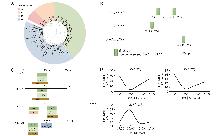
图1
白桦BpLUXs基因分析A.系统发育进化树分析;B.顺式作用元件分析;C.保守结构域分析;D.转录组测序分析。
图2
白桦BpLUXs相对表达量

图3
白桦BpLUXs基因编辑及遗传转化A.BpLUXs sgRNA示意图;B.白桦遗传转化流程;C.bplux1突变体阳性鉴定(M. DL2 000 DNA分子质量标准物;1~19. BpLUX1转基因株系DNA;H2O.阴性对照);D.BpLUX1基因编辑突变位点检测;E.BpLUX1基因编辑突变类型。
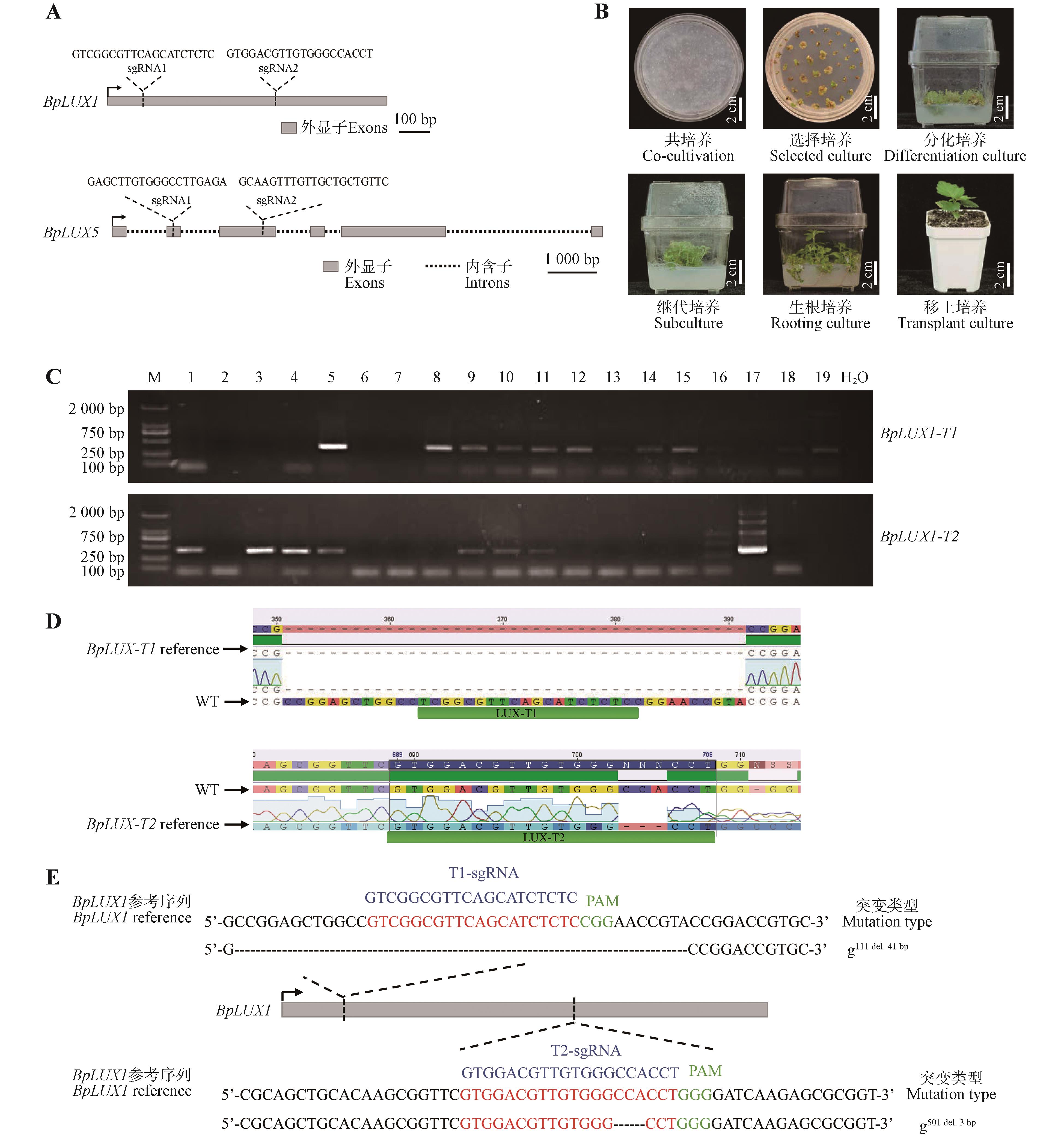
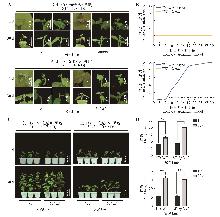
图4
白桦bplux1突变体表型统计A.不同光周期处理下白桦野生型与突变体生长停止表型;B.不同光周期处理下白桦野生型与突变体生长停止比例;C.不同光周期处理下白桦野生型与突变体株高表型;D.不同光周期处理下白桦野生型与突变体株高统计;WT.白桦野生型株系;bplux1.白桦突变体;LD.16 h 光照/8 h 黑暗;SD.8 h 光照/16 h 黑暗。**.P<0.01;***.P<0.001。

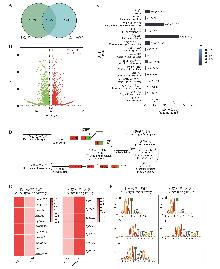
图5
白桦顶芽不同光周期转录组分析A.差异表达基因韦恩图(LD.野生型LD vs突变体LD;SD.野生型SD vs突变体SD);B.差异表达基因火山图;C.KEGG富集分析;D.激素代谢通路图(野生型 vs 突变体;红色上调,绿色下调);E.激素信号通路差异表达基因热图;F.差异表达基因结合位点预测。
| [1] | 关文彬.中国东北地区白桦林植被生态学的研究:桦属植物与中国白桦林的地理分布[J].北京林业大学学报,1998,20(4):104-109. |
| GUAN W B.Vegetation ecology on communities dominated by Betula platyphylla in northeast of China distribution of communities dominated by Betula platyphylla [J].Journal of Beijing Forestry University,1998,20(4):104-109. | |
| [2] | IMAIZUMI T, KAY S A.Photoperiodic control of flowering:not only by coincidence[J].Trends in Plant Science,2006,11(11):550-558. |
| [3] | 王飞飞.大豆生育期基因TOF7的图位克隆和功能分析[D].哈尔滨:中国科学院大学(中国科学院东北地理与农业生态研究所),2019:2-12. |
| WANG F F.Map-based cloning and functional analysis of the maturity gene TOF7 in soybean[D].Harbin:Northeast Institute of Geography and Agroecology,Chinese Academy of Sciences,2019:2-12. | |
| [4] | 陈政.EF11调控大豆光周期开花的分子机制研究[D].广州:广州大学,2025. |
| CHEN Z.The molecular mechanism of EF11 in regulating photoperiod flowering in soybean[D].Guangzhou:Guangzhou University,2025. | |
| [5] | GARNER W W, ALLARD H A.Photoperiodism,the response of the plant to relative length of day and night[J].Science,1922,55(1431):582-583. |
| [6] | ANDRÉS F, COUPLAND G.The genetic basis of flowering responses to seasonal cues[J].Annual Review of Plant Biology,2012,63:627-650. |
| [7] | WANG Z Y, TOBIN E M.Constitutive expression of the circadian clock associated 1(cca1) gene disrupts circadian rhythms and suppresses its own expression[J].Cell,1998,93(7):1207-1217. |
| [8] | MATSUSHIKA A, MAKINO S, KOJIMA M,et al.The APRR1/TOC1 quintet implicated in circadian rhythms of Arabidopsis thaliana:II.Characterization with CCA1-overexpressing plants[J].Plant & Cell Physiology,2002,43(1):118-122. |
| [9] | GENDRON J M, PRUNEDA-PAZ J L, DOHERTY C J,et al. Arabidopsis circadian clock protein,TOC1,is a DNA-binding transcription factor[J].Proceedings of the National Academy of Sciences of the United States of America,2012,109(8):3167-3172. |
| [10] | NAKAMICHI N, KIBA T, HENRIQUES R,et al.PSEUDO-RESPONSE REGULATORS 9,7,and 5 are transcriptional repressors in the Arabidopsis circadian clock[J].The Plant Cell,2010,22(3):594-605. |
| [11] | NUSINOW D A, HELFER A, HAMILTON E E,et al.The ELF4-ELF3-LUX complex links the circadian clock to diurnal control of hypocotyl growth[J].Nature,2011,475(7356):398-402. |
| [12] | DOYLE M R, DAVIS S J, BASTOW R M,et al.The ELF4 gene controls circadian rhythms and flowering time in Arabidopsis thaliana [J].Nature,2002,419(6902):74-77. |
| [13] | HUANG W, PÉREZ-GARCÍA P, POKHILKO A,et al.Mapping the core of the Arabidopsis circadian clock defines the network structure of the oscillator[J].Science,2012,336(6077):75-79. |
| [14] | NASCIMENTO A S M DO, HENSCHEL J M, Felipe S H S,et al.Photoperiod and circadian regulation in plants:a review of insights from in vitro studies[J].Biology,2025,14(11):1502. |
| [15] | ZHANG C, GAO M, SEITZ N C,et al.LUX ARRHYTHMO mediates crosstalk between the circadian clock and defense in Arabidopsis [J].Nature Communications,2019,10:2543. |
| [16] | JONES M A, MOROHASHI K, GROTEWOLD E,et al. Arabidopsis JMJD5/JMJ30 acts independently of LUX ARRHYTHMO within the plant circadian clock to enable temperature compensation[J].Frontiers in Plant Science,2019,10:57. |
| [17] | CHOW B Y, SANCHEZ S E, BRETON G,et al.Transcriptional regulation of LUX by CBF1 mediates cold input to the circadian clock in Arabidopsis [J].Current Biology,2014,24(13):1518-1524. |
| [18] | WANG Y L, TONG W, LI F D,et al.LUX ARRHYTHMO links CBF pathway and jasmonic acid metabolism to regulate cold tolerance of tea plants[J].Plant Physiology,2024,196(2):961-978. |
| [19] | KIM H, KIM H J, VU Q T,et al.Circadian control of ORE1 by PRR9 positively regulates leaf senescence in Arabidopsis [J].Proceedings of the National Academy of Sciences of the United States of America,2018,115(33):8448-8453. |
| [20] | XU P, ZHANG Y X, WEN X X,et al.The clock component OsLUX regulates rice heading through recruiting OsELF3-1 and OsELF4s to repress Hd1 and Ghd7 [J].Journal of Advanced Research,2023,48:17-31. |
| [21] | 徐鹏.水稻生物钟基因OsLUX调控抽穗期的分子机制研究[D].重庆:西南大学,2022. |
| Xu P.Molecular mechanism research of rice biological clock gene OsLUX regulates heading date[D].Chongqing:Southwest University,2022. | |
| [22] | CAI Z Z, ZHANG Y D, TANG W Q,et al.LUX ARRHYTHMO interacts with ELF3a and ELF4a to coordinate vegetative growth and photoperiodic flowering in rice[J].Frontiers in Plant Science,2022,13:853042. |
| [23] | 王大伟.GmLUX调控大豆生育期的分子功能验证[D].哈尔滨:中国科学院大学(中国科学院东北地理与农业生态研究所),2019. |
| WANG D W.Molecular function verification of GmLUX regulating soybean growth period[D].Harbin:Northeast Institute of Geography and Agroecology,Chinese Academy of Sciences,2019. | |
| [24] | CHEN S F, ZHOU Y Q, CHEN Y R,et al.Fastp:an ultra-fast all-in-one FASTQ preprocessor[J].Bioinformatics,2018,34(17):i884-i890. |
| [25] | LOVE M I, HUBER W, ANDERS S.Moderated estimation of fold change and dispersion for RNA-seq data with DESeq2[J].Genome Biology,2014,15(12):550. |
| [26] | SONG Q X, LI Q T, LIU Y F,et al.Soybean GmbZIP123 gene enhances lipid content in the seeds of transgenic Arabidopsis plants[J].Journal of Experimental Botany,2013,64(14):4329-4341. |
| [27] | CHENG D W, LIU Y Y, WANG Y,et al.Establishment of high-efficiency genome editing in white birch (Betula platyphylla Suk.)[J].Plant Biotechnology Journal,2024,22(1):7-9. |
| [28] | DING J H, WANG K J, PANDEY S,et al.Molecular advances in bud dormancy in trees[J].Journal of Experimental Botany,2024,75(19):6063-6075. |
| [29] | HAZEN S P, SCHULTZ T F, PRUNEDA-PAZ J L,et al.LUX ARRHYTHMO encodes a myb domain protein essential for circadian rhythms[J].Proceedings of the National Academy of Sciences of the United States of America,2005,102(29):10387-10392. |
| [30] | DAI S H, WEI X P, PEI L P,et al.BROTHER OF LUX ARRHYTHMO is a component of the Arabidopsis circadian clock[J].The Plant Cell,2011,23(3):961-972. |
| [31] | WANG J, LIAO X L, WU Z H,et al.Genetic control of seasonal meristem arrest in trees[J].Proceedings of the National Academy of Sciences of the United States of America,2025,122(48):e2505641122. |
| [32] | IBÁÑEZ C, KOZAREWA I, JOHANSSON M,et al.Circadian clock components regulate entry and affect exit of seasonal dormancy as well as winter hardiness in Populus trees[J].Plant Physiology,2010,153(4):1823-1833. |
| [33] | LIU D G, TANG D, XIE M,et al. Agave REVEILLE1 regulates the onset and release of seasonal dormancy in Populus [J].Plant Physiology,2023,191(3):1492-1504. |
| [34] | VEERABAGU M, VAN DER SCHOOT C, TUREČK-OVÁ V,et al.Light on perenniality:para-dormancy is based on ABA-GA antagonism and endo-dormancy on the shutdown of GA biosynthesis[J].Plant,Cell & Environment,2023,46(6):1785-1804. |
| [35] | ZHENG C L, ACHEAMPONG A K, SHI Z W,et al.Abscisic acid catabolism enhances dormancy release of grapevine buds[J].Plant,Cell & Environment,2018,41(10):2490-2503. |
| [36] | ZHUANG W B, GAO Z H, WANG L J,et al.Comparative proteomic and transcriptomic approaches to address the active role of GA4 in Japanese apricot flower bud dormancy release[J].Journal of Experimental Botany,2013,64(16):4953-4966. |
| [37] | SINGH R K, MAURYA J P, AZEEZ A,et al.A genetic network mediating the control of bud break in hybrid aspen[J].Nature Communications,2018,9:4173. |
| [38] | ANDRÉ D, ZAMBRANO J A, ZHANG B,et al. Populus SVL acts in leaves to modulate the timing of growth cessation and bud set[J].Frontiers in Plant Science,2022,13:823019. |
| [39] | GÓMEZ-SOTO D, ALLONA I, PERALES M.FLOWERING LOCUS T2 promotes shoot apex development and restricts internode elongation via the 13-hydroxylation gibberellin biosynthesis pathway in poplar[J].Frontiers in Plant Science,2022,12:814195. |
| [40] | TYLEWICZ S, PETTERLE A, MARTTILA S,et al.Photoperiodic control of seasonal growth is mediated by ABA acting on cell-cell communication[J].Science,2018,360(6385):212-215. |
| [41] | YUAN Y P, ZENG L L, KONG D R,et al.Abscisic acid-induced transcription factor PsMYB306 negatively regulates tree peony bud dormancy release[J].Plant Physiology,2024,194(4):2449-2471. |
| [42] | NAIR A, MAURYA J P, PANDEY S K,et al.ELF3 coordinates temperature and photoperiodic control of seasonal growth in hybrid aspen[J].Current Biology,2025,35(7):1484-1494.e2. |
| [43] | ZHONG M, ZENG B J, TANG D Y,et al.The blue light receptor CRY1 interacts with GID1 and DELLA proteins to repress GA signaling during photomorphogenesis in Arabidopsis [J].Molecular Plant,2021,14(8):1328-1342. |
| [44] | CHEN K, LI G J, BRESSAN R A,et al.Abscisic acid dynamics,signaling,and functions in plants[J].Journal of Integrative Plant Biology,2020,62(1):25-54. |
| [45] | WU X M, WEI X R, LI Z,et al.Molecular cloning of cryptochrome 1 from Lilium × formolongi and the characterization of its photoperiodic flowering function in Arabidopsis [J].Plant Science,2022,316:111164. |
| [46] | LEE B D, KIM M R, KANG M Y,et al.The F-box protein FKF1 inhibits dimerization of COP1 in the control of photoperiodic flowering[J].Nature Communications,2017,8:2259. |
| [47] | BABA K, KARLBERG A, SCHMIDT J,et al.Activity-dormancy transition in the cambial meristem involves stage-specific modulation of auxin response in hybrid aspen[J].Proceedings of the National Academy of Sciences of the United States of America,2011,108(8):3418-3423. |
| [48] | ZAWASKI C, KADMIEL M, PICKENS J,et al.Repression of gibberellin biosynthesis or signaling produces striking alterations in poplar growth,morphology,and flowering[J].Planta,2011,234(6):1285-1298. |
| [49] | HELFER A, NUSINOW D A, CHOW B Y,et al. LUX ARRHYTHMO encodes a nighttime repressor of circadian gene expression in the Arabidopsis core clock[J].Current Biology,2011,21(2):126-133. |
| [1] | 武思尧, 王新宇, 孙子腾, 郑志民. 白桦BpDMPs基因家族生物信息学及BpDMP7功能分析[J]. 植物研究, 2025, 45(5): 731-744. |
| [2] | 杜玙琦, 尹赜鹏. 光对果实香气品质影响研究进展[J]. 植物研究, 2025, 45(2): 159-170. |
| [3] | 孙子腾, 王新宇, 侯丽丽, 刘月影, 郑志民. 白桦BpGRFs基因鉴定与功能初步分析[J]. 植物研究, 2025, 45(2): 191-201. |
| [4] | 陈柄华, 张杰, 刘桂丰, 李思婷, 高元科, 李慧玉, 李天芳. 白桦半同胞家系纸浆材优良家系选择及选择方法评价[J]. 植物研究, 2023, 43(5): 690-699. |
| [5] | 王景哲, 牛朝奎, 梁馨元, 申晨静, 尹静. 水杨酸在白桦苗期抵御盐碱胁迫中的调控作用[J]. 植物研究, 2023, 43(3): 379-387. |
| [6] | 杜金霞, 申婷婷, 王浩然, 林一萍, 李慧玉, 张连飞. 白桦BpSPL9基因抑制表达载体的构建及遗传转化研究[J]. 植物研究, 2023, 43(1): 30-35. |
| [7] | 陈坤, 方功桂, 穆怀志, 姜静. 白桦BpPIN3基因启动子序列及应答特性分析[J]. 植物研究, 2022, 42(4): 592-601. |
| [8] | 张玉琦, 苏欣, 尤志强, 富金博, 詹亚光, 尹静. 不同激素处理对白桦幼树萌条及三萜合成的影响[J]. 植物研究, 2022, 42(2): 289-298. |
| [9] | 杨蕴力, 渠畅, 王阳, 刘桂丰, 姜静. 白桦BpPIN5基因启动子组织定位及外源激素应答分析[J]. 植物研究, 2022, 42(1): 104-111. |
| [10] | 马庆, 李芳蕊, 刘桂丰, 李慧玉. 航天诱变白桦生长性状分析[J]. 植物研究, 2021, 41(4): 540-546. |
| [11] | 吕东林, 李腾, 郭译文, 姜静, 黄海娇. 转基因白桦杂交子代种子活力及外源基因遗传规律分析[J]. 植物研究, 2021, 41(4): 564-572. |
| [12] | 郭依萍, 刘佳欣, 于颖, 王超, 杨传平. 白桦BpNAC012基因调控白桦木质部发育表达谱分析[J]. 植物研究, 2021, 41(2): 251-261. |
| [13] | 刘佳欣, 刘慧子, 石晶静, 于颖, 王超. 白桦MYB基因响应激素及盐旱处理的表达研究[J]. 植物研究, 2020, 40(5): 743-750. |
| [14] | 王万奇, 齐婉竹, 赵秋爽, 曾栋, 刘轶, 付鹏跃, 曲冠证, 赵曦阳. 白桦BpJMJ18基因启动子克隆及表达分析[J]. 植物研究, 2020, 40(5): 751-759. |
| [15] | 姜骋, 张曦, 田晴, 李莉. 白桦BpbHLH112基因克隆及其启动子表达特性分析[J]. 植物研究, 2020, 40(4): 583-592. |
| 阅读次数 | ||||||
|
全文 |
|
|||||
|
摘要 |
|
|||||