植物研究 ›› 2026, Vol. 46 ›› Issue (5): 838-850.doi: 10.7525/j.issn.1673-5102.2026.05.006
陈思彤, 罗莎, 张倩洳, 李佳浍, 陶晨, 史倩倩( )
收稿日期:2026-04-14
出版日期:2026-08-28
发布日期:2026-10-10
通讯作者:
史倩倩
E-mail:shiqianqian2005@163.com
作者简介:陈思彤(2005—),女,本科在读,主要从事园林植物观赏性状相关研究。
基金资助:
Sitong CHEN, Sha LUO, Qianru ZHANG, Jiahui LI, Chen TAO, Qianqian SHI()
Received:2026-04-14
Online:2026-08-28
Published:2026-10-10
Contact:
Qianqian SHI
E-mail:shiqianqian2005@163.com
摘要:
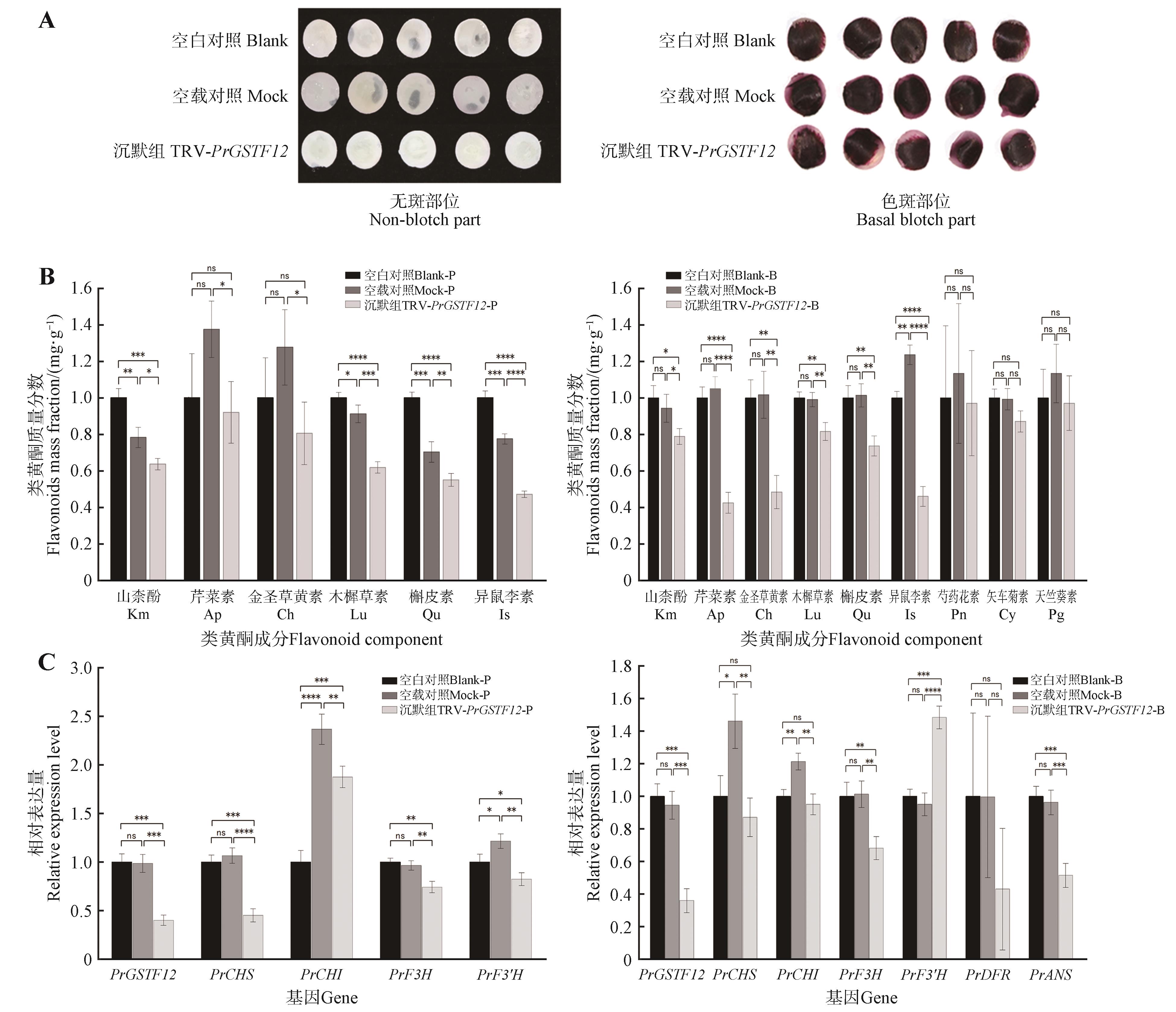
谷胱甘肽转移酶(glutathione S-transferases,GST)基因在植物花青苷积累过程中发挥重要作用。为明确GSTs在紫斑牡丹(Paeonia rockii)花瓣基部色斑的花青苷转运与积累中的作用,本研究以紫斑牡丹为试验材料,测定不同发育时期花瓣的花色值及类黄酮组分和含量。结果表明:芍药素和矢车菊素是影响花瓣基部色斑形成的主要色素成分。在此基础上,从紫斑牡丹花瓣转录组数据中筛选并克隆得到差异表达基因PrGSTF12,并对其进行亚细胞定位、表达分析及病毒诱导的基因沉默(VIGS)试验。进化树分析表明,PrGSTF12基因与已报道的参与花青苷转运的GSTs亲缘关系密切。亚细胞定位结果表明,PrGSTF12定位于液泡膜,提示其在该部位发挥作用。实时荧光定量分析表明,PrGSTF12基因在花瓣基部色斑部位的表达量显著高于无斑部位,且其表达水平与花瓣局部花青苷积累程度呈正相关。VIGS试验结果表明,沉默PrGSTF12后,紫斑牡丹花瓣基部色斑明显褪色,花青苷含量显著降低,同时花青苷合成相关结构基因PrCHS、PrCHI、PrF3H、PrF3'H、PrDFR和PrANS的表达量均显著下调。综上所述,PrGSTF12在紫斑牡丹花瓣基部色斑的花青苷转运与积累过程中发挥重要作用,并参与色斑形成的调控。
中图分类号:
陈思彤, 罗莎, 张倩洳, 李佳浍, 陶晨, 史倩倩. 紫斑牡丹PrGSTF12基因克隆、表达分析及功能验证[J]. 植物研究, 2026, 46(5): 838-850.
Sitong CHEN, Sha LUO, Qianru ZHANG, Jiahui LI, Chen TAO, Qianqian SHI. Cloning, Expression Analysis and Functional Verification of the PrGSTF12 Gene from Paeonia rockii[J]. Bulletin of Botanical Research, 2026, 46(5): 838-850.
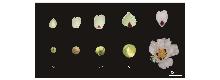
图1
不同发育时期紫斑牡丹花瓣表型S1.无色斑、立蕾时期;S2.色斑逐渐显露、小风铃时期;S3.色斑轮廓初步形成、大风铃时期;S4.色斑基本形成、圆桃时期。
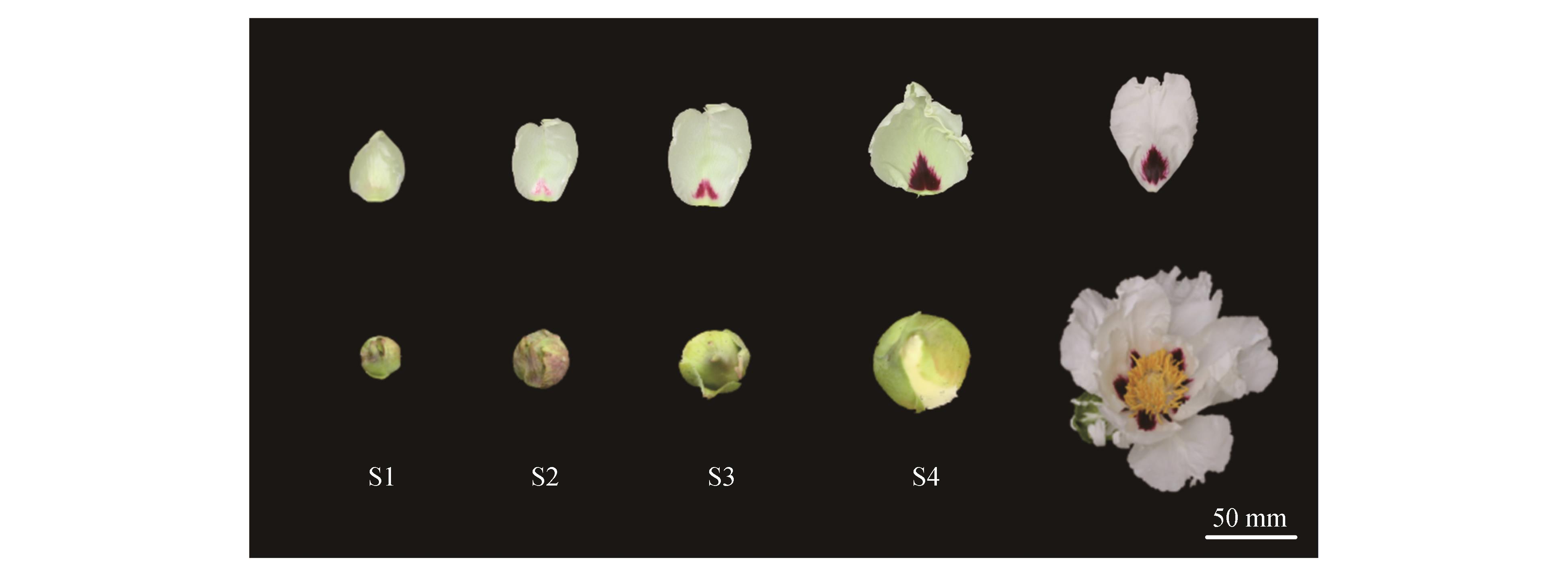
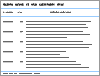
表1
引物序列
引物名称 Primer name | 引物序列(5′→3′) Primer sequence(5′→3′) |
|---|---|
| PrGSTF12-F | TATGGTAGTTAAGGTGTATGG |
| PrGSTF12-R | TTAATTAACAAGATTCATTAATTTC |
| pC2300-PrGSTF12-KpnⅠ-F | ACGGGGGACGAGCTCGGTACCATGGTAGTTAAGGTG |
| pC2300-PrGSTF12-SalⅠ-R | CTTGCTCACCATGGTGTCGACATTAACAAGATTCAT |
表2
载体构建和qRT-PCR引物列表
引物名称 Primer name | 核苷酸序列(5′→3′) Nucleotide sequence(5′→3′) |
|---|---|
| PrGSTF12-pTRV2-F | GTGAGTAAGGTTACCGAATTCACCTGTTGGGAACCACTTTG |
| PrGSTF12-pTRV2-R | CGTGAGCTCGGTACCGGATCCCTGAGACCAGGAAGATGACT |
| PrCHS-F | CAAAGGGTCACGAGTTCTA |
| PrCHS-R | CACGCAAGTGTCCATCA |
| PrCHI-F | CAGCACAGCCTCGGAAAGTTGTT |
| PrCHI-R | CAACGAAATCCCAATCAT |
| PrF3H-F | TTGTCATCAGGCGGTAGA |
| PrE3H-R | TGTTCACGGCAGGGACT |
| PrF3′H-F | TTTTTGTTGGGCTTGG |
| PrF3H-R | ATCGGTTCATGGCTTGT |
| PrDER-F | AATGGGTATCCGCTTTT |
| PrDER-R | GAAGATTGCTGGGTATGG |
| PrANS-F | CTGAGTTGCTTGGCGTA |
| PrANS-R | CAAAGGGTCACGAGTTCTA |
表3
不同发育时期的紫斑牡丹花瓣花色值
时期 Period | 部位 Part | 色卡编号 RHSCC | 明度 L* | 红绿度 a* | 黄蓝度 b* | 色调角 h | 彩度 C |
|---|---|---|---|---|---|---|---|
| S1 | 无斑部位Non-blotch part | 142C | 65.90±0.85c | -18.83±0.15f | 41.70±0.56a | 45.63±0.55a | 114.40±0.40b |
| S2 | 基部色斑部位Basal blotch part | 71B | 67.03±1.27c | -10.97±0.40d | 35.77±0.25b | 37.47±0.21b | 107.10±0.72cd |
| 无斑部位Non-blotch part | 145B | 72.70±0.66b | -17.17±0.38ef | 41.30±0.46a | 44.43±0.60a | 112.40±0.10bc | |
| S3 | 基部色斑部位Basal blotch part | 59C | 42.63±1.10d | 14.97±0.75b | 11.10±0.56d | 18.60±0.20d | 36.20±4.05e |
| 无斑部位Non-blotch part | 145D | 73.43±1.21b | -15.73±0.21e | 36.80±0.60b | 40.40±1.61ab | 112.73±0.15bc | |
| S4 | 基部色斑部位Basal blotch part | N80A | 45.03±3.45d | 30.47±1.92a | -4.53±0.64e | 31.50±2.36abcd | 351.30±1.15a |
| 无斑部位Non-blotch part | 155C | 80.77±0.40a | -8.07±0.21c | 25.77±1.90c | 26.20±0.72cd | 107.60±0.10d |
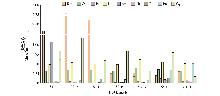
图2
不同发育时期紫斑牡丹花瓣不同部位花色素成分质量分数Km.山柰酚;Qu.槲皮素;Is.异鼠李素;Lu.木犀草素;Ap.芹菜素;Ch.金圣草黄素;Pg.天竺葵素;Pn.芍药素;Cy.矢车菊素。S1~S4代表4个时期。P代表花瓣无斑部位;B代表花瓣基部色斑部位。
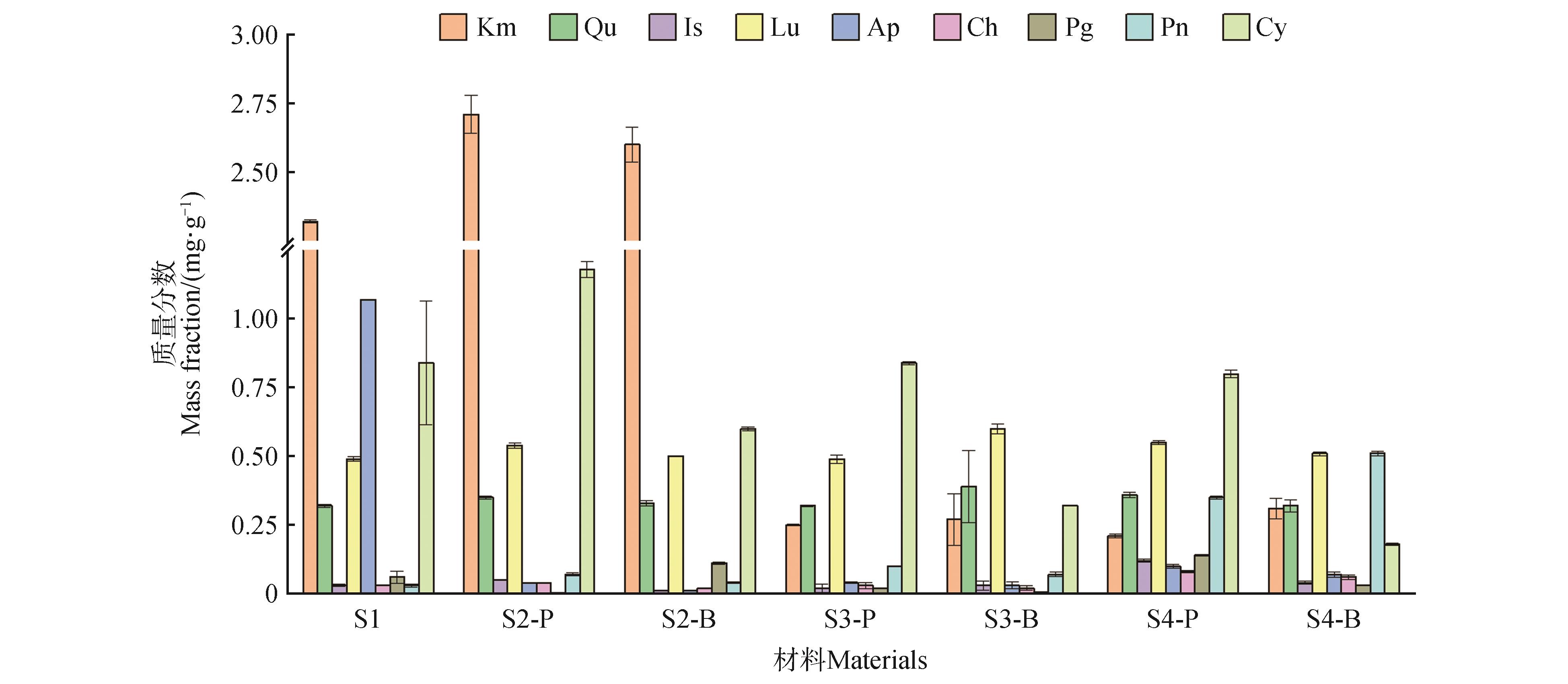
图3
PrGSTF12基因PCR扩增和cDNA序列及其编码氨基酸序列分析A. PrGSTF12 PCR扩增结果;M.DL2000 DNA 分子质量标准物,1~2.PrGSTF12 cDNA全长克隆PCR产物。B.PrGSTF12基因的cDNA序列及其编码的氨基酸序列。
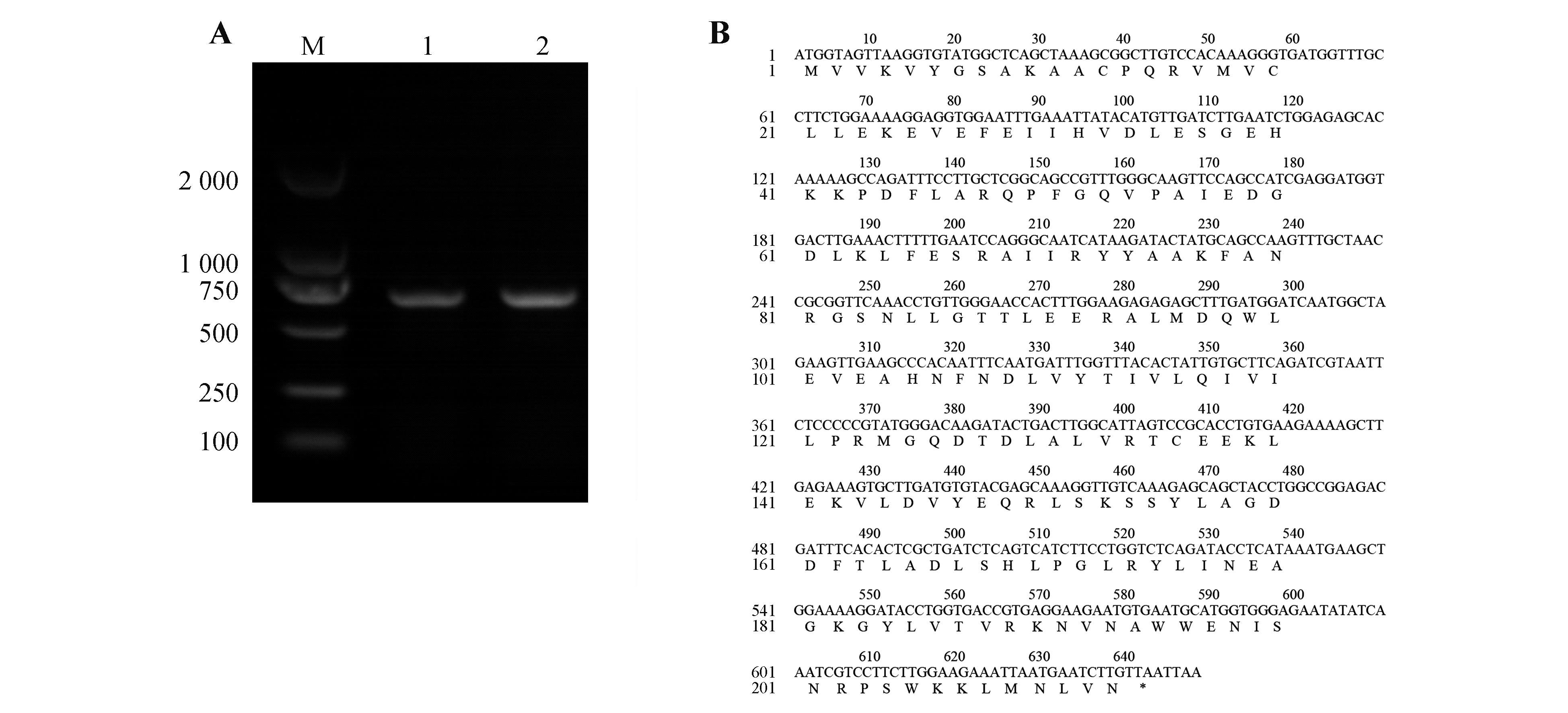
图4
GST蛋白的系统进化树
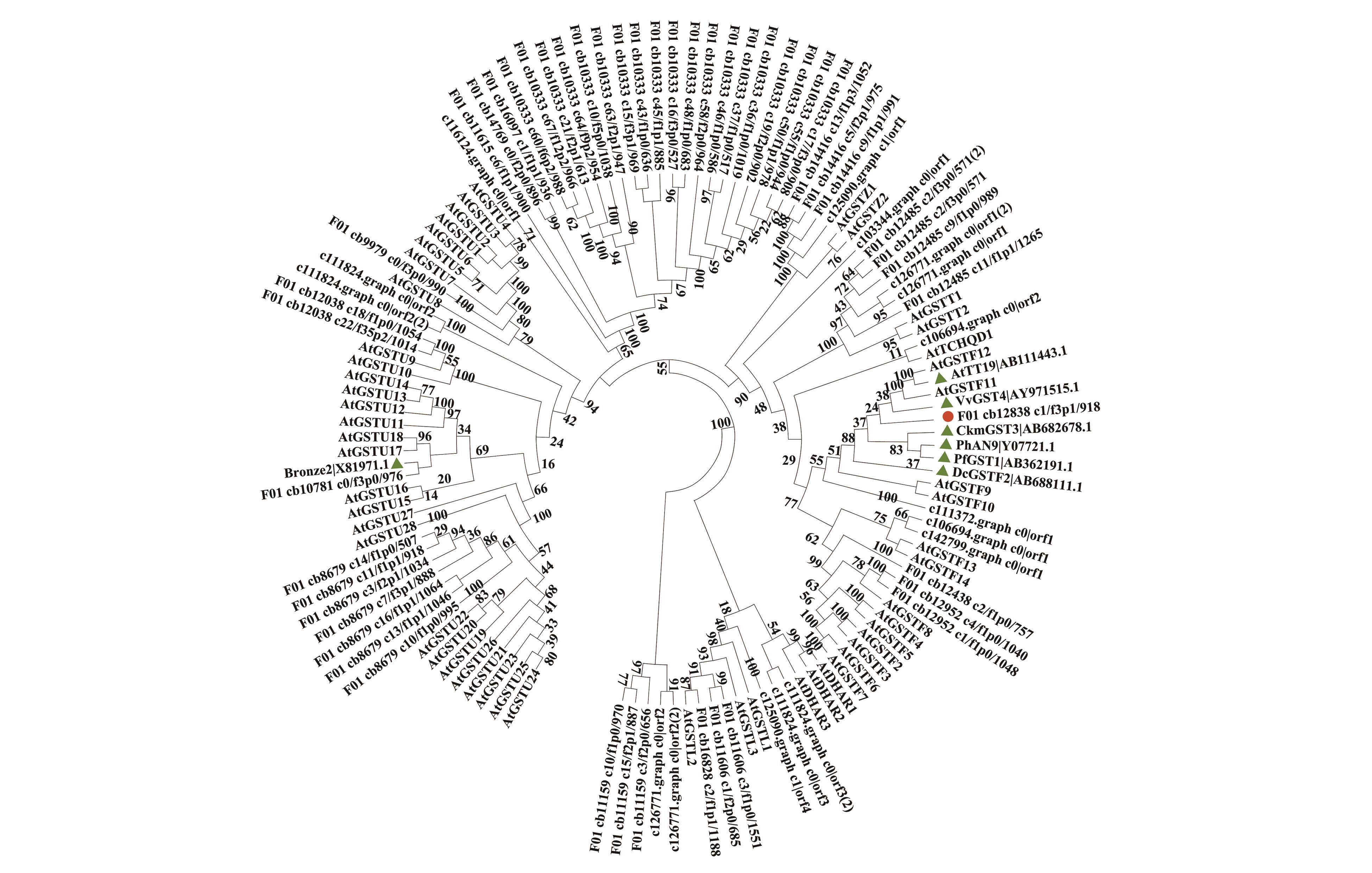
图5
不同植物GST基因序列对比
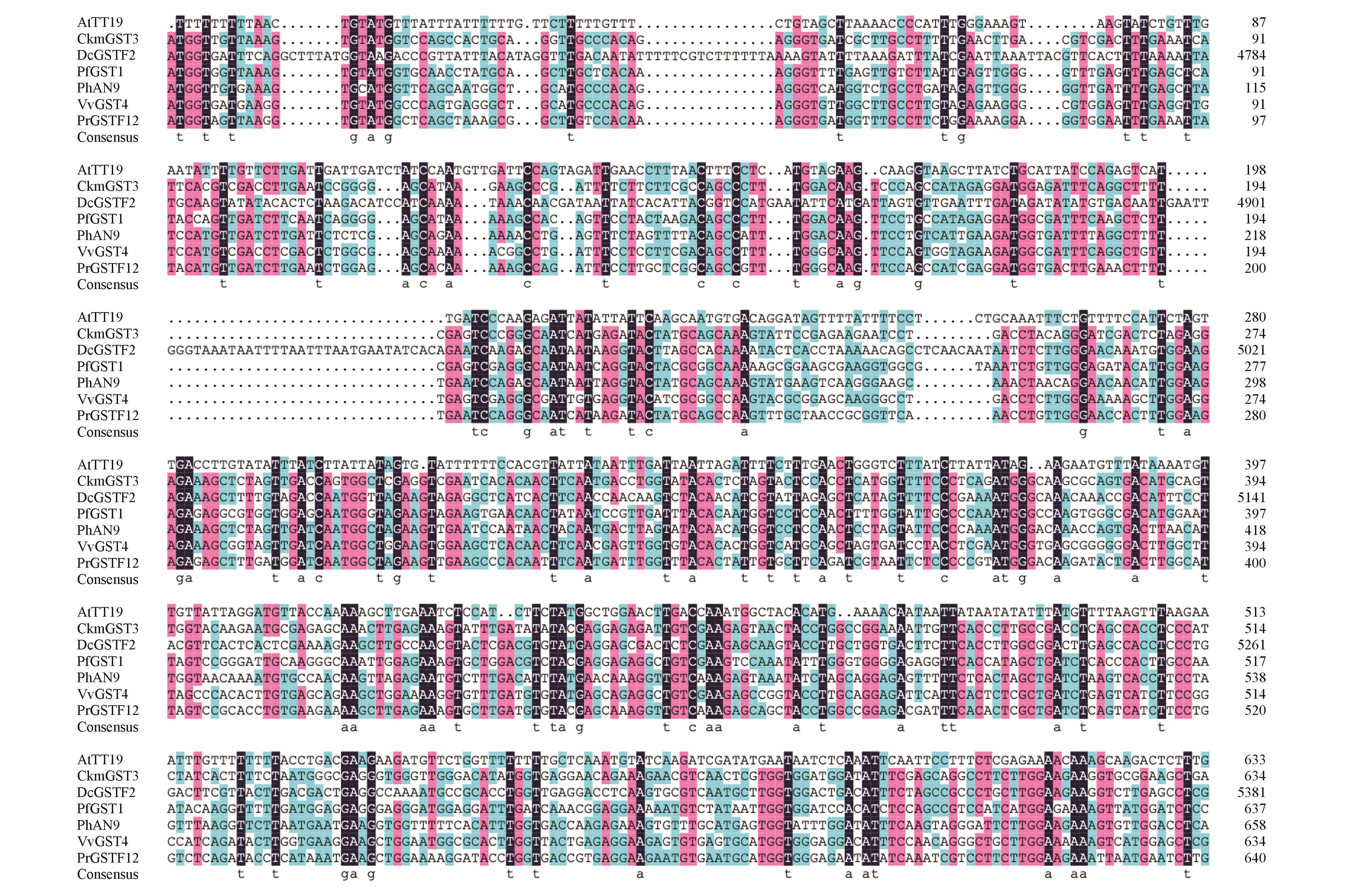
图6
PrGSTF12融合蛋白在烟草叶片中的亚细胞定位分析A.在烟草叶片表皮细胞中表达的空载pCAMBIA2300-GFP;B.在烟草叶片表皮细胞中表达的重组载体pCAMBIA2300-PrGSTF12-GFP。
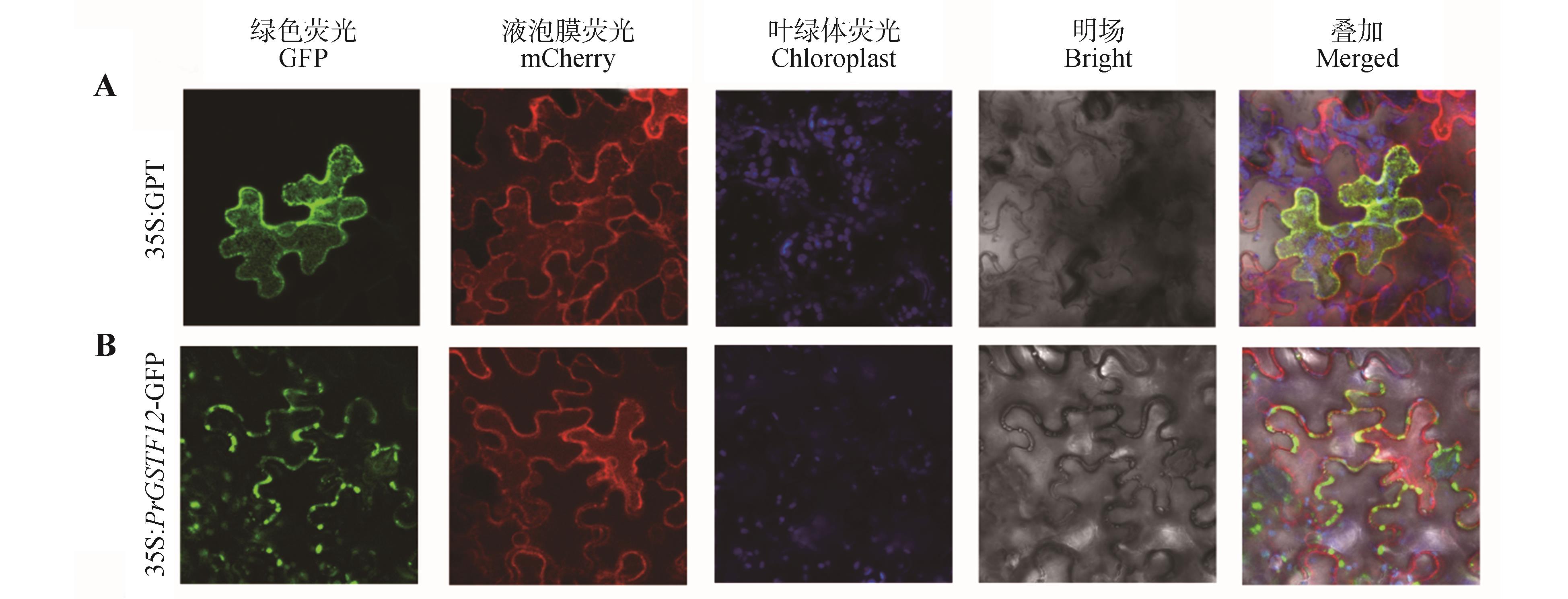
图7
紫斑牡丹PrGSTF12表达分析S1~S4代表4个时期;P代表花瓣无斑部位;B代表花瓣基部色斑部位。
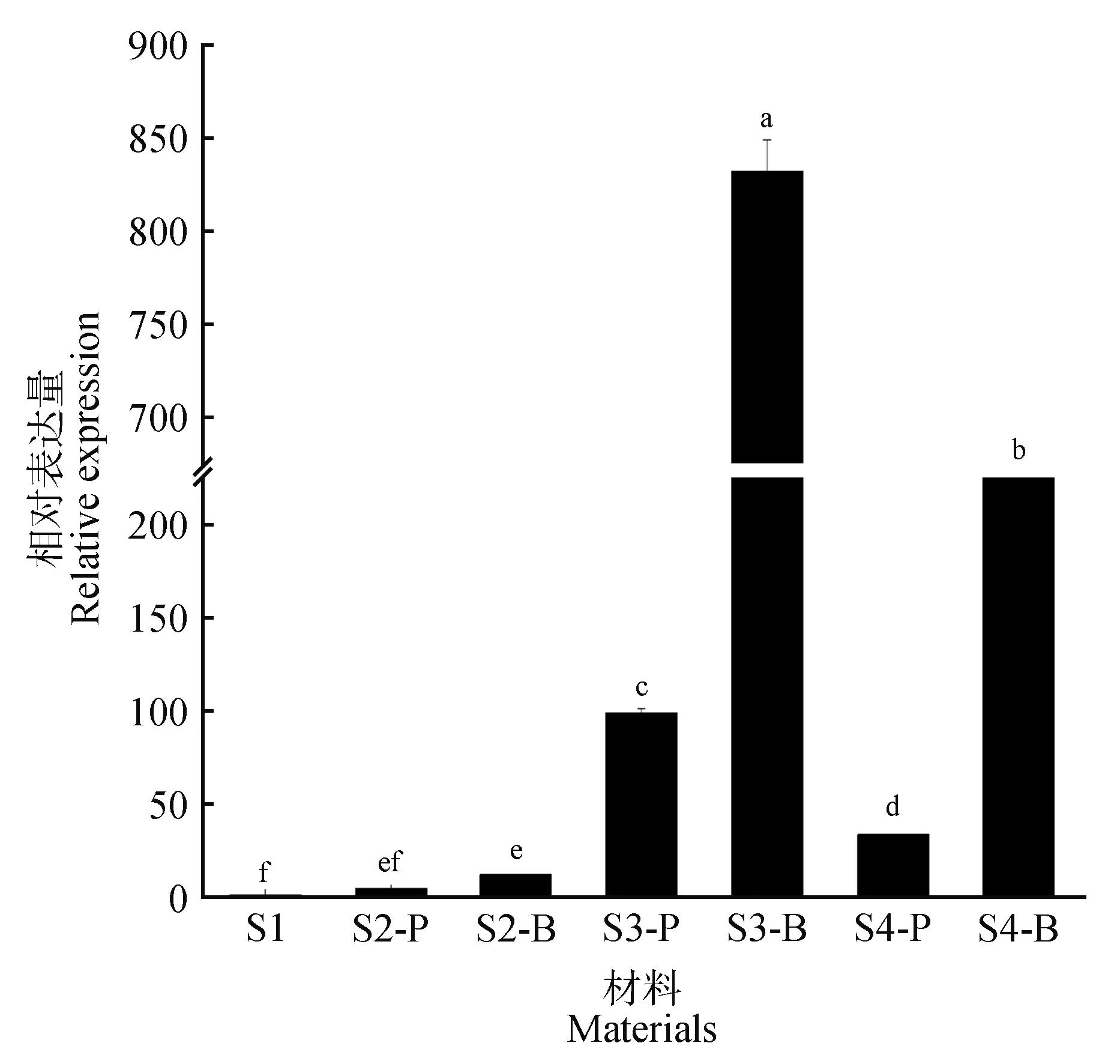
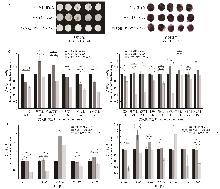
图8
PrGSTF12沉默对紫斑牡丹花瓣盘表型、花色素组分及关键基因表达的影响A.处理7 d后的花瓣盘表型,左:无斑部位,右:色斑部位;B.不同处理下无斑部位和色斑部位类黄酮成分及质量分数;C.不同处理下无斑部位和色斑部位花青苷合成通路关键基因相对表达量;柱状图上方符号表示不同处理组间的显著性差异,ns表示差异不显著,*、**、***和****分别表示P<0.05、P<0.01、P<0.001和P<0.0001。P.花瓣无斑部位,B.花瓣基部色斑部位。
| [1] | 袁梦.紫斑牡丹花瓣基部色斑形成过程中MYB转录因子对下游靶基因的调控作用研究[D].杨凌:西北农林科技大学,2021. |
| Yuan Meng.Regulation of downstream target genes by MYB transcription factors in the formation of spots at the base of Paeonia rockii [D].Yangling: Northwest A&F University,2021. | |
| [2] | 张想红,廖咏玲,杨杰峰.紫斑牡丹中PrPDAT基因克隆与表达分析[J].现代园艺,2024,47(19):1-5. |
| Zhang Xianghong, Liao Yongling, Yang Jiefeng.Cloning and expression analysis of PrPDAT gene in Paeonia rockii [J].Contemporary Horticulture,2024,47(19):1-5. | |
| [3] | Sasaki K, Takahashi T.A flavonoid from Brassica rapa flower as the UV-absorbing nectar guide[J].Phytochemistry,2002,61(3):339-343. |
| [4] | 陈晨,杨凯波,王奎萍,等.植物花色形成研究进展[J/OL].分子植物育种,2025-04-01.. |
| Chen Chen, Yang Kaibo, Wang Kuiping,et al.Research progress of flower color formation in plants[J/OL].Molecular Plant Breeding,2025-04-01.. | |
| [5] | 殷素雅,周洋丽,赵梦婧,等.换锦花类黄酮糖基转移酶基因LsUFGT1及其启动子克隆与表达[J].浙江农林大学学报,2025,42(4):714-724. |
| Yin Suya, Zhou Yangli, Zhao Mengjing,et al.Cloning and expression of the gene and promoter of LsUFGT1 from Lycoris sprengeri [J].Journal of Zhejiang A&F University,2025,42(4):714-724. | |
| [6] | 齐宇.MYB-bHLH-WD40对牡丹花青苷生物合成的转录调控机制[D].北京:中国林业科学研究院,2020. |
| Qi Yu.Mechanisms for transcriptional regulation of anthocyanin biosynthesis by MYB-bHLH-WD40 in Paeonia suffruticosa [D].Beijing:Chinese Academy of Forestry,2020. | |
| [7] | 申慧敏,史俐莎,田清尹,等.ABC转运蛋白在植物花器官生长发育中的研究进展[J].西北植物学报,2021,41(11):1975-1982. |
| Shen Huimin, Shi Lisha, Tian Qingyin,et al.Recent progress of ABC transporters in floral organ development of plants[J].Acta Botanica Boreali-Occidentalia Sinica,2021,41(11):1975-1982. | |
| [8] | 王璐,戴思兰,金雪花,等.植物花青素苷转运机制的研究进展[J].生物工程学报,2014,30(6):848-863. |
| Wang Lu, Dai Silan, Jin Xuehua,et al.Advances in plant anthocyanin transport mechanism[J].Chinese Journal of Biotechnology,2014,30(6):848-863. | |
| [9] | 张雪,陶磊,乔晟,等.谷胱甘肽转移酶在植物抵抗非生物胁迫方面的角色[J].中国生物工程杂志,2017,37(3):92-98. |
| Zhang Xue, Tao Lei, Qiao Sheng,et al.Roles of glutathione S-transferase in plant tolerance to abiotic stresses[J].China Biotechnology,2017,37(3):92-98. | |
| [10] | Dixon D P, Lapthorn A, Edwards R.Plant glutathione transferases[J].Genome Biology,2002,3(3):REVIEWS3004. |
| [11] | 韩璐璐.牡丹PsGSTF3基因参与花青苷转运的分子机制研究[D].北京:中国林业科学研究院,2022. |
| Han Lulu.The molecular mechanism of PsGSTF3 in anthocyanin transport in Paeonia suffruticosa [D].Beijing: Chinese Academy of Forestry,2022. | |
| [12] | Kitamura S, Shikazono N, Tanaka A.TRANSPARENT TESTA 19 is involved in the accumulation of both anthocyanins and proanthocyanidins in Arabidopsis [J].The Plant Journal,2004,37(1):104-114. |
| [13] | Mueller L A, Goodman C D, Silady R A,et al.AN9,a Petunia glutathione S-transferase required for anthocyanin sequestration,is a flavonoid-binding protein[J].Plant Physiology,2000,123(4):1561-1570. |
| [14] | 李想.紫斑牡丹斑色形成相关MYB基因克隆与功能分析[D].杨凌:西北农林科技大学,2019. |
| Li Xiang.Cloning and functional analysis of MYB genes in variegation formation of tree peony(Paeonia rockii)[D].Yangling:Northwest A & F University,2019. | |
| [15] | 李琴琴,董山榕,罗建让,等.卵叶牡丹PqDFR和PqANS及启动子克隆与功能分析[J].园艺学报,2024,51(6):1256-1272. |
| Li Qinqin, Dong Shanrong, Luo Jianrang,et al.Cloning and functional analysis of PqDFR and PqANS genes and its promoters from Paeonia qiui [J].Acta Horticulturae Sinica,2024,51(6):1256-1272. | |
| [16] | 罗小宁.牡丹黄色花形成的分子调控机制研究[D].杨凌:西北农林科技大学,2022. |
| Luo Xiaoning.Molecular regulation mechanism of yellow flower formation in tree peony[D].Yangling: Northwest A&F University,2022. | |
| [17] | Conn S, Curtin C, Bézier A,et al.Purification,molecular cloning,and characterization of glutathione S-transferases(GSTs) from pigmented Vitis vinifera L. cell suspension cultures as putative anthocyanin transport proteins[J].Journal of Experimental Botany,2008,59(13):3621-3634. |
| [18] | Sasaki N, Nishizaki Y, Uchida Y,et al.Identification of the glutathione S-transferase gene responsible for flower color intensity in carnations[J].Plant Biotechnology,2012,29(3):223-227. |
| [19] | Yamazaki M, Shibata M, Nishiyama Y,et al.Differential gene expression profiles of red and green forms of Perilla frutescens leading to comprehensive identification of anthocyanin biosynthetic genes[J].The FEBS Journal,2008,275(13):3494-3502. |
| [20] | Alfenito M R, Souer E, Goodman C D,et al.Functional complementation of anthocyanin sequestration in the vacuole by widely divergent glutathione S-transferases[J].The Plant Cell,1998,10(7):1135-1149. |
| [21] | Kitamura S, Akita Y, Ishizaka H,et al.Molecular characterization of an anthocyanin-related glutathione S-transferase gene in Cyclamen [J].Journal of Plant Physiology,2012,169(6):636-642. |
| [22] | Shi Q Q, Li L, Zhang X X,et al.Biochemical and comparative transcriptomic analyses identify candidate genes related to variegation formation in Paeonia rockii [J].Molecules,2017,22(8):1364. |
| [23] | Shi Q Q, Yuan M, Wang S,et al.PrMYB5 activates anthocyanin biosynthetic PrDFR to promote the distinct pigmentation pattern in the petal of Paeonia rockii [J].Frontiers in Plant Science,2022,13:955590. |
| [24] | 符真珠,袁欣,王二强,等.牡丹‘海黄’花瓣色斑呈色的转录及代谢机制解析[J].植物生理学报,2024,60(10):1524-1536. |
| Fu Zhenzhu, Yuan Xin, Wang Erqiang,et al.Transcriptional and metabolic analysis of the mechanism underlying colored blotches of tree peony‘High Noon’petals[J].Plant Physiology Journal,2024,60(10):1524-1536. | |
| [25] | 赵茜.三色堇花瓣色斑形成相关基因Vw3GT与VwMYBs功能解析[D].新乡:河南科技学院,2025. |
| Zhao Xi.Functional analysis of Vw3GT and VwMYBs genes related to the formation of pansy petals[D].Xinxiang:Henan Institute of Science and Technology,2025. | |
| [26] | 王凌蔚.萱草属植物花器官色斑形成的分子机制研究[D].太谷:山西农业大学,2023. |
| Wang Lingwei.Study on the molecular mechanism of color spot formation in flower organs of Hemerocallis spp.[D].Taigu:Shanxi Agricultural University,2023. | |
| [27] | 李海清,杜春,王娟,等.滇牡丹花瓣色斑形成的分子机制研究[J].广西植物,2025,45(4):628-640. |
| Li Haiqing, Du Chun, Wang Juan,et al.Molecular mechanism of the colour spot formation in Paeonia delavayi petals[J].Guihaia,2025,45(4):628-640. | |
| [28] | 赵云,郑蓓蓓,张若西,等.果实花色苷转运机制研究进展[J].植物科学学报,2023,41(6):781-788. |
| Zhao Yun, Zheng Beibei, Zhang Ruoxi,et al.Advances in mechanisms of anthocyanin transport in fruit[J].Plant Science Journal,2023,41(6):781-788. | |
| [29] | 商利娟,陈京菁,樊连梅,等.富士苹果果实中突触小泡蛋白基因(MdVAMP)的克隆及其表达[J].分子植物育种,2020,18(8):2475-2483. |
| Shang Lijuan, Chen Jingjing, Fan Lianmei,et al.Cloning and expression of synaptobrevin gene (MdVAMP) in the fruit of fuji apple(Malus domestica)[J].Molecular Plant Breeding,2020,18(8):2475-2483. | |
| [30] | Liu Y J, Jiang H, Zhao Y,et al.Three Camellia sinensis glutathione S-transferases are involved in the storage of anthocyanins,flavonols,and proanthocyanidins[J].Planta,2019,250(4):1163-1175. |
| [31] | 史倩倩,周琳,王雁.云南野生黄牡丹谷胱甘肽转移酶(GST)基因的分离及表达分析[J].林业科学,2014,50(12):63-72. |
| Shi Qianqian, Zhou Lin, Wang Yan.Isolation and expression analysis of GST gene encoding glutathione S-Transferase of Paeonia delavayi var.lutea wild population in Yunnan[J].Scientia Silvae Sinicae,2014,50(12):63-72. | |
| [32] | 刘栩,陈媛媛,蒙娟,等.‘美人’梅PmMGST81基因克隆及其对花青素积累的调控功能研究[J/OL].南京林业大学学报(自然科学版),2025-07-24.. |
| Liu Xu, Chen Yuanyuan, Meng Juan,et al.Cloning of the PmMGST81 and regulatory function study on anthocyanin accumulation in Prunus mume ‘Meiren’[J/OL].Journal of Nanjing Forestry University(Natural Sciences Edition),2025-07-24.. | |
| [33] | 王晨晨.红花草莓花瓣花青苷转运的关键FaGSTs筛选及功能验证[D].沈阳:沈阳农业大学,2024. |
| Wang Chenchen.Screening and functional verification of key FaGSTs for anthocyanin transport in petals of red-flowered strawberry[D].Shenyang: Shenyang Agricultural University,2024. | |
| [34] | Jiang S H, Chen M, He N B,et al.MdGSTF6,activated by MdMYB1,plays an essential role in anthocyanin accumulation in apple[J].Horticulture Research,2019,6:40. |
| [35] | Chai Q C, Wang X L, Gao M W,et al.A glutathione S-transferase GhTT19 determines flower petal pigmentation via regulating anthocyanin accumulation in cotton[J].Plant Biotechnology Journal,2023,21(2):433-448. |
| [36] | 樊文敏,邓淑琴,吴高清,等.茶树CsGST基因家族分析与功能验证[J/OL].分子植物育种,2025-07-15.. |
| Fan Wenmin, Deng Shuqin, Wu Gaoqing,et al.Analysis and functional validation of CsGST gene family in tea plant[J/OL].Molecular Plant Breeding,2025-07-15.. | |
| [37] | Zhao Y W, Wang C K, Huang X Y,et al.Genome-wide analysis of the glutathione S-transferase(GST) genes and functional identification of MdGSTU12 reveals the involvement in the regulation of anthocyanin accumulation in apple[J].Genes,2021,12(11):1733. |
| [38] | Zhao Y, Dong W Q, Zhu Y C,et al. PpGST1,an anthocyanin-related glutathione S-transferase gene,is essential for fruit coloration in peach[J].Plant Biotechnology Journal,2020,18(5):1284-1295. |
| [1] | 李文珺, 罗莎, 史倩倩. 紫斑牡丹色斑形成过程中表皮细胞变化及花青苷积累规律[J]. 植物研究, 2026, 46(4): 764-776. |
| [2] | 张力鹏, 武美, 王宏鹏, 李天宇. 大花红景天盐胁迫调控基因RcNAC22克隆及功能分析[J]. 植物研究, 2026, 46(2): 246-258. |
| [3] | 刘玉萍, 余明君, 张雨, 苏旭, 李小莉, 杨倩, 刘雪丽. 沙鞭PvAQP基因克隆及耐旱功能验证[J]. 植物研究, 2024, 44(6): 914-925. |
| [4] | 张昊楠, 陈珊珊, 徐建民, 罗萍, 王晓萍, 许志茹, 范春节. 巨桉EgrWAT1基因克隆和功能初步分析[J]. 植物研究, 2023, 43(4): 601-611. |
| [5] | 宋海云, 张涛, 贺鹏, 郑树芳, 王立丰, 王文林. 澳洲坚果MibZIP1基因克隆及表达规律分析[J]. 植物研究, 2023, 43(1): 131-139. |
| [6] | 杨宇宁, 董昊, 董实伟, 王乃锐, 宋跃, 张含国, 李淑娟. 长白落叶松转录因子LobHLH34克隆及表达分析[J]. 植物研究, 2022, 42(1): 112-120. |
| [7] | 谭秋锦, 张涛, 韦媛荣, 郑树芳, 汤秀华, 王文林. 澳洲坚果开花相关MiMADS-box基因克隆及表达载体构建[J]. 植物研究, 2021, 41(6): 888-895. |
| [8] | 纪欣童, 于磊, 詹亚光. 水曲柳BZR1基因克隆及其表达模式分析[J]. 植物研究, 2021, 41(5): 744-752. |
| [9] | 柯维忠, 钟雯娟, 刘凯盈, 李祥媛, 尹明华. 黄独微型块茎鲨烯合酶的基因克隆与序列分析[J]. 植物研究, 2021, 41(2): 243-250. |
| [10] | 王文林, 陈海生, 郑树芳, 樊松乐, 王立丰, 谭秋锦, 覃振师, 黄锡云, 贺鹏, 汤秀华, 许鹏. 澳洲坚果MiMYB2基因克隆及结构与功能分析[J]. 植物研究, 2020, 40(6): 913-922. |
| [11] | 董实伟, 杨宇宁, 王乃锐, 张含国, 李淑娟. 毛果杨固有无序蛋白质基因克隆及胁迫响应分析[J]. 植物研究, 2020, 40(4): 575-582. |
| [12] | 李新宇, 何利明, 詹亚光. 水曲柳FmWRKY44基因克隆及表达分析[J]. 植物研究, 2019, 39(4): 529-538. |
| [13] | 李文静, 冯雨, 侯晓强, 孙艳香, 韩美玲, 李晓雪, 王勇, 向蓓蓓. 川西獐牙菜SmSLS2基因的克隆、生物信息学及表达分析[J]. 植物研究, 2019, 39(3): 431-440. |
| [14] | 丁一巍, 詹亚光, 张佳薇, 何利明. 水曲柳2个PLT转录因子基因的克隆及表达分析[J]. 植物研究, 2019, 39(1): 139-147. |
| [15] | 徐莉, 成仿云, 钟原. 牡丹胚培养快速成苗技术研究[J]. 植物研究, 2017, 37(5): 690-699. |
| 阅读次数 | ||||||
|
全文 |
|
|||||
|
摘要 |
|
|||||