植物研究 ›› 2026, Vol. 46 ›› Issue (2): 310-323.doi: 10.7525/j.issn.1673-5102.2026.02.010
• 研究论文column:Original Paper • 上一篇 下一篇
张凯1, 杨晓东2, 米尔卡米力⋅麦麦提1, 张月娟1, 艾沙江⋅阿不都沙拉木1( )
)
收稿日期:2025-12-16
出版日期:2026-03-20
发布日期:2026-04-02
通讯作者:
艾沙江?阿不都沙拉木
E-mail:aysajanxj@sina.com
作者简介:张凯(1986—),男,博士,副教授,主要从事植物生态学、植物地理学研究。
基金资助:
Kai ZHANG1, Xiaodong YANG2, Mierkamili MAIMAITI1, Yuejuan ZHANG1, Aysajan ABDUSALAM1()
Received:2025-12-16
Online:2026-03-20
Published:2026-04-02
Contact:
Aysajan ABDUSALAM
E-mail:aysajanxj@sina.com
摘要:
短生植物是由干热植物区系衍生而来、生长在平坦荒漠地带的特殊类群,在我国主要分布于新疆北部地区,而新疆南部总体分布现状尚不清楚,且高山环境中是否存在短生植物当前未知。本研究通过实地调查并结合资料收集,分析新疆北部、南部(含中国境内的帕米尔高原)短生植物的种类组成、地理成分、生活型类型,探讨其起源与生活史策略分化。结果表明:(1)新疆南部短生植物共计18科,42属,51种;中国境内的帕米尔高原有短生植物16科,31属,36种,成为“微避难所”。(2)新疆短生植物寡种科、单种科、寡种属、单种属的比例高,十字花科(Brassicaceae)是优势类群。(3)新疆短生植物以温带成分为主,1年生和多年生生活型比例高,高山环境1年生植物比例上升,凸显了生态保守性对短生植物进化的约束作用。综上,新疆南北短生植物在科属组成、地理成分和生活型谱上高度趋同,中国境内的帕米尔高原是短生植物的“微避难所”,短生植物的生态保守性使其面临较大的进化压力。
中图分类号:
张凯, 杨晓东, 米尔卡米力⋅麦麦提, 张月娟, 艾沙江⋅阿不都沙拉木. 新疆短生植物区系和生活史策略分异[J]. 植物研究, 2026, 46(2): 310-323.
Kai ZHANG, Xiaodong YANG, Mierkamili MAIMAITI, Yuejuan ZHANG, Aysajan ABDUSALAM. Divergence in Floristics and Life-history Strategies of Ephemeral Plants in Xinjiang[J]. Bulletin of Botanical Research, 2026, 46(2): 310-323.
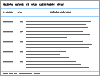
表1
新疆短生植物科属种名录
科 Families | 新疆北部 Northern Xinjiang | 新疆南部 Southern Xinjiang | 中国境内的帕米尔高原 Pamir Plateau within China | |||
|---|---|---|---|---|---|---|
| 属Genera | 种Species | 属Genera | 种Species | 属Genera | 种Species | |
十字花科 (Brassicaceae) | 离子芥属(Chorispora)、线果芥属(Iljinskaea)、四棱荠属(Goldbachia)、薄果荠属(Hornungia)、独行菜属(Lepidium)、涩芥属(Strigosella)、四齿芥属(Tetracme)、念珠芥属(Neotorularia)、紫罗兰属(Matthiola)、棒果芥属(Sterigmostemum)、爪花芥属(Oreoloma)、高河菜属(Megacarpaea)、绵果荠属(Lachnoloma)、鸟头荠属(Euclidium)、丝叶芥属(Leptaleum)、菘蓝属(Isatis)、条叶庭荠属(Meniocus)、庭荠属(Alyssum)、脱喙荠属(Litwinowia)、亚麻荠属(Camelina)、异果芥属(Diptychocarpus) | 离子芥(Chorispora tenella)、线果芥(Iljinskaea planisiliqua)、四棱荠(Goldbachia laevigata)、螺喙荠(Goldbachia sabulosa)、薄果荠(Hornungia procumbens)、抱茎独行菜(Lepidium perfoliatum)、卷果涩芥(Strigosella scorpioides)、涩芥(Strigosella africana)、四齿芥(Tetracme quadricornis)、弯角四齿芥(Tetracme recurvata)、念珠芥(Neotorularia torulosa)、中亚紫罗兰(Matthiola stoddartii)、棒果芥(Sterigmostemum caspicum)、黄花棒果芥(Sterigmostemum sulphfureum)、福海棒果芥(Oreoloma fuhaiense)、爪花芥(Oreoloma violaceum)、大果高河菜(Megacarpaea megalocarpa)、绵果荠(Lachnoloma lehmannii)、鸟头荠(Euclidium syriacum)、丝叶芥(Leptaleum filifolium)、小果菘蓝(Isatis minima)、宽翅菘蓝(Isatis violascens)、密花厚翅芥(Isatis densiflora)、厚壁荠(Isatis multicaulis)、舟果荠(Isatis gymnocarpa)、条叶庭荠(Meniocus linifolius)、粗果庭荠(Alyssum dasycarpum)、庭荠(Alyssum desertorum)、新疆庭荠(Alyssum simplex)、无齿萼果庭荠(Alyssum calycocarpum)、脱喙荠(Litwinowia tenuissima)、小果亚麻荠(Camelina microcarpa)、异果芥(Diptychocarpus strictus) | 离子芥属(Chorispora)、线果芥属(Iljinskaea)、四棱荠属(Goldbachia)、薄果荠属(Hornungia)、独行菜属(Lepidium)、涩芥属(Strigosella)、四齿芥属(Tetracme)、念珠芥属(Neotorularia)、紫罗兰属(Matthiola)、棒果芥属(Sterigmostemum) | 离子芥(Chorispora tenella)、线果芥(Iljinskaea planisiliqua)、四棱荠(Goldbachia laevigata)、薄果荠(Hornungia procumbens)、独行菜(Lepidium apetalum)、卷果涩芥(Strigosella scorpioides)、涩芥(Strigosella africana)、四齿芥(Tetracme quadricornis)、念珠芥(Neotorularia torulosa)、中亚紫罗兰(Matthiola stoddartii)、棒果芥(Sterigmostemum caspicum) | 离子芥属(Chorispora)、线果芥属(Iljinskaea)、四棱荠属(Goldbachia)、薄果荠属(Hornungia)、独行菜属(Lepidium)、涩芥属(Strigosella)、四齿芥属(Tetracme)、念珠芥属(Neotorularia) | 离子芥(Chorispora tenella)、线果芥(Iljinskaea planisiliqua)、四棱荠(Goldbachia laevigata)、薄果荠(Hornungia procumbens)、独行菜(Lepidium apetalum)、卷果涩芥(Strigosella scorpioides)、涩芥(Strigosella africana)、四齿芥(Tetracme quadricornis)、念珠芥(Neotorularia torulosa) |
紫草科 Boraginaceae | 假狼紫草属(Nonea)、鹤虱属(Lappula)、翅鹤虱属(Lepechiniella)、翅果草属(Rindera)、孪果鹤虱属(Rochelia)、假异果鹤虱属(Pseudoheterocaryum)、软紫草属(Arnebia)、天芥菜属(Heliotropium) | 假狼紫草(Nonea caspica)、卵果鹤虱(Lappula patula)、狭果鹤虱(Lappula patula)、两形果鹤虱(Lappula duplicicarpa)、石果鹤虱(Lappula spinocarpos)、隐果鹤虱(Lappula occultata)、双果鹤虱(Lappula diploloma)、沙生鹤虱(Lappula deserticola)、翅鹤虱(Lepechiniella lasiocarpa)、翅果草(Rindera tetraspis)、光果孪果鹤虱(Rochelia leiocarpa)、弯萼孪果鹤虱(Rochelia retorta)、长梗孪果鹤虱(Rochelia leiosperma)、异果鹤虱(Pseudoheterocaryum rigidum)、硬萼软紫草(Arnebia decumbens)、尖花天芥菜(Heliotropium acutiflorum) | 假狼紫草属(Nonea)、鹤虱属(Lappula)、翅鹤虱属(Lepechiniella) | 假狼紫草(Nonea caspica)、卵果鹤虱(Lappula patula)、狭果鹤虱(Lappula patula)、两形果鹤虱(Lappula duplicicarpa)、翅鹤虱(Lepechiniella lasiocarpa) | 假狼紫草属(Nonea)、鹤虱属(Lappula)、翅鹤虱属(Lepechiniella) | 假狼紫草(Nonea caspica)、卵果鹤虱(Lappula patula)、狭果鹤虱(Lappula patula)、两形果鹤虱(Lappula duplicicarpa)、翅鹤虱(Lepechiniella lasiocarpa) |
菊科 Asteraceae | 蝎尾菊属(Koelpinia)、鸦葱属(Takhtajaniantha)、毛鸦葱属(Gelasia)、白刺菊属(Schischkinia)、还阳参属(Crepis)、婆罗门参属(Tragopogon)、鼠毛菊属(Epilasia)、小疮菊属(Garhadiolus)、絮菊属(Filago)、异喙菊属(Heteracia) | 蝎尾菊(Koelpinia linearis)、细叶鸦葱(Takhtajaniantha pusilla)、绢毛鸦葱(Gelasia sericeolanata)、皱波球根鸦葱(Gelasia circumflexa)、白刺菊(Schischkinia albispina)、屋根草(Crepis tectorum)、中亚婆罗门参(Tragopogon kasachstanicus)、长茎婆罗门参(Tragopogon elongatus)、沙婆罗门参(Tragopogon sabulosus)、鼠毛菊(Epilasia hemilasia)、顶毛鼠毛菊(Epilasia acrolasia)、小疮菊(Garhadiolus papposus)、絮菊(Filago arvensis)、异喙菊(Heteracia szovitsii) | 蝎尾菊属(Koelpinia)、鸦葱属(Takhtajaniantha) | 蝎尾菊(Koelpinia linearis)、细叶鸦葱(Takhtajaniantha pusilla) | 蝎尾菊属(Koelpinia)、鸦葱属(Takhtajaniantha) | 蝎尾菊(Koelpinia linearis)、细叶鸦葱(Takhtajaniantha pusilla) |
豆科 Fabaceae | 黄芪属(Astragalus)、苜蓿属(Medicago)、胡卢巴属(Trigonella) | 丝茎黄芪(Astragalus filicaulis)、镰荚黄芪(Astragalus arpilobus)、弯喙黄芪(Astragalus campylorrhynchus)、巴卡利黄芪(Astragalus bakaliensis)、替代黄芪(Astragalus vicarius)、混合黄芪(Astragalus commixtus)、矮型黄芪(Astragalus stalinskyi)、胡麻黄芪(Astragalus sesamoides)、尖舌黄芪(Astragalus oxyglottis)、蒺藜黄芪(Astragalus tribuloides)、沙生黄芪(Astragalus ammophilus)、弯果胡卢巴(Medicago medicaginoides)、单花苜蓿(Medicago monantha)、直果苜蓿(Medicago orthoceras)、网脉胡卢巴(Trigonella stellata) | 黄芪属(Astragalus)、苜蓿属(Medicago) | 丝茎黄芪(Astragalus filicaulis)、弯果胡卢巴(Medicago medicaginoides) | 黄芪属(Astragalus)、苜蓿属(Medicago) | 丝茎黄芪(Astragalus filicaulis)、弯果胡卢巴(Medicago medicaginoides) |
伞形科 Apiaceae | 阿魏属(Ferula)、块茎芹属(Krasnovia)、栓翅芹属(Prangos)、双球芹属(Schrenkia)、针果芹属(Scandix) | 荒地阿魏(Ferula syreitschikowii)、阜康阿魏(Ferula fukanensis)、新疆阿魏(Ferula sinkiangensis)、大果阿魏(Ferula lehmannii)、托里阿魏(Ferula krylovii)、全裂叶阿魏(Ferula dissecta)、多伞阿魏(Ferula feruloides)、块茎芹(Krasnovia longiloba)、隐盘芹(Prangos cachroides)、双生隐盘芹(Prangos didyma)、大果栓翅芹(Prangos ledebourii)、双球芹(Schrenkia vaginata)、针果芹(Scandix stellata) | 阿魏属(Ferula) | 荒地阿魏(Ferula syreitschikowii)、阜康阿魏(Ferula fukanensis) | 阿魏属(Ferula) | 荒地阿魏(Ferula syreitschikowii)、阜康阿魏(Ferula fukanensis) |
罂粟科 Papaveraceae | 海罂粟属(Glaucium)、紫堇属(Corydalis)、疆罂粟属(Roemeria)、角茴香属(Hypecoum) | 天山海罂粟(Glaucium elegans)、海罂粟(Glaucium fimbrilligerum)、新疆元胡(Corydalis glaucescens)、长距元胡(Corydalis schanginii)、薯根延胡索(Corydalis ledebouriana)、红花疆罂粟(Roemeria refracta)、紫花疆罂粟(Roemeria hybrida)、黑环疆罂粟(Roemeria pavonina)、小花角茴香(Hypecoum pendulum var. pendulum) | 海罂粟属(Glaucium)、紫堇属(Corydalis) | 天山海罂粟(Glaucium elegans)、海罂粟(Glaucium fimbrilligerum)、新疆元胡(Corydalis glaucescens) | 海罂粟属(Glaucium) | 天山海罂粟(Glaucium elegans) |
大戟科 Euphorbiaceae | 大戟属(Euphorbia) | 土大戟(Euphorbia turczaninowii)、英德尔大戟(Euphorbia inderiensis)、中亚大戟(Euphorbia turkestanica)、小萝卜大戟(Euphorbia rapulum)、睫毛大戟(Euphorbia blepharophylla)、布赫塔尔大戟(Euphorbia buchtormensis) | 大戟属(Euphorbia) | 中亚大戟(Euphorbia turkestanica) | ||
车前科 Plantaginaceae | 婆婆纳属(Veronica)、车前属(Plantago) | 尖齿婆婆纳(Veronica arguteserrata)、弯果婆婆纳(Veronica campylopoda)、红叶婆婆纳(Veronica rubrifolia)、中间婆婆纳(Veronica intercedens)、丝茎婆婆纳(Veronica tenuissima)、心果婆婆纳(Veronica cardiocarpa)、小车前(Plantago minuta) | 婆婆纳属(Veronica)、车前属(Plantago) | 尖齿婆婆纳(Veronica argute-serrata)、弯果婆婆纳(Veronica campylopoda)、小车前(Plantago minuta) | 婆婆纳属(Veronica)、车前属(Plantago) | 尖齿婆婆纳(Veronica argute-serrata)、小车前(Plantago minuta) |
毛茛科 Ranunculaceae | 侧金盏花属(Adonis)、翠雀属(Delphinium)、银莲花属(Anemone)、毛茛属(Ranunculus) | 天山侧金盏花(Adonistianschanica)、小侧金盏花(Adonis scrobiculata subsp. scrobiculata)、凸脉飞燕草(Delphinium rugulosum)、双花银莲花(Anemone biflora var. gortschakowii)、角果毛茛(Ranunculus testiculatus)、多根毛茛(Ranunculus polyrhizos)、宽翅毛茛(Ranunculus platyspermus) | 侧金盏花属(Adonis)、翠雀属(Delphinium)、银莲花属(Anemone) | 天山侧金盏花(Adonis tianschanica)、凸脉飞燕草(Delphinium rugulosum)、双花银莲花(Anemone biflora var. gortschakowii) | 银莲花属(Anemone) | 双花银莲花(Anemone biflora var. gortschakowii) |
唇形科 Lamiaceae | 荆芥属(Nepeta)、水苏属(Stachys)、青兰属(Dracocephalum) | 刺尖荆芥(Nepeta pungens)、小花荆芥(Nepeta micrantha)、矮刺苏(Stachys ilicifolius)、扁柄草(Dracocephalum royleanum) | 荆芥属(Nepeta) | 刺尖荆芥(Nepeta pungens) | 荆芥属(Nepeta) | 刺尖荆芥(Nepeta pungens) |
苋科 Amaranthaceae | 滨藜属(Atriplex)、虫实属(Corispermum)、沙冰藜属(Bassia)、猪毛菜属(Salsola) | 犁苞滨藜(Atriplex dimorphostegia)、倒披针叶虫实(Corispermum lehmannianum)、绒藜(Bassia eriophora)、早熟猪毛菜(Salsola praecox) | 滨藜属(Atriplex)、虫实属(Corispermum) | 犁苞滨藜(Atriplex dimorphostegia)、倒披针叶虫实(Corispermum lehmannianum) | 滨藜属(Atriplex) | 犁苞滨藜(Atriplex dimorphostegia) |
牻牛儿苗科 Geraniaceae | 老鹳草属(Geranium)、牻牛儿苗属(Erodium) | 球根老鹳草(Geranium linearilobum)、尖喙牻牛儿苗(Erodium oxyrhinchum)、长喙牻牛儿苗(Erodium hoefftianum) | ||||
茄科 Solanaceae | 脬囊草属(Physochlaina)、天仙子属(Hyoscyamus) | 脬囊草(Physochlaina physaloides)、中亚天仙子(Hyoscyamus pusillus) | 脬囊草属(Physochlaina)、天仙子属(Hyoscyamus) | 脬囊草(Physochlaina physaloides)、中亚天仙子(Hyoscyamus pusillus) | 天仙子属(Hyoscyamus) | 中亚天仙子(Hyoscyamus pusillus) |
石竹科 Caryophyllaceae | 卷耳属(Cerastium)、山漆姑属(Sabulina)、硬骨草属(Holosteum) | 镰刀叶卷耳(Cerastium falcatum)、短瓣山漆姑(Sabulina regeliana)、硬骨草(Holosteum umbellatum) | 卷耳属(Cerastium) | 镰刀叶卷耳(Cerastium falcatum) | 卷耳属(Cerastium) | 镰刀叶卷耳(Cerastium falcatum) |
小檗科 Berberidaceae | 牡丹草属(Gymnospermium)、囊果草属(Leontice) | 阿尔泰牡丹草(Gymnospermium altaicum)、囊果草(Leontice incerta) | ||||
蓼科 Polygonaceae | 酸模属(Rumex)、大黄属(Rheum) | 酸模(Rumex acetosa)、圆叶大黄(Rheum tataricum) | 大黄属(Rheum) | 圆叶大黄(Rheum tataricum) | 大黄属(Rheum) | 圆叶大黄(Rheum tataricum) |
蒺藜科 Zygophyllaceae | 驼蹄瓣属(Zygophyllum) | 速生霸王(Zygophyllum lehmannianum) | ||||
堇菜科 Violaceae | 堇菜属(Viola) | 隐距堇菜(Viola occulta) | ||||
报春花科 Primulaceae | 点地梅属(Androsace) | 大苞点地梅(Androsace maxima) | 点地梅属(Androsace) | 大苞点地梅(Androsace maxima) | 点地梅属(Androsace) | 大苞点地梅(Androsace maxima) |
忍冬科 Caprifoliaceae | 缬草属(Valeriana)、星首花属(Lomelosia) | 块茎缬草(Valeriana chionophila)、小花星首花(Lomelosia olivieri) | ||||
阿福花科 Asphodelaceae | 独尾草属(Eremurus) | 粗柄独尾草(Eremurus inderiensis)、异翅独尾草(Eremurus anisopterus) | ||||
百合科 Liliaceae | 贝母属(Fritillaria)、顶冰花属(Gagea)、郁金香属(Tulipa)、猪牙花属(Erythronium) | 新疆贝母(Fritillaria walujewii)、伊贝母(Fritillaria pallidiflora)、额敏贝母(Fritillaria meleagroides)、托星贝母(Fritillaria tortifolia)、黄花贝母(Fritillaria verticillata)、砂贝母(Fritillaria karelinii)、多球顶冰花(Gagea kunawurensis)、毛梗顶冰花(Gagea albertii)、林生顶冰花(Gagea filiformis)、钝瓣顶冰花(Gagea fragifera)、叉梗顶冰花(Gagea divaricata)、镰叶顶冰花(Gagea fedtschenkoana)、腋球顶冰花(Gagea bulbifera)、草原顶冰花(Gagea stepposa)、细弱顶冰花(Gagea tenera)、毛蕊郁金香(Tulipa dasystemon)、异瓣郁金香(Tulipa heteropetala)、伊犁郁金香(Tulipa iliensis)、准噶尔郁金香(Tulipa suaveolens)、迟花郁金香(Tulipa kolpakowskiana)、阿尔泰郁金香(Tulipa altaica)、新疆郁金香(Tulipa sinkiangensis)、单花郁金香(Tulipa uniflora)、垂蕾郁金香(Tulipa patens)、柔毛郁金香(Tulipa biflora)、新疆猪牙花(Erythronium sibiricum) | 贝母属(Fritillaria)、顶冰花属(Gagea)、郁金香属(Tulipa) | 新疆贝母(Fritillaria walujewii)、多球顶冰花(Gagea kunawurensis)、毛梗顶冰花(Gagea albertii)、毛蕊郁金香(Tulipa dasystemon)、异瓣郁金香(Tulipa heteropetala) | 贝母属(Fritillaria)、顶冰花属(Gagea)、郁金香属(Tulipa) | 新疆贝母(Fritillaria walujewii)、多球顶冰花(Gagea kunawurensis)、毛蕊郁金香(Tulipa dasystemon) |
石蒜科 Amaryllidaceae | 葱属(Allium) | 丝叶韭(Allium setifolium)、多籽蒜(Allium fetisowii)、星花蒜(Allium decipiens) | 葱属(Allium) | 丝叶韭(Allium setifolium) | ||
禾本科 Poaceae | 旱麦草属(Eremopyrum)、雀麦属(Bromus)、山羊草属(Aegilops)、齿稃草属(Schismus)、早熟禾属(Poa) | 旱麦草(Eremopyrum triticeum)、东方旱麦草(Eremopyrum orientale)、毛穗旱麦草(Eremopyrum distans)、光穗旱麦草(Eremopyrum bonaepartis)、旱雀麦(Bromus tectorum)、偏穗雀麦(Bromus squarrosus)、节节麦(Aegilops tauschii)、齿稃草(Schismus arabicus)、阿尔泰旱禾(Poa diaphora)、鳞茎早熟禾(Poa bulbosa) | 旱麦草属(Eremopyrum)、雀麦属(Bromus)、山羊草属(Aegilops)、齿稃草属(Schismus) | 旱麦草(Eremopyrum triticeum)、旱雀麦(Bromus tectorum)、偏穗雀麦(Bromus squarrosus)、节节麦(Aegilops tauschii)、齿稃草(Schismus arabicus) | 旱麦草属(Eremopyrum)、雀麦属(Bromus) | 旱麦草(Eremopyrum triticeum)、旱雀麦(Bromus tectorum)、偏穗雀麦(Bromus squarrosus) |
莎草科 Cyperaceae | 薹草属(Carex) | 囊果薹草(Carex physodes)、粗柱苔草(Carex pachystylis) | ||||
鸢尾科 Iridaceae | 番红花属(Crocus)、鸢尾属(Iris) | 白番红花(Crocus alatavicus)、细叶鸢尾(Iris tenuifolia) | ||||
鸢尾蒜科 Ixioliriaceae | 鸢尾蒜属(Ixiolirion) | 鸢尾蒜(Ixiolirion tataricum)、假管鸢尾蒜(Ixiolirion ixiolirioides) | ||||
表2
新疆短生植物科的等级统计
科的大小 Size of families | 新疆北部 Northern Xinjiang | 新疆南部 Southern Xinjiang | 中国境内的帕米尔高原 Pamir Plateau within China | |||||||||||||||
|---|---|---|---|---|---|---|---|---|---|---|---|---|---|---|---|---|---|---|
科数 No. of families | 科的比例 Proportion of families/% | 所含属数 No. of genera | 属的比例 Proportion of genera/% | 所含种数 No. of species | 种的比例 Proportion of species/% | 科数 No. of families | 科的比例 Proportion of families/% | 所含属数 No. of genera | 属的比例Proportion of genera/% | 所含种数 No. of species | 种的比例 Proportion of species/% | 科数 No. of families | 科的比例 Proportion of families/% | 所含属数 No. of genera | 属的比例 Proportion of genera/% | 所含种数 No. of species | 种的比例 Proportion of species/% | |
单种科 Monospecific families (1) | 3 | 11.1 | 3 | 3.1 | 3 | 1.6 | 6 | 33.3 | 6 | 14.3 | 6 | 11.8 | 8 | 50 | 8 | 25.8 | 8 | 22.2 |
寡种科 Oligospecific families (2~9) | 17 | 63.0 | 37 | 38.5 | 62 | 32.3 | 11 | 61.1 | 26 | 61.9 | 34 | 66.6 | 8 | 50 | 23 | 74.2 | 28 | 77.8 |
中等科 Medium-sized families (10~19) | 5 | 18.5 | 31 | 32.3 | 68 | 35.4 | 1 | 5.6 | 10 | 23.8 | 11 | 21.6 | ||||||
较大科 Moderately large families (20~29) | 1 | 3.7 | 4 | 4.2 | 26 | 13.5 | ||||||||||||
大科 Large families (≥30) | 1 | 3.7 | 21 | 21.9 | 33 | 17.2 | ||||||||||||
表3
新疆短生植物属的等级统计
属的大小 Size of genera | 新疆北部 Northern Xinjiang | 新疆南部 Southern Xinjiang | 中国境内的帕米尔高原 Pamir Plateau within China | |||||||||
|---|---|---|---|---|---|---|---|---|---|---|---|---|
属数 No. of genera | 属的比例 Proportion of genera/% | 所含种数 No. of species | 种的比例 Proportion of species/% | 属数 No. of genera | 属的比例 Proportion of genera/% | 所含种数 No. of species | 种的比例 Proportion of species/% | 属数 No. of genera | 属的比例 Proportion of genera/% | 所含种数 No. of species | 种的比例 Proportion of species/% | |
单种属 Monotypic genus(1) | 61 | 63.5 | 61 | 31.8 | 34 | 81.0 | 34 | 66.7 | 27 | 87.1 | 27 | 75.0 |
寡种属 Oligotypic genera(2~5) | 27 | 28.1 | 69 | 35.9 | 8 | 19.0 | 17 | 33.3 | 4 | 12.9 | 9 | 25.0 |
中等属 Medium-sized genera(6~9) | 6 | 6.3 | 41 | 21.4 | ||||||||
多种属 Polytypic genera(≥10) | 2 | 2.1 | 21 | 10.9 | ||||||||
表4
新疆短生植物分布区类型统计
分布区类型 Areal-types | 新疆北部 Northern Xinjiang | 新疆南部 Southern Xinjiang | 中国境内的帕米尔高原 Pamir Plateau within China | |||||||||
|---|---|---|---|---|---|---|---|---|---|---|---|---|
属数 No. of genera | 属的比例 Proportion of genera/% | 所含种数 No. of species | 种的比例 Proportion of species/% | 属数 No. of genera | 属的比例 Proportion of genera/% | 所含种数 No. of species | 种的比例 Proportion of species/% | 属数 No. of genera | 属的比例 Proportion of genera/% | 所含种数 No. of species | 种的比例 Proportion of species/% | |
| 1世界分布或广布 (Cosmopolitan or wide spread) | 12 | 12.5 | 26 | 13.5 | 4 | 9.5 | 4 | 7.8 | 4 | 12.9 | 4 | 11.1 |
| 2泛热带分布 (Pantropic) | 2 | 2.1 | 7 | 3.6 | 1 | 2.4 | 1 | 2.0 | ||||
| 8北温带分布 (North Temperate) | 15 | 15.6 | 38 | 19.8 | 10 | 23.8 | 13 | 25.5 | 6 | 19.4 | 7 | 19.4 |
8-4北温带和南温带间断(泛温带) [North Temperate and South Temperate Disjuncted (“Pan-Temperate”)] | 4 | 4.2 | 10 | 5.2 | 3 | 7.1 | 5 | 9.8 | 3 | 9.7 | 5 | 13.9 |
| 10旧世界温带分布 (Old World Temperate) | 15 | 15.6 | 28 | 14.6 | 6 | 14.3 | 6 | 11.8 | 4 | 12.9 | 4 | 11.1 |
10-1地中海、西亚(或中亚)和东亚间断 [Mediterranean,West Asia (or Central Asia) and East Asia Disjuncted] | 1 | 1.0 | 1 | 0.5 | ||||||||
| 10-2地中海和喜马拉雅间断 (Mediterranean and Himalayan Disjuncted) | 3 | 3.1 | 3 | 1.6 | 1 | 2.4 | 1 | 2.0 | 1 | 3.2 | 1 | 2.8 |
10-3欧亚和南部非洲(有时还有大洋洲)间断 [Eurasia and Southern Africa (some-times also Australasia) Disjuncted] | 2 | 2.1 | 4 | 2.1 | 1 | 2.4 | 1 | 2.0 | 1 | 3.2 | 1 | 2.8 |
| 11温带亚洲分布 (Temperate Asia) | 1 | 1.0 | 1 | 0.5 | 1 | 2.4 | 1 | 2.0 | ||||
| 12地中海、西至中亚分布 (Mediterranean, West Asia to Central Asia) | 24 | 25.2 | 47 | 24.6 | 10 | 23.8 | 14 | 27.3 | 8 | 25.8 | 10 | 27.8 |
12-1地中海至中亚和南部非洲,大洋洲间断 (Mediterranean to Central Asia and Southern Africa, Australasia Disjuncted) | 2 | 2.1 | 4 | 2.1 | ||||||||
12-3地中海至温带-热带亚洲,大洋洲和南美洲间断 (Mediterranean to Temperate-Tropical Asia, Australasia and South America Disjuncted) | 1 | 1.0 | 2 | 1.0 | ||||||||
12-5地中海至北非、中亚、北美洲西南、南部非洲、智利和大洋洲间断(泛地中海) [Mediterranean to North Africa, Central Asia, Southwestern North America, Southern Africa, Chile and Australasia Disjuncted (“Pan-Mediterranean”)] | 1 | 1.0 | 1 | 0.5 | 1 | 2.4 | 1 | 2.0 | 1 | 3.2 | 1 | 2.8 |
| 13中亚分布 (Central Asia) | 11 | 11.5 | 17 | 8.9 | 4 | 9.5 | 4 | 7.8 | 3 | 9.7 | 3 | 8.3 |
| 13-1中亚东部(或中部亚洲) [Eastern Central Asia(or Asia Media)] | 1 | 1.0 | 2 | 1.0 | ||||||||
| 13-2中亚至喜马拉雅和华西南 (Central Asia to Himalayan and Southwestern China) | 1 | 1.0 | 1 | 0.5 | ||||||||
表5
新疆短生植物生活型统计
生活型 Life form | 新疆北部 Northern Xinjiang | 新疆南部 Southern Xinjiang | 中国境内的帕米尔高原 Pamir Plateau within China | |||
|---|---|---|---|---|---|---|
种数 No. of species | 占比 Proportion/% | 种数 No. of species | 占比 Proportion/% | 种数 No. of species | 占比 Proportion/% | |
| 1年生草本Annual herb | 98 | 51.1 | 32 | 62.7 | 23 | 63.8 |
| 1年或2年生草本Annual or biennial herb | 3 | 1.6 | 2 | 3.9 | 2 | 5.6 |
| 1年生或多年生草本Annual or perennial herb | 2 | 1.0 | 1 | 2.0 | 1 | 2.8 |
| 2年生草本Biennial herb | 1 | 0.5 | ||||
| 2年生或多年生草本Biennial or perennial herb | 1 | 0.5 | 1 | 2.0 | 1 | 2.8 |
| 多年生草本Perennial herb | 87 | 45.3 | 15 | 29.4 | 9 | 25.0 |
| [1] | FRIEDMAN J.The evolution of annual and perennial plant life histories:ecological correlates and genetic mechanisms[J].Annual Review of Ecology,Evolution,and Systematics,2020,51(1):461-481. |
| [2] | BARRETT S C H, HUSBAND B C.Ecology and genetics of ephemeral plant populations:Eichhornia paniculata (Pontederiaceae) in northeast Brazil[J].Journal of Heredity,1997,88(4):277-284. |
| [3] | MULROY T W, RUNDEL P W.Annual plants:adaptations to desert environments[J].Bioscience,1977,27(2):109-114. |
| [4] | BROUWER E, BACKX H, ROELOFS J G M.Nutrient requirements of ephemeral plant species from wet,mesotrophic soils[J].Journal of Vegetation Science,2001,12(3):319-326. |
| [5] | LAPOINTE L.How phenology influences physiology in deciduous forest spring ephemerals[J].Physiologia Plantarum,2001,113(2):151-157. |
| [6] | 艾沙江·阿不都沙拉木,帕太木·依明,卡迪尔·阿布都热西提,等.塔克拉玛干沙漠西南部的短命植物及其新记录种[J].干旱区研究,2019,36(4):886-892. |
| ABDUSALAM A, YIMING P, ABDURIXIT K,et al.Ephemeral plants and their newly recorded species in the southwest Taklimakan Desert[J].Arid Zone Research,2019,36(4):886-892. | |
| [7] | 李学禹,马淼,崔大方,等.新疆植物物种多样性的特点分析[J].石河子大学学报(自然科学版),1998,2(4):289-303. |
| LI X Y, MA M, CUI D F,et al.Analyses on the characteristics of botanical species diversity in Xinjiang[J].Journal of Shihezi University(Natural Science),1998,2(4):289-303. | |
| [8] | MCKENNA M F, HOULE G.Why are annual plants rarely spring ephemerals?[J].New Phytologist,2000,148(2):295-302. |
| [9] | 袁素芬,唐海萍.新疆准噶尔荒漠短命植物群落特征及其水热适应性[J].生物多样性,2010,18(4):346-354. |
| YUAN S F, TANG H P.Patterns of ephemeral plant communities and their adaptations to temperature and precipitation regimes in Dzungaria Desert,Xinjiang[J].Biodiversity Science,2010,18(4):346-354. | |
| [10] | 吴征镒.论中国植物区系的分区问题[J].云南植物研究,1979,1(1):1-22. |
| WU Z Y.On the floristic regionalization of China[J].Acta Botanica Yunnanica,1979,1(1):1-22. | |
| [11] | 陈昌笃,张立运,胡文康.古尔班通古特沙漠的沙地植物群落、区系及其分布的基本特征[J].植物生态学报,1983,7(2):89-99. |
| CHEN C D, ZHANG L Y, HU W K.The basic characteristics of plant communities,flora and their distribution in the sandy district of Gurbantungut[J].Chinese Journal of Plant Ecology,1983,7(2):89-99. | |
| [12] | 毛祖美,张佃民.新疆北部早春短命植物区系纲要[J].干旱区研究,1994,11(3):1-26. |
| MAO Z M, ZHANG D M.The conspectus of ephemeral flora in northern Xinjiang[J].Arid Zone Research,1994,11(3):1-26. | |
| [13] | 王烨.新疆早春短命及类短命植物的物候观测[J].干旱区研究,1993,10(3):34-39. |
| WANG Y.Phenological observation of the early spring ephemeral and ephemeroid plant in Xinjiang[J].Arid Zone Research,1993,10(3):34-39. | |
| [14] | 陈灵芝,孙航,郭柯.中国植物区系与植被地理[M].北京:科学出版社,2015. |
| CHEN L Z, SUN H, GUO K.Plant geography and vegetation zonation in China[M].Beijing:Science Press,2015. | |
| [15] | GUTTERMAN Y.Survival strategies of annual desert plants[M].Berlin-Heidelberg:Springer Berlin,Heidelberg,2002. |
| [16] | WANG T T, LIU B Y, ZHANG X,et al.Variations in root architecture traits and their association with organ mass fraction of common annual ephemeral species in the desert of northern Xinjiang[J].Ecology and Evolution,2024,14(2):e10908. |
| [17] | 潘晓玲,党荣理,伍光和.西北干旱荒漠区植物区系地理与资源利用[M].北京:科学出版社,2001. |
| PAN X L, DANG R L, WU G H.Floristic geography and resource utilization in the arid desert regions of northwest China[M].Beijing:Science Press,2001. | |
| [18] | Institute of Botany,Chinese Academy of Science.Flora of China[DB/OL].(2025-05-22)[2025-11-08].. |
| [19] | 新疆植物志编辑委员会.新疆植物志[M].乌鲁木齐:新疆科技卫生出版社,1992. |
| Xinjiang Flora Editorial Committee.Flora Xinjiangensis[M].Urumqi:Xinjiang Science,Technology & Health Publishing House,1992. | |
| [20] | 吴征镒,孙航,周浙昆,等.中国种子植物区系地理[M].北京:科学出版社,2011. |
| WU Z Y, SUN H, ZHOU Z K,et al.Floristics of seed plants from China[M].Beijing:Science Press,2011. | |
| [21] | 李德铢.中国维管植物科属志[M].北京:科学出版社,2020 . |
| LI D Z.The families and genera of Chinese vascular plants[M].Beijing:Science Press,2020. | |
| [22] | Royal Botanic Gardens.Plants of the world online[DB/OL].(2017-3-1)[2025-11-8].. |
| [23] | MARTY J T.Effects of cattle grazing on diversity in ephemeral wetlands[J].Conservation Biology,2005,19(5):1626-1632. |
| [24] | LOGOFET D O, KAZANTSEVA E S, BELOVA I N,et al.How long does a short-lived perennial live? A modeling approach[J].Biology Bulletin Reviews,2017,8(5):406-420. |
| [25] | GUO R R, BASKIN C C, BASKIN J M,et al.Semiannual dormancy cycling results in two seedling cohorts of annual species in the cold desert of central Asia[J].Journal of Ecology,2025,113(3):727-741. |
| [26] | WENT F W.Ecology of desert plants.II.The effect of rain and temperature on germination and growth[J].Ecology,1949,30(1):1-13. |
| [27] | MOTT J J.Germination studies on some annual species from an arid region of western Australia[J].Journal of Ecology,1972,60(2):293-304. |
| [28] | SMITH J G, SCONIERS W, SPASOJEVIC M J,et al.Phenological changes in alpine plants in response to increased snowpack,temperature,and nitrogen[J].Arctic,Antarctic,and Alpine Research,2012,44(1):135-142. |
| [29] | QIU H Y, YAN Q, YANG Y C,et al.Flowering in the Northern Hemisphere is delayed by frost after leaf-out[J].Nature Communications,2024,15(1):9123. |
| [30] | AUGSPURGER C K, SALK C F.Constraints of cold and shade on the phenology of spring ephemeral herb species[J].Journal of Ecology,2017,105(1):246-254. |
| [31] | RISSER P G, COTTAM G.Carbohydrate cycles in the bulbs of some spring ephemerals[J].Bulletin of the Torrey Botanical Club,1968,95(4):359-369. |
| [32] | 张立运.新疆天然草场上的短命和类短命植物及其饲用评价[J].中国草原,1983,2(1):28-32. |
| ZHANG L Y.Ephemeral and ephemeroid plants in the natural grasslands of Xinjiang and their forage evaluation[J].Chinese Grassland,1983,2(1):28-32. | |
| [33] | WANG C C, ZHU S S, JIANG X L,et al.Spatio-temporal variation of species richness and phylogenetic diversity patterns for spring ephemeral plants in northern China[J].Global Ecology and Conservation,2023,48(1):e02752. |
| [34] | 毛祖美.早春短命植物区系特点[J].干旱区研究,1992,9(1):11-12. |
| MAO Z M.Floristic characteristics of early-spring ephemeral plants[J].Arid Zone Research,1992,9(1):11-12. | |
| [35] | 刘晓风,谭敦炎.24种十字花科短命植物的扩散体特征与扩散对策[J].植物生态学报,2007,31(6):1019-1027. |
| LIU X F, TAN D Y.Diaspore characteristics and dispersal strategies of 24 ephemeral species of brassicaceae in the Junggar Desert of China[J].Chinese Journal of Plant Ecology,2007,31(6):1019-1027. | |
| [36] | 郑金萍,杨晶,郭忠玲,等.东北温带森林早春类短命植物种类及区系分布[J].北华大学学报(自然科学版),2014,15(4):516-521. |
| ZHENG J P, YANG J, GUO Z L,et al.Species and faunal distribution of the early spring ephemeroid plants of temperate forests in northeastern China[J].Journal of Beihua University(Natural Science),2014,15(4):516-521. | |
| [37] | GÓMEZ A, LUNT D H.Refugia within refugia:patterns of phylogeographic concordance in the Iberian Peninsula[M]//WEISS S,FERRAND N.Phylogeography of Southern European Refugia.Berlin:Springer,2007. |
| [38] | DUAN C, WU L, HE L Y,et al.Spatio-temporal distribution pattern of vegetation coverage in Junggar Basin,Xinjiang[J].Acta Ecologica Sinica,2016,36(2):72-76. |
| [39] | ZHAI D, ZHANG L Y, LI L Z,et al.Reciprocal conversion between annual and polycarpic perennial flowering behavior in the Brassicaceae[J].Cell,2024,187(13):3319-3337. |
| [40] | 张大勇.植物生活史进化与繁殖生态学[M].北京:科学出版社,2004. |
| ZHANG D Y.Plant life history evolution and reproductive ecology[M].Beijing:Science Press,2004. | |
| [41] | ALATALO J M, TOTLAND Ø.Response to simulated climatic change in an alpine and subarctic pollen-risk strategist,Silene acaulis [J].Global Change Biology,1997, 3(S1):74-79. |
| [42] | VENABLE D L.Bet hedging in a guild of desert annuals[J].Ecology,2007,88(5):1086-1090. |
| [43] | JUMP A S, PEÑUELAS J.Running to stand still:adaptation and the response of plants to rapid climate change[J].Ecology Letters,2005,8(9):1010-1020. |
| [44] | MOLINA-VENEGAS R, APARICIO A, LAVERGNE S,et al.Climatic and topographical correlates of plant palaeo- and neoendemism in a Mediterranean biodiversity hotspot[J].Annals of Botany,2017,119(2):229-238. |
| [45] | CAI L R, KREFT H, TAYLOR A,et al.Climatic stability and geological history shape global centers of neo- and paleoendemism in seed plants[J].Proceedings of the National Academy of Sciences of the United States of America,2023,120(30):e2300981120. |
| [46] | STEINBAUER M J, GRYTNES J A, JURASINSKI G,et al.Accelerated increase in plant species richness on mountain summits is linked to warming[J].Nature,2018,556(7700):231-234. |
| [47] | FIZ-PALACIOS O, SCHNEIDER H, HEINRICHS J,et al.Diversification of land plants:insights from a family-level phylogenetic analysis[J].BMC Evolutionary Biology,2011,11(1):341. |
| [48] | 何锴,蒋学龙.中国西南地区的“天空之岛”:Ⅰ系统地理学研究概述[J].科学通报,2014,59(12):1055-1068. |
| HE K, JIANG X L.Sky islands of southwest China:Ⅰ an overview of phylogeographic patterns[J].Chinese Science Bulletin,2014,59(12):1055-1068. | |
| [49] | SCHLAEPFER M A, RUNGE M C, SHERMAN P W.Ecological and evolutionary traps[J].Trends in Ecology & Evolution,2002,17(10):474-480. |
| [1] | 刘禹含, 李婷婷, 杨柳, 李特, 刘刚, 王秀伟. 不同生活型和气孔分布类型植物叶片气孔特征差异及其与叶资源经济性状关联[J]. 植物研究, 2026, 46(1): 131-144. |
| [2] | 龙姿羽, 王志成, 赵蕊, 刘冰, 陈功锡. 德夯地质公园岩溶河谷源头瀑布草本群落植物多样性[J]. 植物研究, 2025, 45(5): 707-721. |
| [3] | 杨昕瑜, 张硕, 张曦文, 郑青山, 苏日力格, 谷加存. 白音敖包国家级自然保护区典型乔、灌木叶、枝及细根生态化学计量特征[J]. 植物研究, 2025, 45(5): 795-806. |
| [4] | 李岩, 曹伟, 何欢, 张粤, 苏道岩, 陈玮. 中国东北地区石松类和蕨类植物区系研究[J]. 植物研究, 2022, 42(3): 321-328. |
| [5] | 申琳, 于晶, 李丹丹, 郭水良. 舟山群岛苔藓植物地理成分分析——兼论苔藓植物地理成分的划分方法[J]. 植物研究, 2019, 39(6): 826-834. |
| [6] | 赵晶, 汪溪远. 古尔班通古特沙漠南缘3种生活型草本植物生物量分配及相关生长关系[J]. 植物研究, 2017, 37(2): 304-311. |
| [7] | 张斯斯;肖宜安;*. 中国外来入侵植物生活型与性系统多样性[J]. 植物研究, 2013, 33(3): 351-359. |
| [8] | 于顺利;方伟伟;泽仁旺姆*;尼珍;张小凤. 西藏及其东南地区被子植物与其不同生活型的果实类型分析[J]. 植物研究, 2013, 33(2): 154-158. |
| [9] | 沙汀;张文辉*;刘新成. 天津市种子植物区系成分分析[J]. 植物研究, 2009, 29(1): 96-102. |
| [10] | 郝朝运;刘 鹏*;吕思田;泮望霖. 浙江磐安种子植物地理成分及与其他区系相似关系的研究[J]. 植物研究, 2007, 27(2): 244-252. |
| [11] | 赵一之. 中药黄芪植物分类及其区系地理分布研究[J]. 植物研究, 2006, 26(5): 532-538. |
| [12] | 曲秀春;刘祥君;于 爽. 黑龙江省木本植物区系分析[J]. 植物研究, 2006, 26(2): 250-256. |
| [13] | 朱 华;赵崇奖;王 洪;周时顺;施济普;李保贵. 思茅菜阳河自然保护区植物区系研究——兼论热带亚洲植物区系向东亚植物区系的过渡[J]. 植物研究, 2006, 26(1): 38-52. |
| [14] | 王发国, 邢福武, 叶华谷, 严岳鸿. 澳门路环岛灌丛群落的特征[J]. 植物研究, 2005, 25(2): 236-241. |
| [15] | 王翠红, 张金屯, 上官铁梁. 山西省种子植物多样性分布格局与环境关系的研究[J]. 植物研究, 2004, 24(2): 248-253. |
| 阅读次数 | ||||||
|
全文 |
|
|||||
|
摘要 |
|
|||||