Bulletin of Botanical Research ›› 2026, Vol. 46 ›› Issue (3): 493-504.doi: 10.7525/j.issn.1673-5102.2026.03.010
• Original Paper • Previous Articles Next Articles
Banghuan WANG1, Jiaxin LI1, Qi PAN1,2, Yueqin LIANG1,3, Aiping WU1, Shuangjiao FENG1, Ju GU1, Zixiang YANG4, Ping LIU5, Chao WANG1( )
)
Received:2025-12-30
Online:2026-05-20
Published:2026-06-01
Contact:
Chao WANG
E-mail:47188127@qq.com
CLC Number:
Banghuan WANG, Jiaxin LI, Qi PAN, Yueqin LIANG, Aiping WU, Shuangjiao FENG, Ju GU, Zixiang YANG, Ping LIU, Chao WANG. Tissue Structure, Hormone Levels, and Molecular Changes in Horned Galls Before and After Dehiscence[J]. Bulletin of Botanical Research, 2026, 46(3): 493-504.
Add to citation manager EndNote|Ris|BibTeX
URL: https://bbr.nefu.edu.cn/EN/10.7525/j.issn.1673-5102.2026.03.010
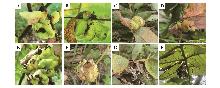
Fig.1
Indehiscent horned galls and horned galls at different stages of dehiscenceA. Indehiscent horned galls; B-C. Early-stage dehiscent horned galls, with small dehiscences that have not darkened; D. Moderately dehiscent horned galls, with slightly larger dehiscences that have not darkened; E-F. Late-stage dehiscent horned galls, with large dehiscences that have darkened; aphids have largely completed migration. G-H. Dehiscent galls, with aphids having completed migration; withered horned galls.
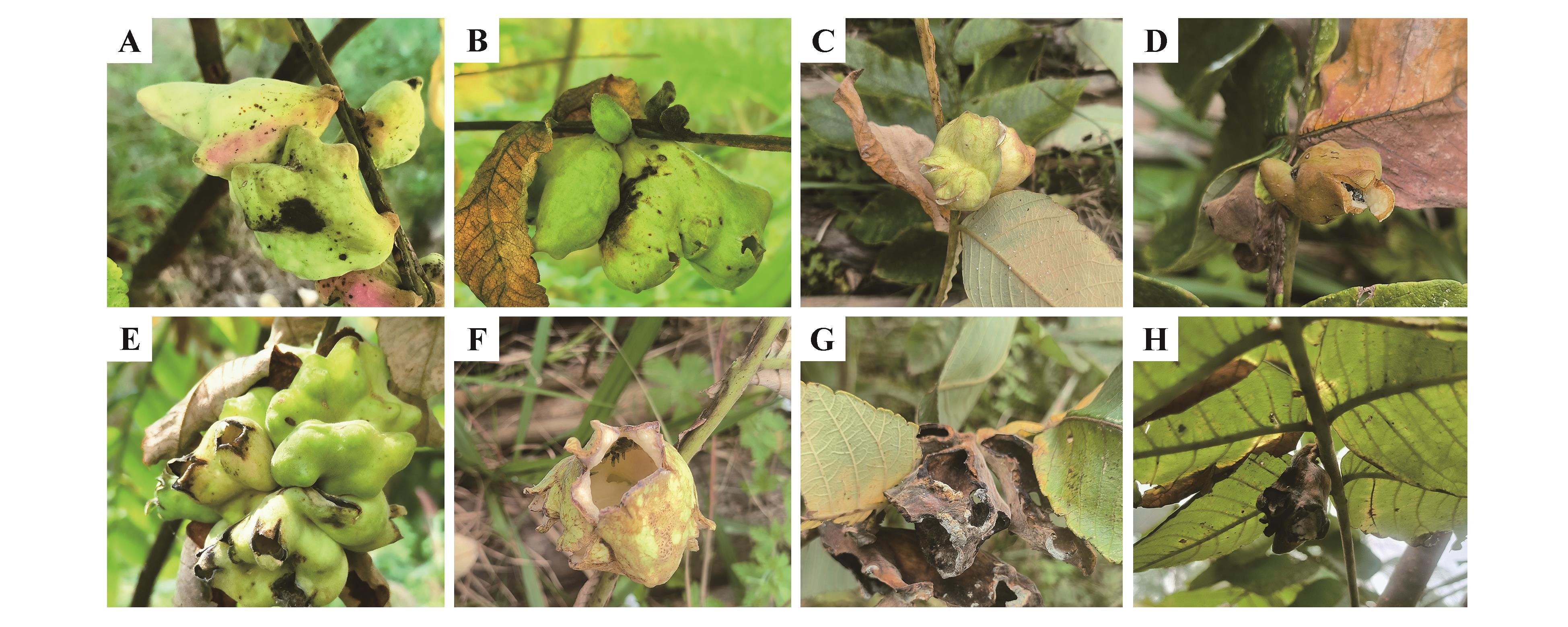
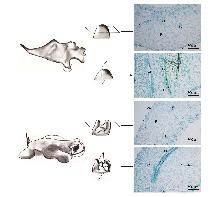
Fig.2
Diagrams of horizontal and vertical paraffin sections of horned gallst. Tomentum; ea. Epidermis-air; pa. Parenchyma; sd. Schizogenous duct; vb. Vascular bundle; el. Epidermis-lumen.
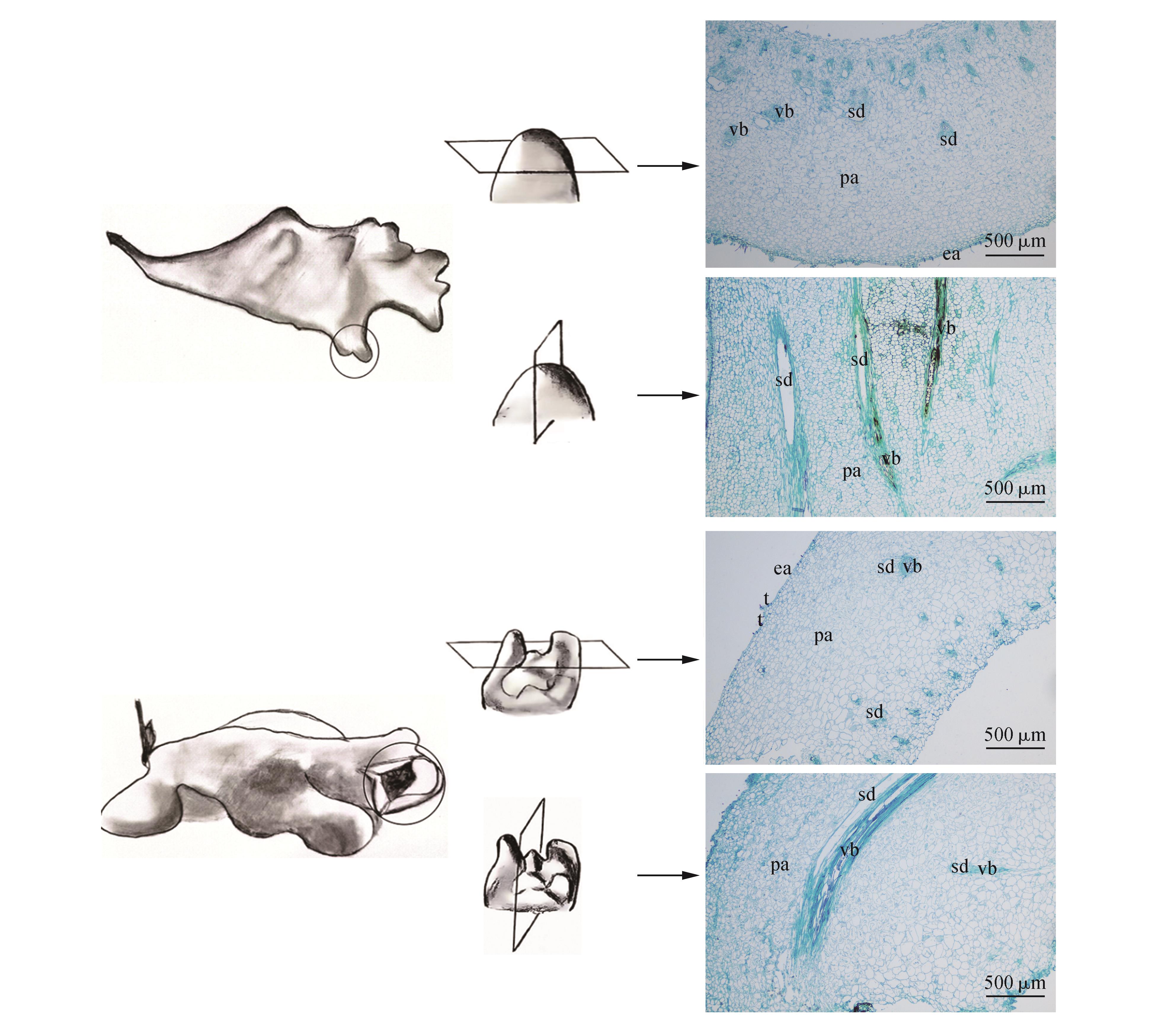
Table 1
Chromatographic conditions
条件 Conditions | 参数 Parameters |
|---|---|
流动相A Mobile phase A | 甲醇 Methanol |
流动相B Mobile phase B | 0.1%乙酸水溶液 0.1% acetic acid aqueous solution(pH=3.6) |
柱温 Column temperature | 25 ℃ |
流速 Flow velocity | 1.0 mL⋅min-1 |
检测波长 Detection wavelength | 210 nm |
进样量 Injection volume | 10 μL |
梯度洗脱程序 Gradient elution program | 等度洗脱 Isocratic elution A∶B=20∶80 |
Fig.3
Structural changes,hormonal alterations,and differentially expressed genes in dehiscent horned gallsA. Number of parenchyma cells and upper epidermal cells per 200 μm² area in sections of indehiscent and dehiscent horned galls; B. Diameter of parenchyma cells, schizogenous duct and vascular bundles in indehiscent(W) and dehiscent(B) horned galls; C. 1 and 3 indicated indehiscent horned gall; 2 and 4 indicated mid-dehiscent horned galls (t. tomentum; ea. upper epidermis (air-facing surface); pa. parenchyma tissue; sd. schizogous duct; vb. vascular bundle; D. Abscisic acid mass fraction in horned galls at different dehiscent stages; E. Gibberellin mass fraction in horned galls at different dehiscent stages(W. Indehiscent; C. Early-stage dehiscent; Z. Moderately dehiscent; M. Late-stage dehiscent); F. Volcano plot of gene differential expression: log2(FC) meant logarithm of fold change; -lg(P) meant negative logarithm of P (base 10); G: Bar chart of differentially expressed genes. *.P=0.033 2; **.P=0.002 1; ***.P=0.000 1.
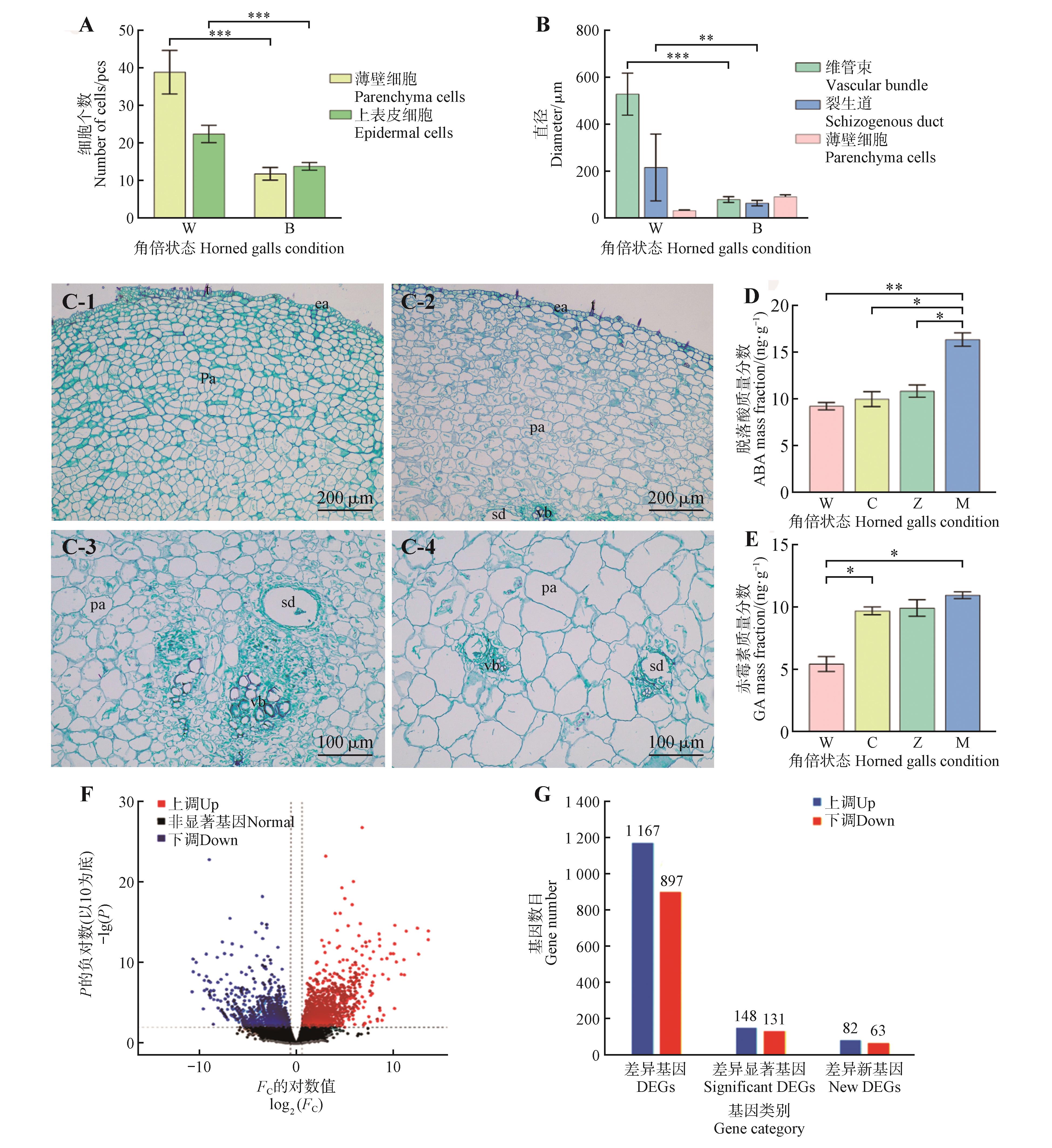
Table 2
Transcriptome sequencing quality analysis
样本ID Sample ID | 干净读数 Clean bases/Gb | GC碱基占总碱基的百分比 GC content/% | Q20测序准确度 Q20 (99% accuracy) | Q30测序准确度 Q30 (99% accuracy) |
|---|---|---|---|---|
| B1 | 6.52 | 43.33 | 99.78 | 98.77 |
| B2 | 6.30 | 43.78 | 99.80 | 98.93 |
| B3 | 6.53 | 43.94 | 99.45 | 98.16 |
| W1 | 7.85 | 43.67 | 98.32 | 96.42 |
| W2 | 6.54 | 43.32 | 99.77 | 98.72 |
| W3 | 6.60 | 43.48 | 99.83 | 99.08 |
Fig.4
KEGG enrichment pathway and heatmap of significantly different genes after dehiscence of horned gallsA. Pathways related to plant genetic information processing, environmental information processing, plant metabolic pathways; B,C. Differentially expressed genes associated with gibberellin and abscisic acid, respectively.
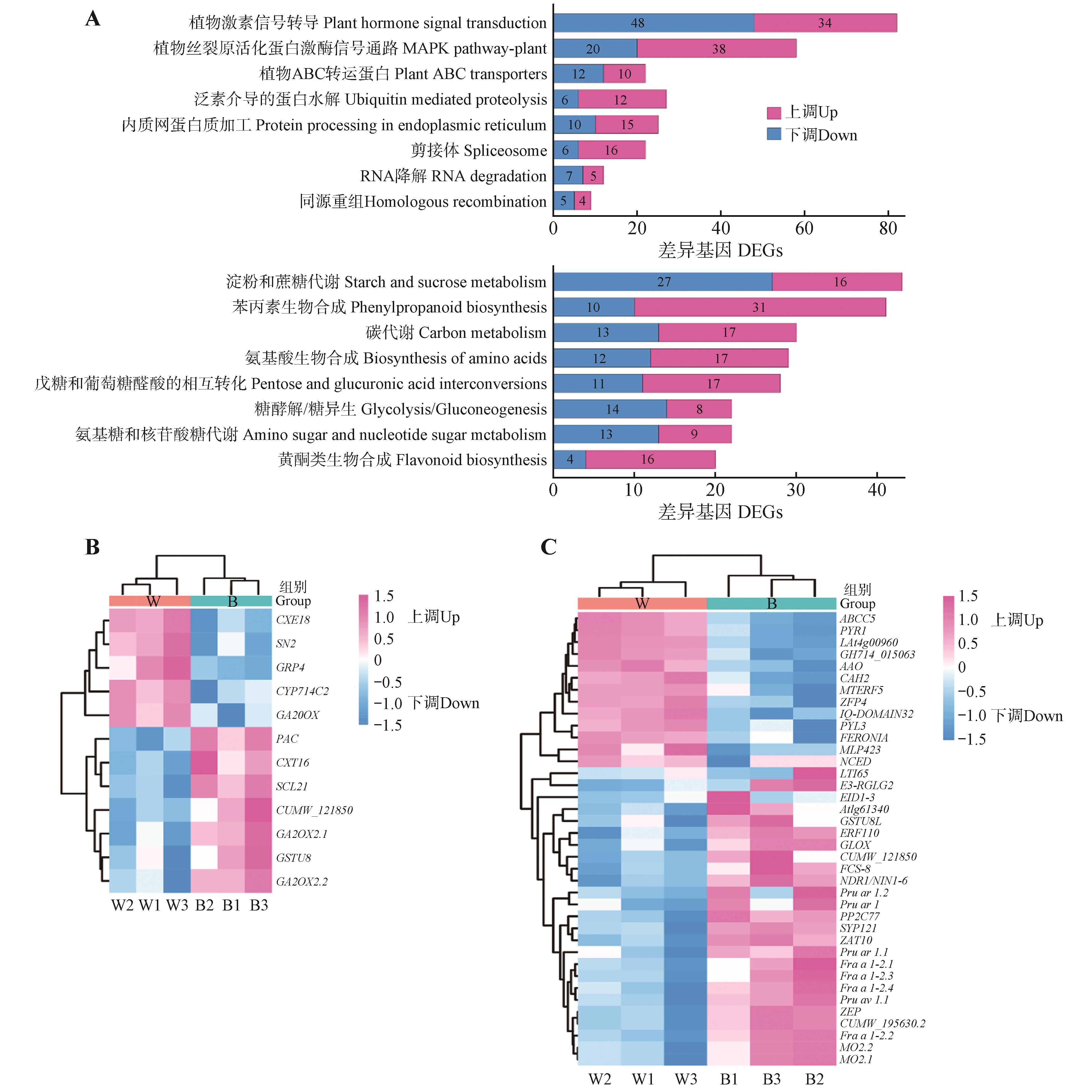
Fig.5
Differential metabolite analysis of horned galls after dehiscenceA. Differential metabolites; B. Top 20 enrichment results annotated by KEGG; C. Top 20 enriched pathways of differential metabolites in KEGG of horned galls after dehiscence.
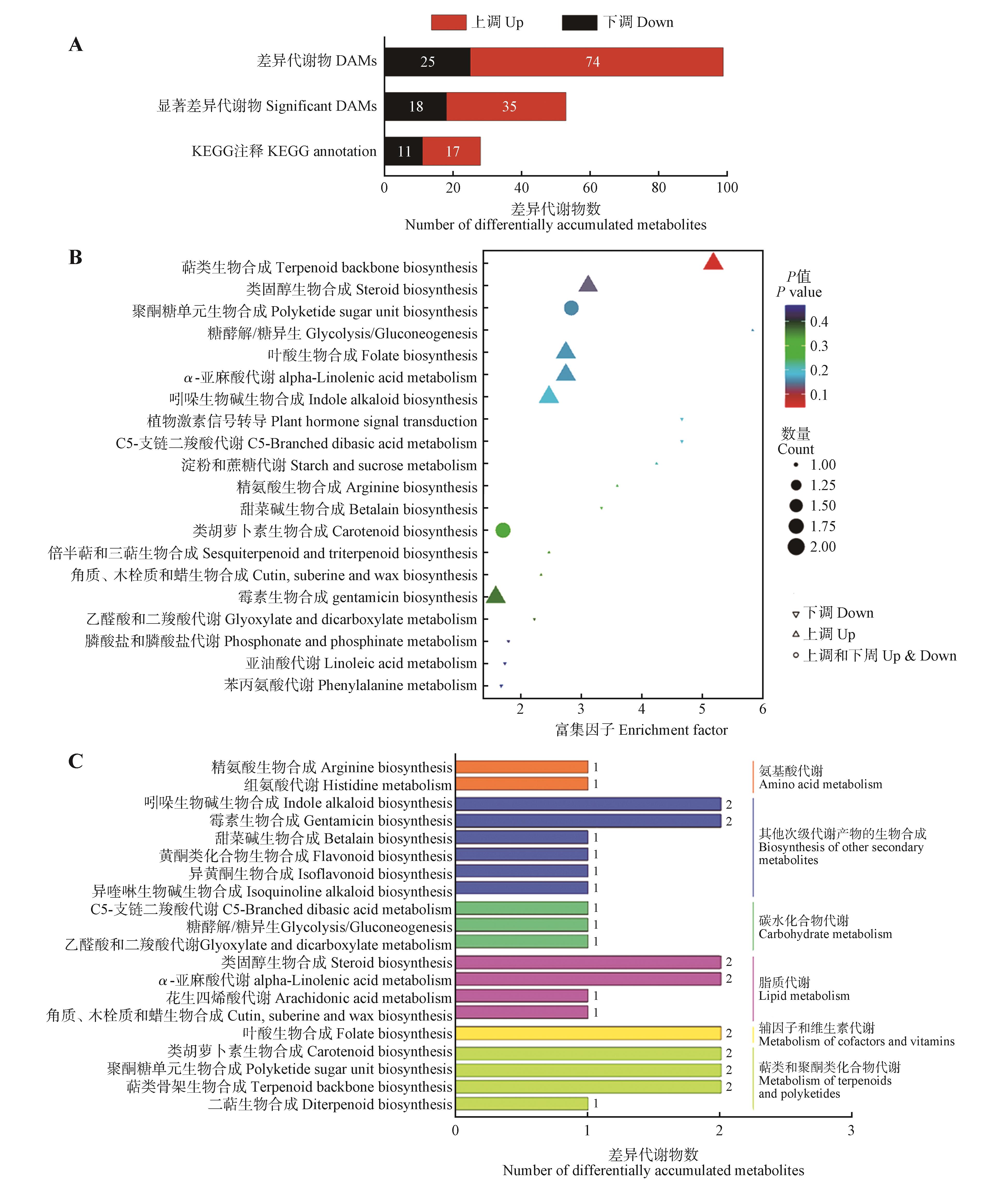
Fig.6
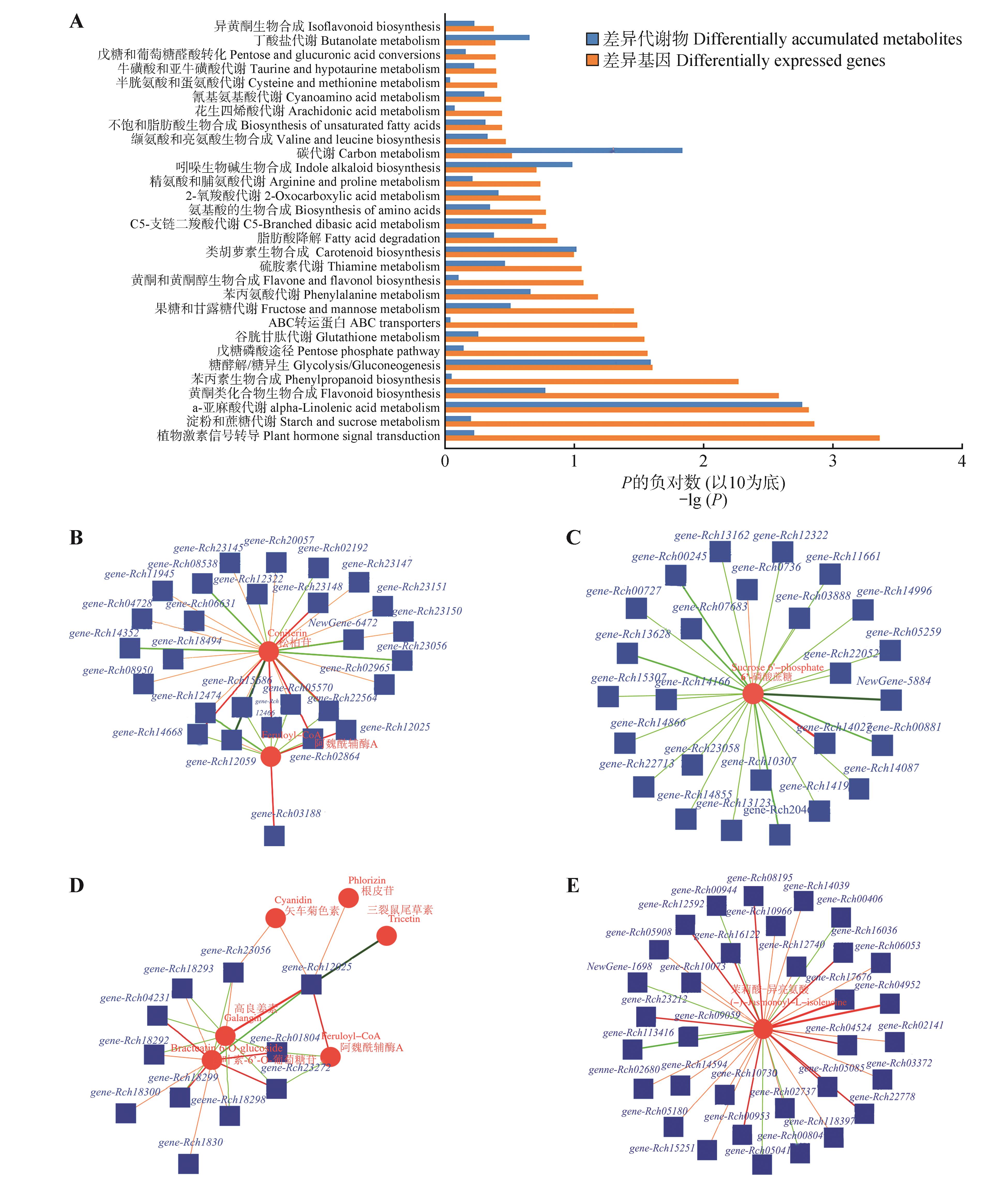
Top 30 KEGG enriched pathways for differentially expressed genes and accumulated metabolites in horned gallsA. Top 30 KEGG enriched pathways for differentially expressed genes and accumulated metabolites in horned galls(-lg(P). negative logarithm of P to base 10); B-E. Correlation networks of differentially expressed genes and accumulated metabolites in horned galls dehiscent metabolic pathways (B. Phenylpropanoid biosynthesis pathway; C. Starch and sucrose metabolism pathway; D. Flavonoid biosynthesis pathway; E. Plant hormone signaling pathway). Circles represented metabolites, squares represented genes; the lines indicated correlation; red represented positive correlations; green represented negative correlations; wider lines and darker colors indicated higher correlation.
| [1] | TIAN X F, SANG Z Y, LAN Z H,et al.Fine-scale analysis of both wild and cultivated horned galls provides insight into their quality differentiation[J].BMC Plant Biology,2023,23(1):426. |
| [2] | LI X Q, WU W, LIU Y T,et al.Mechanistic studies on the antidiabetic properties of gallotannins[J].Current Pharmaceutical Design,2025,31(8):575-584. |
| [3] | 严高红,赵虎,夏剑萍,等.五倍子生物活性研究进展[J].湖北林业科技,2022,51(1):57-59. |
| YAN G H, ZHAO H, XIA J P,et al.Research progress on bioactivity of Chinese gallnut[J].Hubei Forestry Science and Technology,2022,51(1):57-59. | |
| [4] | CHEN X M, YANG Z X, CHEN H,et al.A complex nutrient exchange between a gall-forming aphid and its plant host[J].Frontiers in Plant Science,2020,11:811. |
| [5] | REN Y Y, ZHANG X R, LI T N,et al. Galla chinensis,a traditional Chinese medicine:comprehensive review of botany,traditional uses,chemical composition,pharmacology and toxicology[J].Journal of Ethnopharmacology,2021,278:114247. |
| [6] | CHEN H,LUI J, CUI K,et al.Molecular mechanisms of tannin accumulation in Rhus galls and genes involved in plant-insect interactions[J].Scientific Reports,2018,8(1):1-12. |
| [7] | GATGENS-BONICHE O.The mechanism of plant gall induction by insects:revealing clues,facts,and consequences in a cross-kingdom complex interaction[J].Revista de Biología Tropical,2019,67(6):116-121. |
| [8] | PAWLOWSKI T A, STASZAK A M, KAROLEWSKI P,et al.Plant development reprogramming by cynipid gall wasp:proteomic analysis[J].Acta Physiologiae Plantarum,2017,39(5):114-126. |
| [9] | HIRANO T, KIMURA S, SAKAMOTO T,et al.Reprogramming of the developmental program of Rhus javanica during initial stage of gall induction by Schlechtendalia chinensis [J].Frontiers in Plant Science,2020,40(11):471-480. |
| [10] | 徐玉洁.倍蚜寄主盐肤木属叶绿体全基因组及进化意义[D].太原:山西大学,2020. |
| XU Y J.Complete chloroplast genome of the host-plant Rhus species of Rhus gall aphids and evolutionary implications[D].Taiyuan:Shanxi University,2020. | |
| [11] | 梁育康.五倍子蚜与第一寄主植物和初级内共生菌系统发育及协同进化[D].太原:山西大学,2023. |
| LIANG Y K.Phylogeny of Rhus gall aphids,and its primary host plants and endosymbionts,and their coevolutionary implication[D].Taiyuan:Shanxi University,2023. | |
| [12] | 陆沁,杨子祥,吴海霞,等.角倍蚜虫瘿的组织学结构与功能解析[J].环境昆虫学报,2018,40(1):1-10. |
| LU Q, YANG Z X, WU H X,et al.The anatomical structure and function of horned gall induced by Schlechtendalia chinensis [J].Journal of Environmental Entomology,2018,40(1):1-10. | |
| [13] | 刘江.角倍蚜与第一寄主盐肤木比较转录组学研究[D].太原:山西大学,2022. |
| LIU J.Comparative transcriptomic analysis of Schlechtendalia chinensis and its host-plant Rhus chinensis [D].Taiyuan:Shanxi University,2022. | |
| [14] | STONE G N, SCHONROGGE K.The adaptive significance of insect gall morphology[J].Trends in Ecology & Evolution,2003,18(10):512-522. |
| [15] | 牛雪霏.角倍蚜与其第一寄主植物盐肤木转录组序列及相关性[D].太原:山西大学,2019. |
| NIU X F.Transcriptome and correlative relationship of the aphid Schlechtendalia chinensis and its unique primary host plant Rhus chinensis [D].Taiyuan:Shanxi University,2019. | |
| [16] | 周凝.角倍蚜及其寄主植物盐肤木互作相关蛋白基因分析[D].太原:山西大学,2024. |
| ZHOU N.Gene analysis of interacting related protein of Schlechtendalia chinensis and its host plant Rhus chinensis [D].Taiyuan:Shanxi University,2024. | |
| [17] | LU Q, CHEN X M, YANG Z X,et al.Molecular and histologic adaptation of horned gall induced by the aphid Schlechtendalia chinensis (Pemphigidae)[J].International Journal of Molecular Sciences,2021,22(10):5166-5166. |
| [18] | 王海英.内源激素调控角倍发育的分子机制[D].北京:中国林业科学研究院,2017. |
| WANG H Y.The molecular mechanism of endogenous hormones regulate horned gall development[D].Beijing:Chinese Academy of Forestry,2017. | |
| [19] | 陈彦超,汪启明,饶力群,等.基于比较转录组学的盐肤木响应五倍子蚜胁迫的机理探究[J].分子植物育种,2024,22(6):1861-1869. |
| CHEN Y C, WANG Q M, RAO L Q,et al.The stress response mechanism of Rhus chinensis to Schlechtendalia chinensis based on comparative transcriptome[J].Molecular Plant Breeding,2024,22(6):1861-1869. | |
| [20] | MISHRA P, SAINI P, PATNI V.Biochemical dynamics during development of insect-induced plant galls:a revie[J].Journal of Plant Diseases and Protection,2024,131(6):1803-1818. |
| [21] | WANG H Y, LIU J, CUI K,et al.Gibberellic acid is selectively downregulated in response to aphid-induced gall formation[J].Acta Physiologiae Plantarum,2016,38(9):32-36. |
| [22] | 龚成胜,王述彬,刘金兵,等.辣椒果实发育过程中开裂性状的转录调控分析[J/OL].分子植物育种,(2024-03-04)[2025-02-22].. |
| GONG C S, WANG S B, LIU J B,et al.Transcriptional regulation of cracking traits during the development of pepper fruit[J/OL].Molecular Plant Breeding,(2024-03-04)[2025-02-22].. | |
| [23] | REN B, ZHANG L, CHEN J,et al.Response of abscission zone of blue honeysuckle (Lonicera caerulea L.) fruit to GA3 and 2,4-D spray application[J].Agronomy,2023,13(12):2937-2941. |
| [24] | DONG N, LIN H.Contribution of phenylpropanoid metabolism to plant development and plant-environment interactions[J].Journal of Integrative Plant Biology,2021,63(1):180-209. |
| [25] | LARSEN K.Cloning and characterization of a ryegrass (Lolium perenne) gene encoding cinnamoyl-CoA reductase (CCR)[J].Plant Science,2004,166(3):569-581. |
| [26] | CUI W, ZHUANG Z, JIANG P,et al.Characterization,expression profiling,and biochemical analyses of the cinnamoyl-CoA reductase gene family for lignin synthesis in alfalfa plants[J].International Journal of Molecular Sciences,2022,23(14):7762-7762. |
| [27] | 单超然,陈晓慧,丁云飞,等.水曲柳FmCCoAOMT基因在木质素合成及非生物胁迫中的功能分析[J].植物研究,2023,43(5):768-778. |
| SHAN C R, CHEN X H, DING Y F,et al.Functional analysis of FmCCoAOMT gene in Fraxinus mandshurica during lignin synthesis and abiotic stress[J].Bulletin of Botanical Research,2023,43(5):768-778. | |
| [28] | 何韩军.纤维素酶和半纤维素酶对拟南芥果荚发育和开裂的影响[D].广州:华南农业大学,2018. |
| HE H J.Cellulase and mannase affect silique development and dehiscence in Arabidopsis [D].Guangzhou:South China Agriculture University,2018. | |
| [29] | 邵淑霞,阮桢媛,杨子祥,等.虫瘿:昆虫与植物互作的奇特产物[J].环境昆虫学报,2012,34(3):363-369. |
| SHAO S X, RUAN Z Y, YANG Z X,et al. Insect galls:the peculiar product of the interaction between plants and insects[J].Journal of Environmental Entomology,2012,34(3):363-369. | |
| [30] | TAKEDA S, HIRANO T, OHSHIMA I,et al.Recent progress regarding the molecular aspects of insect gall formation[J].International Journal of Molecular Sciences,2021,22(17):9424. |
| [31] | CONNOR E F, BARTLETT L, O’TOOLE S,et al.The mechanism of gall induction makes galls red[J].Arthropod-Plant Interactions,2012,6(4):489-495. |
| [32] | ZHI J J, LIU X X, LI D J,et al.CRISPR/Cas9-mediated SlAN2 mutants reveal various regulatory models of anthocyanin biosynthesis in tomato plant[J].Plant Cell Reports,2020,39(6):799-809. |
| [33] | LEWIS J A, JACOBO E P, PALMER N,et al.Structural and interactional analysis of the flavonoid pathway proteins:chalcone synthase,chalcone isomerase and chalcone isomerase-like protein[J].International Journal of Molecular Sciences,2024,25(11):5651-5651. |
| [34] | 王超,牛芸,李成强,等.五倍子——角倍的爆裂机制初步研究[J].江西农业,2022(12):127-128. |
| WANG C, NIU Y, LI C Q,et al.Preliminary study on the bursting mechanism of Chinese gallnuts and horned galls[J].Jiangxi Agricultural Science,2022(12):127-128. | |
| [35] | SPADA P, DOMINGUEZ E, CONTINRLLA A,et al.Factors influencing fruit cracking:an environmental and agronomic perspective[J].Frontiers in Plant Science,2024,15(6):1343452. |
| [36] | LIAQAT W, ALTAF M T, BARUTCULAR C,et al.Sorghum:a star crop to combat abiotic stresses,food insecurity,and hunger under a changing climate:a review[J].Journal of Soil Science and Plant Nutrition,2024,24(1):74-101. |
| [37] | MANZOOR M A, XU Y, LV Z X,et al.Horticulture crop under pressure:unraveling the impact of climate change on nutrition and fruit cracking[J].Journal of Environmental Management,2024,35(7):120759. |
| [1] | Siqi WANG, Yunjie BI, Huixian LI, Zhengbao SONG, Runke LIU, Ruixin GAO. Effect of Exogenous Gibberellin on Seed Germination of Agastache rugosa under Salt Stress [J]. Bulletin of Botanical Research, 2026, 46(3): 481-492. |
| [2] | Wenbin DING, Yuehan HU, Yinjia BAI, Yuhan YANG, Hua XUE. Expression Characteristics and Functional Analysis of PtNF-Ys Gene during Early Flower Development in Pinus tabuliformis [J]. Bulletin of Botanical Research, 2026, 46(2): 195-208. |
| [3] | Xinyi YU, Huiyue JI, Pingping LU, Jiayu ZHOU, Hai LIAO. The Bioinformatic Analysis on the Plant Isopentenyl Pyrophosphate Isomerase [J]. Bulletin of Botanical Research, 2024, 44(5): 774-782. |
| [4] | Zhiyuan CHENG, Yanjiang ZHANG, Yue SHEN, Guang LI, Qin CHEN, Jie LI, Yanhong XING. Metabolomics Analysis of Lilium davidii var. unicolor in Response to Autotoxicity Stress [J]. Bulletin of Botanical Research, 2024, 44(5): 793-804. |
| [5] | Hengfeng ZHANG, Yangwu HE, Huanchao ZHANG, Qingcui WEI. Metabolomics Analysis of Lagerstroemia indica in Response to Salt and Alkali Stress [J]. Bulletin of Botanical Research, 2024, 44(3): 420-430. |
| [6] | Bi QIN, Mingyang LIU, Meng WANG, Lifeng WANG, Fei HUANG. Cloning and Expression Analysis of DELLA gene HbRGL1 from Hevea brasiliensis Müll. Arg [J]. Bulletin of Botanical Research, 2022, 42(6): 997-1004. |
| [7] | Yan WU, Sai LI, Kexin WU, Liqiang MU. Differences in Leaf Metabolism of Wild Rosa acicularis and Rosa acicularis ‘Luhe’ Based on GC-MS [J]. Bulletin of Botanical Research, 2022, 42(6): 1070-1078. |
| [8] | Liben PAN, Xue YAN, Jia LIU, Kexin WU, Yang LIU, Shaochong LIU. Physiological Characteristics of Early Spring Flowering Plants under Northeast Forest [J]. Bulletin of Botanical Research, 2022, 42(4): 657-666. |
| [9] | Ying Song, Kexin Wu, Wenda Shao, Yuli Liu, Jia Liu, Yang Liu, Zhonghua Tang. Development-specific Investigation of Leaf Primary Metabolism of Acanthopanax senticosus and Acanthopanax sessiliflorus [J]. Bulletin of Botanical Research, 2022, 42(2): 268-277. |
| [10] | Hua-Feng CHEN, Song-Le FAN, Li-Feng WANG. Structural and Functional Analysis of Gibberellin Signaling Transduction Pathway Gene HbRGA1 in Rubber Tree [J]. Bulletin of Botanical Research, 2021, 41(4): 531-539. |
| [11] | ZHI Hui, AI Dan, WU Ke-Xin, GUO Yun, XU Ming-Yuan, TANG Zhong-Hua. Comparison on Chemical Constituents between Potentilla chinensis and P.acaulis using GC-MS by Metabolomics Approach [J]. Bulletin of Botanical Research, 2020, 40(5): 718-727. |
| [12] | FAN Song-Le, WANG Ji-Kun, XIE Gui-Shui, WANG Meng, WANG Li-Feng. Structural and Functional Analysis of R2R3 MYB Transcription Factor HbMYB88 [J]. Bulletin of Botanical Research, 2020, 40(1): 106-116. |
| [13] | ZHAO Min, WANG Yue-Xuan, XU Yun-Fei, ZHAO Qi-An, LIU Bo, YANG Ning. Relationship between H2S and ABA Signaling in Arabidopsis thaliana under Drought Stress [J]. Bulletin of Botanical Research, 2019, 39(1): 104-112. |
| [14] | WU Min-Yi, LI Xia, HE Ya-Fei, ZHANG Chen, YAN Ting. Drought Response in Overexpression of Maize Phosphoenolpyruvate Carboxylase Rice Seedlings Treated by Inhibitors of ABA and HXK Pathway [J]. Bulletin of Botanical Research, 2017, 37(3): 402-415. |
| [15] | HE Wen-Ping, WANG Xin-Xia, ZHANG Xu-Qiang, YANG Peng-Jun, QIU Yi-Zhi, YANG Ning. Exogenous ABA Affected on Antioxidant Enzymes and Osmotic Adjustment in Choraspora bungeana Under Low Temperature Stress [J]. Bulletin of Botanical Research, 2016, 36(6): 870-877. |
| Viewed | ||||||
|
Full text |
|
|||||
|
Abstract |
|
|||||