Bulletin of Botanical Research ›› 2026, Vol. 46 ›› Issue (1): 1-12.doi: 10.7525/j.issn.1673-5102.2026.01.001
• Review Article • Next Articles
Linlin HE, Lei WU, Xuesong REN, Jun SI, Qinfei LI, Hongyuan SONG( )
)
Received:2025-08-29
Online:2026-01-20
Published:2026-01-20
Contact:
Hongyuan SONG
E-mail:yuahs@163.com
CLC Number:
Linlin HE, Lei WU, Xuesong REN, Jun SI, Qinfei LI, Hongyuan SONG. Progress in the Study on Stay-green Gene SGR[J]. Bulletin of Botanical Research, 2026, 46(1): 1-12.
Add to citation manager EndNote|Ris|BibTeX
URL: https://bbr.nefu.edu.cn/EN/10.7525/j.issn.1673-5102.2026.01.001
Fig.1
Chlorophyll degradation pathway(Illustrations were created using the BioRender software)
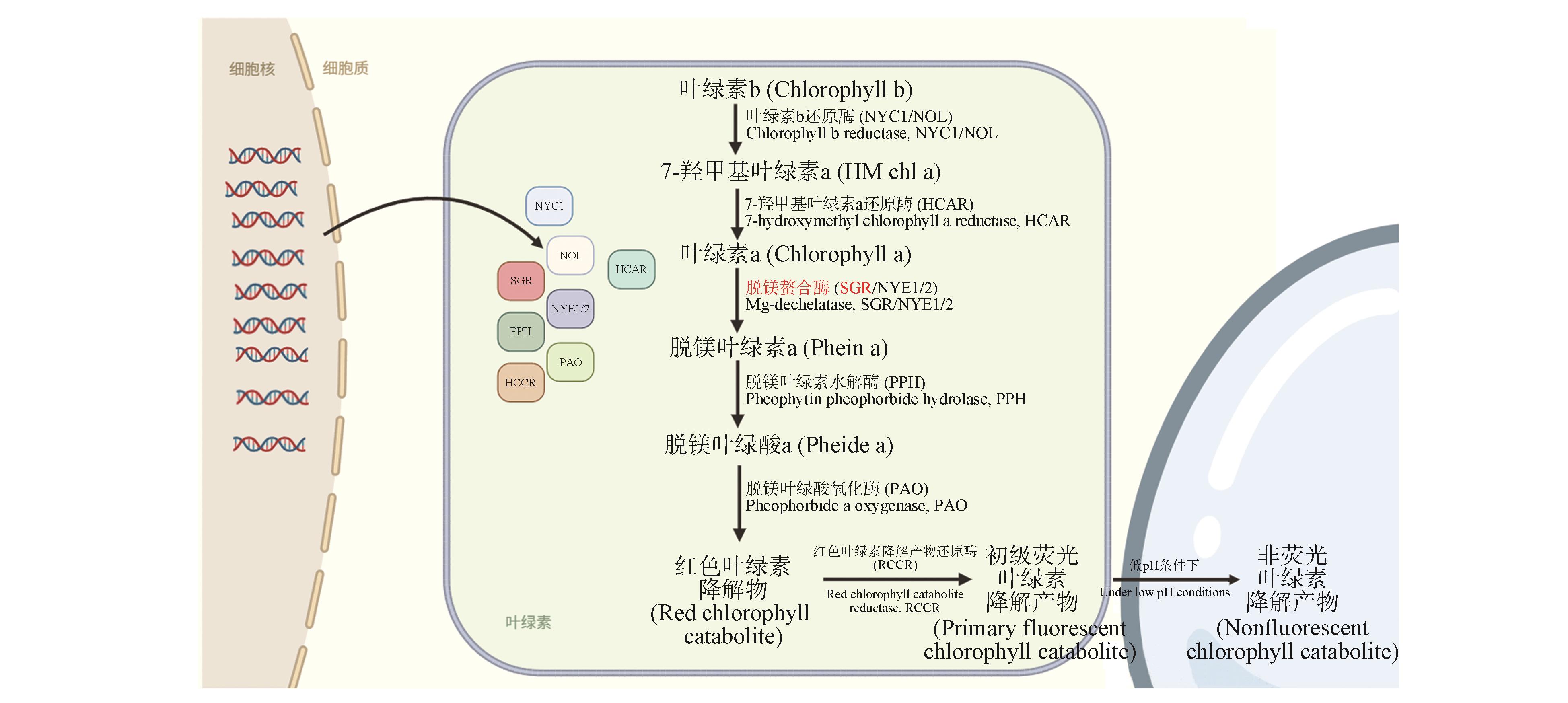
Fig.2
Phylogenetic tree of SGR homologous genes in different species
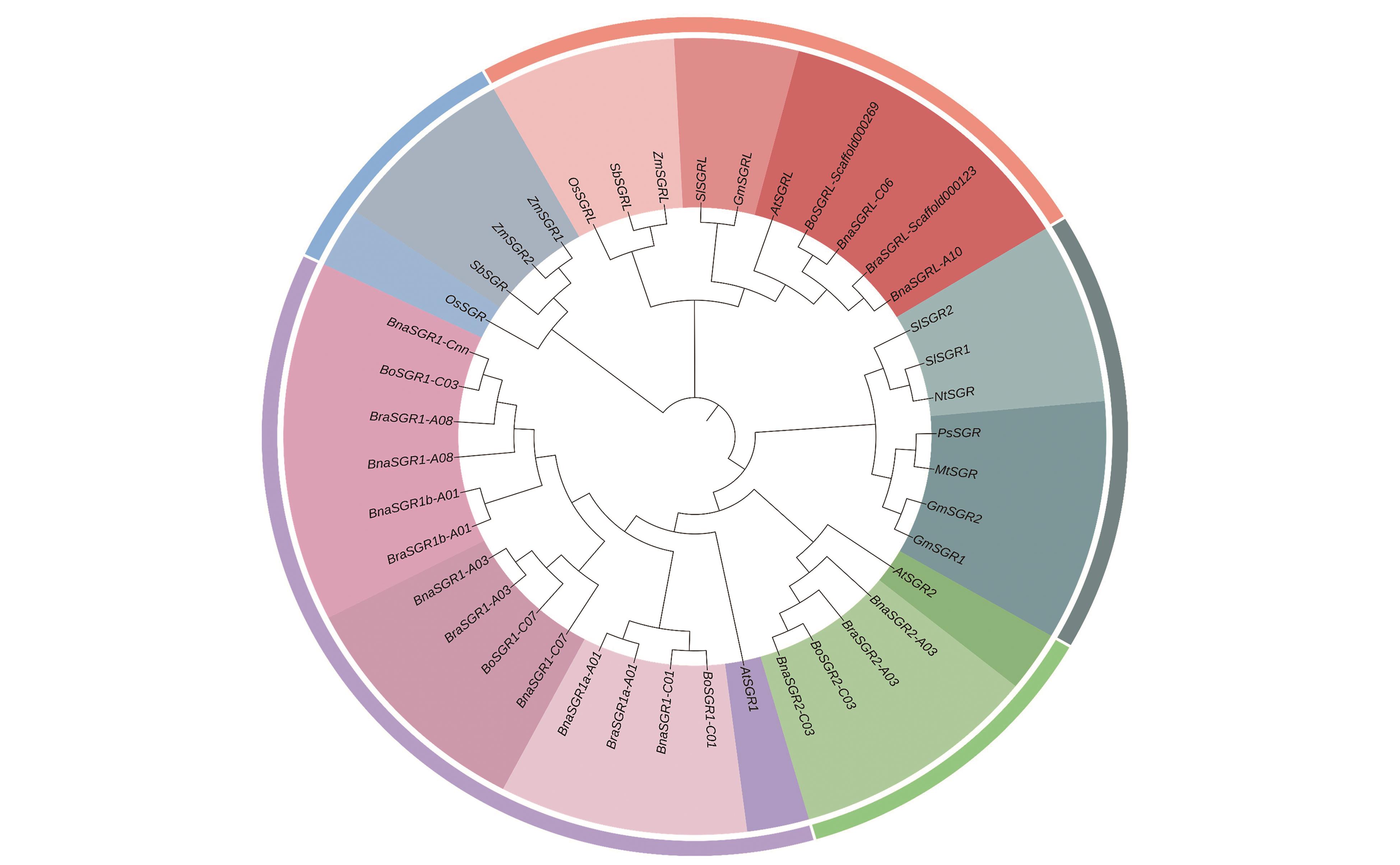

Table 1
List of SGR homologous genes from different species
物种 Species | 基因名称 Gene name | 登录号/基因ID Accession number/Gene ID |
|---|---|---|
水稻 Oryza sativa | OsSGR | NP_001063758 |
| OsSGRL | NP_001054370 | |
玉米 Zea mays | ZmSGR1 | ACG27475 |
| ZmSGR2 | NP_001105771 | |
| ZmSGRL | NP_001130909 | |
高粱 Sorghum bicolor | SbSGR | AAW82958 |
| SbSGRL | XP_002448084 | |
苜蓿 Medicago sativa | MtSGR | AEE0020 |
烟草 Nicotiana tabacum | NtSGR | ABY19382 |
豌豆 Pisum sativum | PsSGR | BAF76351 |
拟南芥 Arabidopsis thaliana | AtSGR1 | At4g22920 |
| AtSGR2 | At4g11910 | |
| AtSGRL | At1g44000 | |
番茄 Solanum lycopersicum | SlSGR1 | Solyc08g080090.2.1 |
| SlSGR2 | Solyc12g056480.1.1 | |
| SlSGRL | Solyc04g063240.2.1 | |
大豆 Glycine max | GmSGR1 | Glyma11g02980.1 |
| GmSGR2 | Glyma01g42390.1 | |
| GmSGR3a | Glyma17g14201.2 | |
| GmSGR3b | Glyma17g14210.2 | |
| GmSGRL | XP_003523416 | |
甘蓝 Brassica oleracea var. capitata | BoSGR1-C01/C03/C07 | Bol014983/Bol010654/Bol042063 |
| BoSGR2-C03 | Bol030516 | |
| BoSGRL-Scaffold000269 | Bol006958 | |
欧洲油菜 B. napus | BnaSGR1a-A01 | BnaA01g12570D |
| BnaSGR1b-A01 | BnaA01g22870D | |
| BnaSGR1-A03/A08 | BnaA03g45630D/BnaA08g10510D | |
| BnaSGR1-Cnn | BnaCnng29210D | |
| BnaSGR1-C01/C07 | BnaC0lg14360D/BnaC07g37710D | |
| BnaSGR2-A03/C03 | BnaA03g24900D/BnaC03g72930D | |
| BnaSGRL-A10/CO6 | BnaA10g08850D/BnaC06g00560D | |
白菜 B. rapa | BraSGRla-A01 | Bra013656 |
| BraSGR1b-A01 | Bra028385 | |
| BraSGR1-A03/A08 | Bra019346/Bra020829 | |
| BraSGR2-A03 | Bra000755 | |
| BraSGRL-Scaffold000123 | Bra036938 |
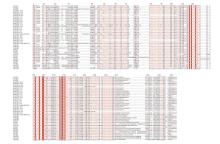
Fig.3
Multiple sequence alignment of SGR homologous genes in different species(The amino acid sequences of SGR proteins obtained from various species for phylogenetic tree construction were used for multiple sequence alignment using MEGA11 and ESPript3.0 software)
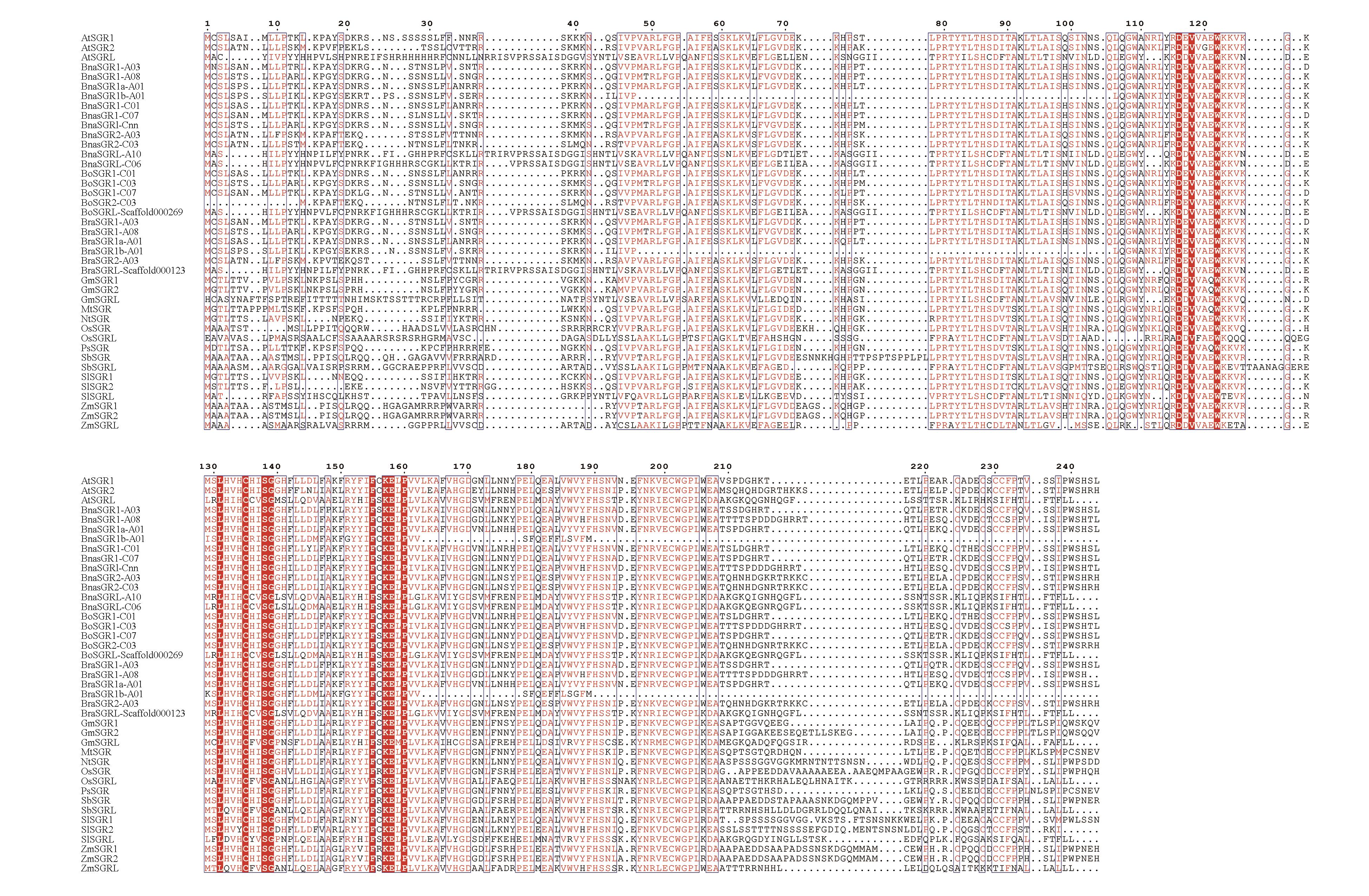
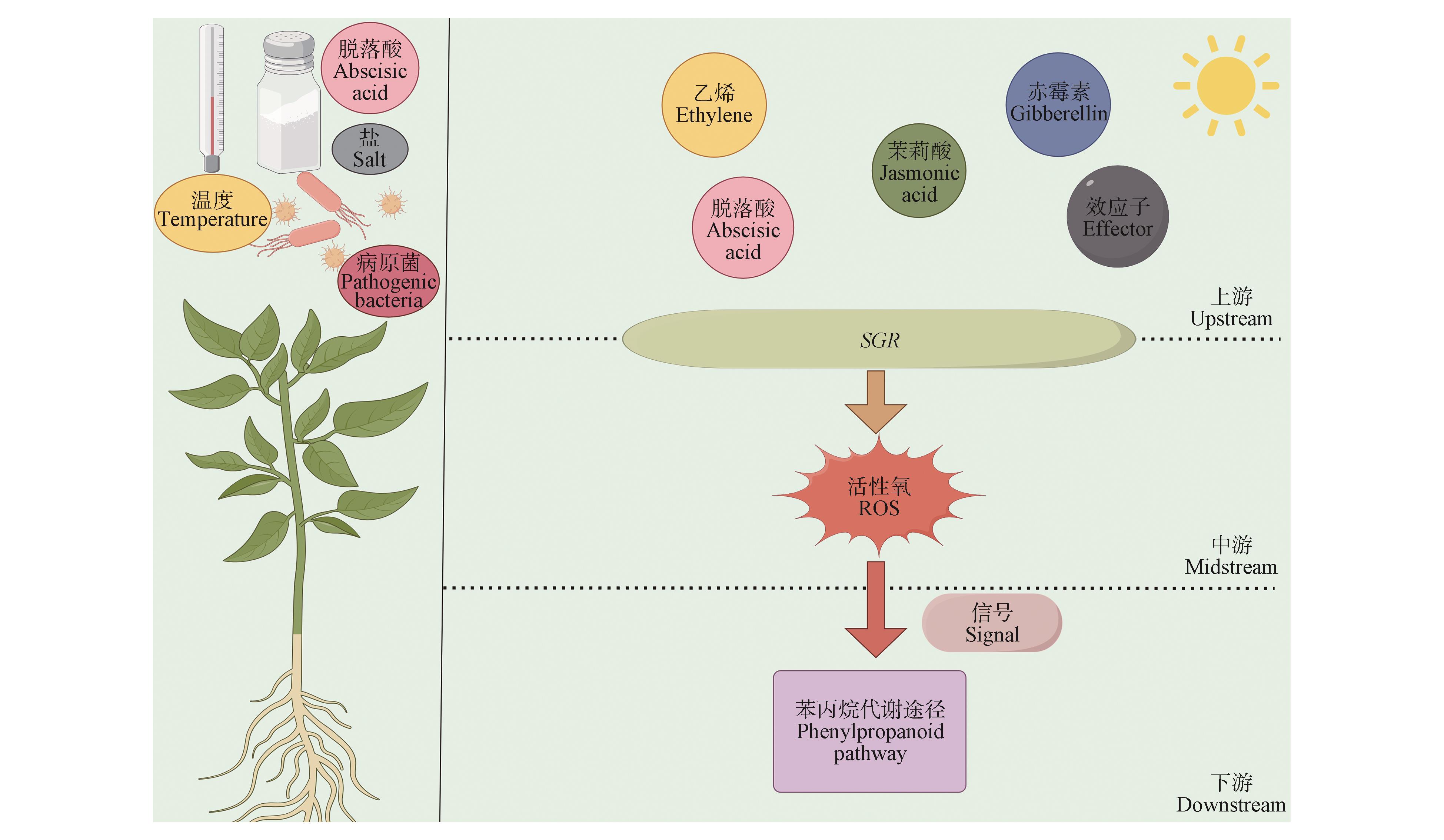
Fig.4
The molecular mechanism of SGR genein plant stress response
| [1] | ZHAO W X, ZHAO H Y, WANG H S,et al.Research progress on the relationship between leaf senescence and quality,yield and stress resistance in horticultural plants[J].Frontiers in Plant Science,2022,13:1044500. |
| [2] | VOMDORP K, HÖLZL G, PLOHMANN C,et al.Remobilization of phytol from chlorophyll degradation is essential for tocopherol synthesis and growth of Arabidopsis [J].The Plant Cell,2015,27(10):2846-2859. |
| [3] | THOMAS H, HOWARTH C J.Five ways to stay green[J].Journal of Experimental Botany,2000,51(Sup.1):329-337. |
| [4] | HÖRTENSTEINER S.Stay-green regulates chlorophyll and chlorophyll-binding protein degradation during senescence[J].Trends in Plant Science,2009,14(3):155-162. |
| [5] | KUSABA M, ITO H, MORITA R,et al.Rice NON-YELLOW COLORING1 is involved in light-harvesting complex Ⅱ and grana degradation during leaf senescence[J].The Plant Cell,2007,19(4):1362-1375. |
| [6] | SATO Y, MORITA R, KATSUMA S,et al.Two short-chain dehydrogenase/reductases,NON-YELLOW COLORING 1 and NYC1-LIKE,are required for chlorophyll b and light-harvesting complex II degradation during senescence in rice[J].The Plant Journal,2009,57(1):120-131. |
| [7] | REN G D, ZHOU Q, WU S X,et al.Reverse genetic identification of CRN1 and its distinctive role in chlorophyll degradation in Arabidopsis [J].Journal of Integrative Plant Biology,2010,52(5): 496-504. |
| [8] | MEGURO M, ITO H, TAKABAYASHI A,et al.Identification of the 7-hydroxymethyl chlorophyll a reductase of the chlorophyll cycle in Arabidopsis [J].The Plant Cell,2011,23(9):3442-3453. |
| [9] | MORITA R, SATO Y, MASUDA Y,et al.Defect in non-yellow coloring 3,an alpha/beta hydro-lase-fold family protein,causes a stay-green phenotype during leaf senescence in rice[J].The Plant Journal,2009,59(6):940-952. |
| [10] | PRUŽINSKÁ A, TANNER G, ANDERS I,et al.Chlorophyll breakdown: pheophorbide a oxygenase is a rieske-type iron-sulfur protein,encoded by the accelerated cell death 1 gene[J].Proceedings of the National Academy of Sciences of the United States of America,2003,100(25):15259-15264. |
| [11] | PRUŽINSKÁ A, ANDERS I, AUBRY S,et al. In vivo participation of red chlorophyll catabolite reductase in chlorophyll breakdown[J].The Plant Cell,2007,19(1):369-387. |
| [12] | GUO Y F, REN G D, ZHANG K W,et al.Leaf senescence:progression,regulation,and application[J].Molecular Horticulture,2021,1(1):5. |
| [13] | 唐蕾,毛忠贵.植物叶绿素降解途径及其分子调控[J].植物生理学报,2011,47(10):936-942. |
| TANG L, MAO Z G.Degradation pathway of plant chlorophyll and its molecular regulation[J].Plant Physiology Journal,2011,47(10):936-942. | |
| [14] | KUAI B K, CHEN J Y, HÖRTENSTEINER S.The biochemistry and molecular biology of chlorophyll breakdown[J].Journal of Experimental Botany,2018,69(4):751-767. |
| [15] | REN G D, AN K, LIAO Y,et al.Identification of a novel chloroplast protein AtNYE1 regulating chlorophyll degradation during leaf senescence in Arabidopsis [J].Plant Physiology,2007,144(3):1429-1441. |
| [16] | PARK S Y, YU J W, PARK J S,et al.The senescence-induced stay-green protein regulates chlorophyll degradation[J].The Plant Cell,2007,19(5):1649-1664. |
| [17] | SATO Y, MORITA R, NISHIMURA M,et al.Mendel’s green cotyledon gene encodes a positive regulator of the chlorophyll-degrading pathway[J].Proceedings of the National Academy of Sciences of the United States of America,2007,104 (35):14169-14174. |
| [18] | HU Z L, DENG L, YAN B,et al.Silencing of the LeSGR1 gene in tomato inhibits chlorophyll degradation and exhibits a stay-green phenotype[J].Biologia Plantarum,2011,55(1):27-34. |
| [19] | ROCA M, HORNERO-MÉNDEZ D, GANDUL-ROJAS B,et al.Stay-green phenotype slows the carotenogenic process in Capsicum annuum(L.) fruits[J].Journal of Agricultural and Food Chemistry,2006,54(23):8782-8787. |
| [20] | WEI Q, GUO Y J, KUAI B K.Isolation and characterization of a chlorophyll degradation regulatory gene from tall fescue[J].Plant Cell Reports,2011,30(7):1201-1207. |
| [21] | XU B, YU G H, LI H,et al.Knockdown of STAYGREEN in perennial ryegrass(Lolium perenne L.) leads to transcriptomic alterations related to suppressed leaf senescence and improved forage quality[J].Plant & Cell Physiology,2019,60(1):202-212. |
| [22] | FANG C, LI C C, LI W Y,et al.Concerted evolution of D1 and D2 to regulate chlorophyll degradation in soybean[J].The Plant Journal,2014,77(5):700-712. |
| [23] | WANG N, LIU Z Y, ZHANG Y,et al.Identification and fine mapping of a stay-green gene(Brnye1) in pak choi (Brassica campestris L.ssp.chinensis) [J].Theoretical and Applied Genetics,2018,131(3):673-684. |
| [24] | ZHOU C E, HAN L, PISLARIU C,et al.From model to crop: functional analysis of a STAY-GREEN gene in the model legume Medicago truncatula and effective use of the gene for alfalfa improvement[J].Plant Physiology,2011,157(3):1483-96. |
| [25] | CUI L, ZHENG F Y, LI C X,et al.Defective mutations in STAY-GREEN 1,PHYTOENE SYNTHASE 1,and MYB12 genes lead to formation of green ripe fruit in tomato[J].Journal of Experimental Botany,2024,75(11):3322-3336. |
| [26] | BAO Q Y, WOLABU T W, ZHANG Q,et al.Application of CRISPR/Cas9 technology in forages[J].Grassland Research,2022,1(4):244-251. |
| [27] | WOLABU T W, CONG L L, PARK J J,et al.Development of a highly efficient multiplex genome editing system in outcrossing tetraploid alfalfa(Medicago sativa)[J].Frontiers in Plant Science,2020,11:1063. |
| [28] | JIAO B Z, MENG Q W, LV W.Roles of stay-green (SGR) homologs during chlorophyll degradation in green plants[J].Botanical Studies,2020,61(1):25. |
| [29] | RONG H, TANG Y Y, ZHANG H,et al.The Stay-Green Rice like(SGRL) gene regulates chlorophyll degradation in rice[J].Journal of Plant Physiology,2013,170(15):1367-1373. |
| [30] | WANG Y H, TAN J Y, WU Z M,et al.STAYGREEN,STAY HEALTHY:a loss-of-susceptibility mutation in the STAYGREEN gene provides durable,broad-spectrum disease resistances for over 50 years of US cucumber production[J].The New Phytologist,2019,221(1):415-430. |
| [31] | ULUISIK S, KIYAK A, KURT F,et al. STAY-GREEN (SGR) genes in tomato(Solanum lycopersicum):genome-wide identification,and expression analyses reveal their involvements in ripening and salinity stress responses[J].Horticulture,Environment,and Biotechnology,2022,63:557-569. |
| [32] | BADE R G, BAO M L, JIN W Y,et al.Genome-wide identification and analysis of the SGR gene family in Cucumis melo L.[J].Genetics and Molecular Research,2016,15(4):gmr15048485. |
| [33] | NAKANO M, YAMADA T, MASUDA Y,et al.A green-cotyledon/stay-green mutant exemplifies the ancient whole-genome duplications in soybean[J].Plant & Cell Physiology,2014,55(10):1763-1771. |
| [34] | 唐玉凤,姚敏,何昕,等.甘蓝型油菜SGR基因家族的全基因组鉴定与功能分析[J].作物学报,2023,49(7):1829-1842. |
| TANG Y F, YAO M, HE X,et al.Genome-wide identification and functional analysis of SGR gene family in Brassica napus L.[J].Acta Agronomica Sinica,2023,49(7):1829-1842. | |
| [35] | FANG C, YANG M Y, TANG Y C,et al.Dynamics of cis-regulatory sequences and transcriptional divergence of duplicated genes in soybean[J].Proceedings of the National Academy of Sciences of the United States of America,2023,120(44):e2303836120. |
| [36] | LIU T F, LIU Z, FAN J W,et al.Loss of lateral suppressor gene is associated with evolution of root nodule symbiosis in Leguminosae[J].Genome Biology,2024,25(1):250. |
| [37] | XIE Z K, WU S D, CHEN J Y,et al.The C-terminal cysteine-rich motif of NYE1/SGR1 is indispensable for its function in chlorophyll degradation in Arabidopsis [J].Plant Molecular Biology,2019,101(3):257-268. |
| [38] | SHI S Y, MIAO H Y, DU X M,et al. GmSGR1,a stay-green gene in soybean(Glycine max L.),plays an important role in regulating early leaf-yellowing phenotype and plant productivity under nitrogen deprivation[J].Acta Physiologiae Plantarum,2016,38:97. |
| [39] | 惠振.小麦滞绿突变体TaSG1的光合特性及其滞绿机理研究[D].泰安:山东农业大学,2009. |
| HUI Z.The photosynthetic characteristic of TaSG1 wheat mutant with stay-green phenotype and the physiological mechanism responsible for stay-green[D].Tai’an:Shandong Agricultural University,2009. | |
| [40] | BARRY C S, MCQUINN R P, CHUNG M Y,et al.Amino acid substitutions in homologs of theSTAY-GREEN protein are responsible for the green-flesh and chlorophyll retainer mutations of tomato and pepper[J].Plant Physiology,2008,147(1):179-187. |
| [41] | SAKURABA Y, SCHELBERT S, PARK S Y,et al.STAY-GREEN and chlorophyll catabolic enzymes interact at light-harvesting complexII for chlorophyll detoxification during leaf senescence in Arabidopsis [J].The Plant Cell,2012,24(2):507-518. |
| [42] | SAKURABA Y, PARK S Y, KIM Y S,et al. Arabidopsis STAY-GREEN2 is a negative regulator of chlorophyll degradation during leaf senescence[J].Molecular Plant,2014,7(8):1288-1302. |
| [43] | ZHANG Y T, WEI G Q, XUE J Y,et al. CfSGR1 and CfSGR2 from Cryptomeria fortunei exhibit contrasting responses to hormones and abiotic stress in transgenic Arabidopsis [J].Plant Physiology and Biochemistry,2024,216:109152. |
| [44] | SAKURABA Y, KIM D, KIM Y S,et al. Arabidopsis STAYGREEN-LIKE(SGRL) promotes abiotic stress-induced leaf yellowing during vegetative growth[J].FEBS Letters,2014,588(21):3830-3837. |
| [45] | BELL A, MOREAU C, CHINOY C,et al.SGRL can regulate chlorophyll metabolism and contributes to normal plant growth and development in Pisum sativum L.[J].Plant Molecular Biology,2015,89(6):539-558. |
| [46] | YANG M M, ZHU S B, JIAO B Z,et al.SlSGRL,a tomato SGR-like protein,promotes chlorophyll degradation downstream of the ABA signaling pathway[J].Plant Physiology and Biochemistry,2020,157:316-327. |
| [47] | XU J M, PAN C Y, LIN H,et al.A rice XANTHINE DEHYDROGENASE gene regulates leaf senescence and response to abiotic stresses[J].The Crop Journal,2022,10(2):310-322. |
| [48] | ZHANG J, LI H, HUANG X R,et al.STAYGREEN-mediated chlorophyll a catabolism is critical for photosystem stability during heat-induced leaf senescence in perennial ryegrass[J].Plant,Cell & Environment,2022,45(5):1412-1427. |
| [49] | 茅远煜,李丽菁,李进超,等.结缕草ZjSGR基因在离体模拟逆境胁迫环境下的功能[J].草地学报,2022,30(6):1396-1402. |
| MAO Y Y, LI L J, LI J C,et al.Gene functional analysis of ZjSGR gene in Zoysia japonica leaves in response to vitro stress[J].Acta Agrestia Sinica,2022,30(6):1396-1402. | |
| [50] | LUO J, ABID M, ZHANG Y,et al.Genome-Wide identification of kiwifruit SGR family members and functional characterization of SGR2 protein for chlorophyll degradation[J].International Journal of Molecular Sciences,2023,24(3):1993. |
| [51] | BAI W Q, YANG Z Y, HUANG S X,et al.Breeding and molecular characterization of a new salt-tolerant wheat variety[J].aBIOTECH,2025,6:278-283. |
| [52] | 邵允,张蒙蒙,陈云,等.桃PpSGR基因功能鉴定及其对乙烯合成的调控[J].果树学报,2023,40(12):2513-2523. |
| SHAO Y, ZHANG M M, CHEN Y,et al.Function identification of PpSGR gene and its regulation of ethylene synthesis in peach[J].Journal of Fruit Science,2023,40(12):2513-2523. | |
| [53] | NAWAZ M, SUN J F, SHABBIR S,et al.A review of plants strategies to resist biotic and abiotic environmental stressors[J].Science of The Total Environment,2023,900:165832. |
| [54] | REN H Z, YU Y T, HUANG C,et al.Genome-wide identification and characterization of tea SGR family members reveal their potential roles in chlorophyll degradation and stress tolerance[J].Agronomy,2024,14(4):769. |
| [55] | MECEY C, HAUCK P, TRAPP M,et al.A critical role of STAYGREEN/Mendel’s I locus in controlling disease symptom development during Pseudomonas syringae pv tomato infection of Arabidopsis [J].Plant Physiology,2011,157(4):1965-1974. |
| [56] | XIE W Y, XUE X, WANG Y,et al.Natural mutation in Stay-Green(OsSGR) confers enhanced resistance to rice sheath blight through elevating cytokinin content[J].Plant Biotechnology Journal,2025,23(3):807-823. |
| [57] | ISHIGA Y, UPPALAPATI S R, GILL U S,et al.Transcriptomic and metabolomic analyses identify a role for chlorophyll catabolism and phytoalexin during Medicago nonhost resistance against Asian soybean rust[J].Scientific Reports,2015,5:13061. |
| [58] | CHANG H X, TAN R, HARTMAN G L,et al.Characterization of soybean STAY-GREEN genes in susceptibility to foliar chlorosis of sudden death syndrome[J].Plant Physiology,2019,180(2):711-717. |
| [59] | DONG S Y, LI C X, TIAN H J,et al.Natural variation in STAYGREEN contributes to low-temperature tolerance in cucumber[J].Journal of Integrative Plant Biology,2023,65(12):2552-2568. |
| [60] | GAO S, GAO J, ZHU X Y,et al.ABF2,ABF3,and ABF4 promote ABA-mediated chlorophyll degradation and leaf senescence by transcriptional activation of chlorophyll catabolic genes and senescence-associated genes in Arabidopsis [J].Molecular Plant,2016,9(9):1272-1285. |
| [61] | DELMAS F, SANKARANARAYANAN S, DEB S,et al.ABI3 controls embryo degreening through Mendel’s I locus[J].Proceedings of the National Academy of Sciences of the United States of America,2013,110(40):3888-3894. |
| [62] | WOO H R, KIM H J, LIM P O,et al.Leaf senescence:systems and dynamics aspects[J].Annual Review of Plant Biology,2019,70:347-376. |
| [63] | SAKURABA Y, JEONG J, KANG M Y,et al.Phytochrome-interacting transcription factors PIF4 and PIF5 induce leaf senescence in Arabidopsis [J].Nature Communications,2014,5:4636. |
| [64] | ZHANG Y Q, LIU Z J, WANG X Y,et al.DELLA proteins negatively regulate dark-induced senescence and chlorophyll degradation in Arabidopsis through interaction with the transcription factor WRKY6[J].Plant Cell Reports,2018,37(7):981-992. |
| [65] | CLARK K J, PANG Z Q, TRINH J,et al.Sec-Delivered effector 1(SDE1) of ‘Candidatus liberibacter asiaticus’ promotes citrus huanglongbing[J].Molecular Plant-Microbe Interactions,2020,33(12):1394-1404. |
| [66] | ZHANG Y, GAO Y, WANG H L,et al. Verticillium dahliae secretory effector PevD1 induces leaf senescence by promoting ORE1-mediated ethylene biosynthesis[J].Molecular plant,2021,14(11):1901-1917. |
| [67] | ZHU X Y, CHEN J Y, XIE Z K,et al.Jasmonic acid promotes degreening via MYC2/3/4- and ANAC019/055/072-mediated regulation of major chlorophyll catabolic genes[J].The Plant Journal,2015,84(3):597-610. |
| [68] | LI Y, QU X R, YANG W J,et al.A fungal pathogen suppresses host leaf senescence to increase infection[J].Nature Communications,2025,16(1):2864. |
| [69] | CASTRO B, CITTERICO M, KIMURA S,et al.Stress-induced reactive oxygen species compartmentalization,perception and signaling[J].Nature Plants,2021,7(4):403-412. |
| [70] | ASADA K.Production and scavenging of reactive oxygen species in chloroplasts and their functions[J].Plant Physiology,2006,141(2):391-396. |
| [71] | SHI J N, WANG Y, WANG X Y,et al.Anthocyanin and chlorophyll accumulation by targeted metabolomic and transcriptomic analysis involved in pigment accumulation during fruit maturation in Liriope spicata [J].Journal of Plant Physiology,2025,311:154529. |
| [72] | ZOU S C, ZHUO M G, ABBAS F,et al.Transcription factor LcNAC002 coregulates chlorophyll degradation and anthocyanin biosynthesis in litchi[J].Plant Physiology,2023,192(3):1913-1927. |
| [73] | MOURA J C M S, BONINE C A V,DE OLIVEIRA FERNANDES VIANA J,et al.Abiotic and biotic stresses and changes in the lignin content and composition in plants[J].Journal of Integrative Plant Biology,2010,52(4):360-376. |
| [74] | CESARINO I.Structural features and regulation of lignin deposited upon biotic and abiotic stresses[J].Current Opinion in Biotechnology,2019,56:209-214. |
| [75] | MA Q H.Lignin biosynthesis and its diversified roles in disease resistance[J].Genes,2024,15(3):295. |
| [76] | YANG H B, XIA L X, LI J S,et al. CsLAC4,regulated by CsmiR397a,confers drought tolerance to the tea plant by enhancing lignin biosynthesis[J].Stress Biology,2024,4(1):50. |
| [77] | KIM J Y, KIM J H, JANG Y H,et al.Transcriptome and metabolite profiling of tomato SGR-knockout null lines using the CRISPR/Cas9 system[J].International Journal of Molecular Sciences,2023,24(1):109. |
| [78] | WANG N, KONG X M, LUO M L,et al. SGR mutation in pak choi prolongs its shelf life by retarding chlorophyll degradation and maintaining membrane function[J].Postharvest Biology and Technology,2022,191:111986. |
| [1] | Jianan GUO, Yipeng ZHAO, Yuanzhi YANG, Qingjie GUAN. Roles of Superoxide Dismutase in Plant Response to Drought, Salinity and Cold Stress [J]. Bulletin of Botanical Research, 2024, 44(4): 481-490. |
| [2] | Yajie LIU, Lizhe AN. Nitric Oxide Mediates Brassinosteroids-induced Chilling Tolerance in Chorispora bungeana Suspension Cultured Cells [J]. Bulletin of Botanical Research, 2024, 44(1): 118-131. |
| [3] | Hong YANG, Lifeng WANG, Longjun DAI, Bingbing GUO. Effects of Tapping Panel Dryness on Mitochondrial Ultrastructure and ROS Metabolism in Barks of Rubber Tree (Hevea brasiliensis) [J]. Bulletin of Botanical Research, 2023, 43(1): 69-75. |
| [4] | Bi QIN, Xiaoxiao WANG, Yushuang YANG, Qiuhai NIE, Qiuhui CHEN, Shizhong LIU. Identification and Expression Pattern Analysis of TkAPC10 in Taraxacum kok-saghyz Rodin [J]. Bulletin of Botanical Research, 2022, 42(5): 830-839. |
| [5] | Jianxin LIU, Ruirui LIU, Xiuli LIU, Haiyan JIA, Ting BU, Na LI. Effects of Spraying NaHS at Different Growth Stages on H2S Production and Reactive Oxygen Species Metabolism of Naked Oat Leaves under Saline-Alkali Stress [J]. Bulletin of Botanical Research, 2022, 42(3): 455-465. |
| [6] | ZHANG Li-Li, ZHANG Fu-Chun. Transcriptomic Analysis of the Halostachys caspica in Response to Short-term Salt Stress [J]. Bulletin of Botanical Research, 2018, 38(1): 91-99. |
| [7] | LIU Jian-Xin;WANG Rui-Juan;JIA Hai-Yan;. Alleviation of SNP on Growth Inhibition and Root Oxidative Damage Caused by Lanthanum in Ryegrass Seedlings [J]. Bulletin of Botanical Research, 2012, 32(6): 680-684. |
| [8] | LIU Jian-Xin;WANG Xin;WANG Rui-Juan;LI Dong-Bo. Effects of Alkaline Stress on the Metabolism of Reactive Oxygen Species and Osmotica Accumulation in Ryegrass Seedling Roots [J]. Bulletin of Botanical Research, 2011, 31(6): 674-679. |
| [9] | LIU Ai-Rong;ZHANG Yuan-Bing;CHEN Deng-Ke. Effects of salt stress on the growth and the antioxidant enzyme activity of Thellungiella halophila [J]. Bulletin of Botanical Research, 2006, 26(2): 216-221. |
| [10] | FENG Yu-long, ZHANG Ya-jie, JU Guan-sheng, ZHU Chun-quan . PHOTOINHIBITION OF PHOTOSYNTHESIS OF ATTACHED LEAVES IN POPLAR CLONE SEEDLINGS [J]. Bulletin of Botanical Research, 2001, 21(4): 578-582. |
| Viewed | ||||||
|
Full text |
|
|||||
|
Abstract |
|
|||||