Bulletin of Botanical Research ›› 2026, Vol. 46 ›› Issue (5): 889-898.doi: 10.7525/j.issn.1673-5102.2026.05.010
• Original Paper • Previous Articles Next Articles
Jingyi KE, Mengfei LI( )
Received:2026-04-01
Online:2026-08-28
Published:2026-10-10
Contact:
Mengfei LI
E-mail:lmf@gsau.edu.cn
CLC Number:
Jingyi KE, Mengfei LI. Effects of Different Culture Modes on Growth and Bioactive Metabolite Accumulation in Callus of Fritillaria cirrhosa[J]. Bulletin of Botanical Research, 2026, 46(5): 889-898.
Add to citation manager EndNote|Ris|BibTeX
URL: https://bbr.nefu.edu.cn/EN/10.7525/j.issn.1673-5102.2026.05.010
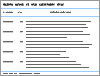
Table 1
Different mass concentrations of hormone combinations
培养基 Medium | A NAA/(mg⋅L-1) | B 6-BA/(mg⋅L-1) | C GA3/(mg⋅L-1) |
|---|---|---|---|
| CK | 0 | 0 | 0 |
| T1 | 2.0 | 1.0 | 0 |
| T2 | 0.5 | 1.0 | 0 |
| T3 | 2.0 | 1.0 | 1.0 |
| T4 | 0.5 | 1.0 | 0.5 |
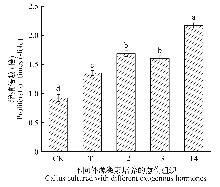
Fig.1
Proliferation coefficient of embryogenic callus under different exogenous hormonesDifferent lowercase letters indicated significant differences at P<0.05 level among different culture methods.
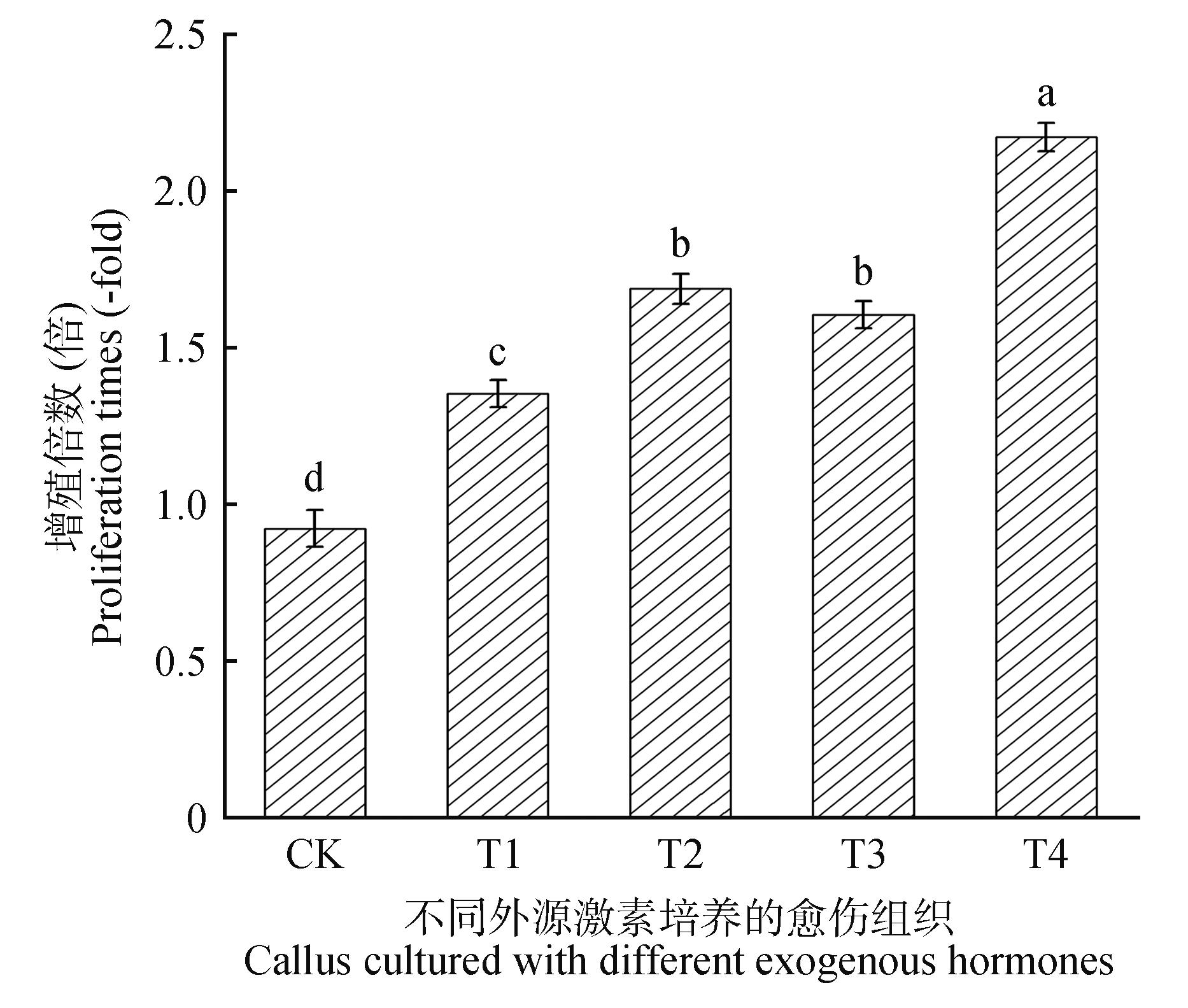
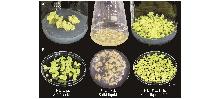
Fig.2
Morphological characteristics of embryogenic callus under different culture methodsA and B represented the growth status and morphological characteristics of embryogenic callus under different culture methods.
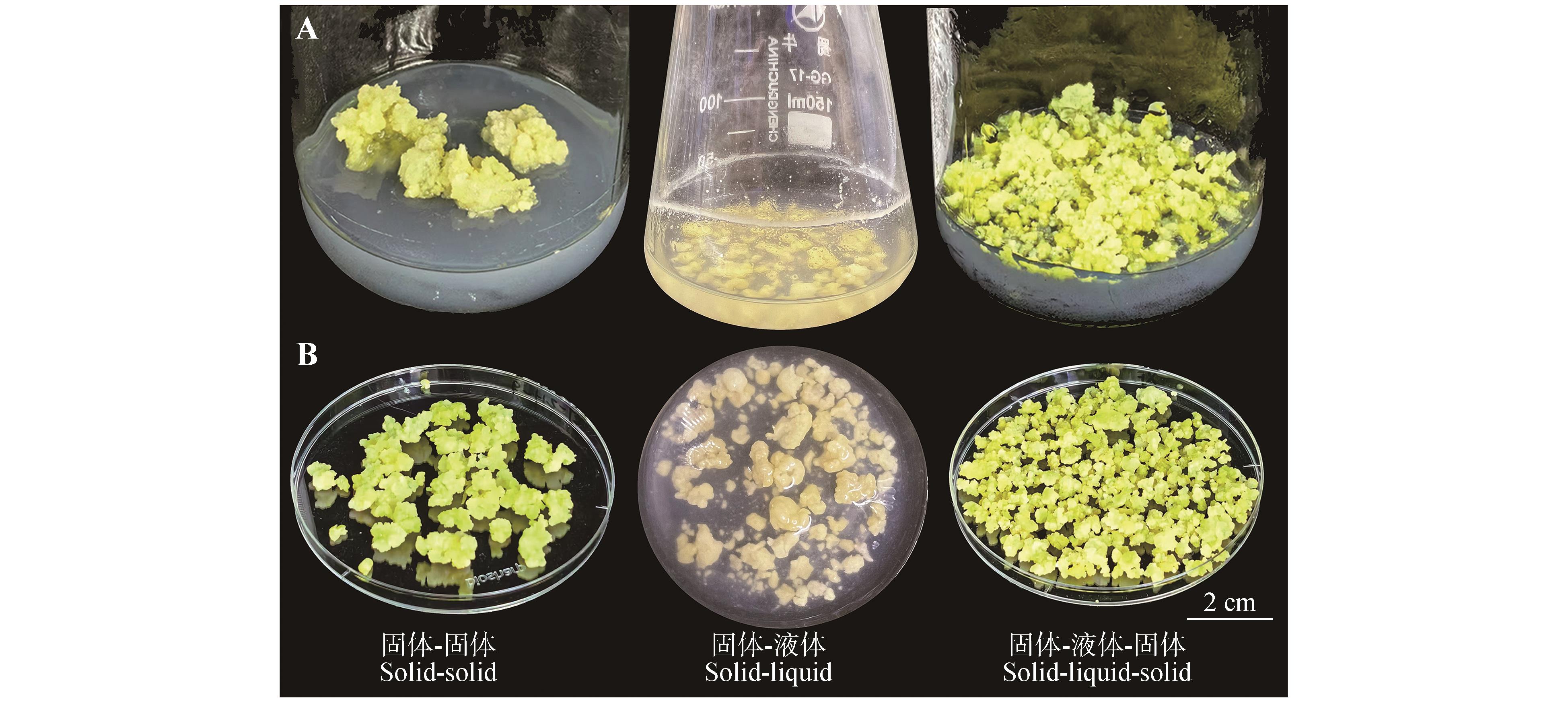
Fig.3
Cytological characteristics of embryogenic callus under different culture methods
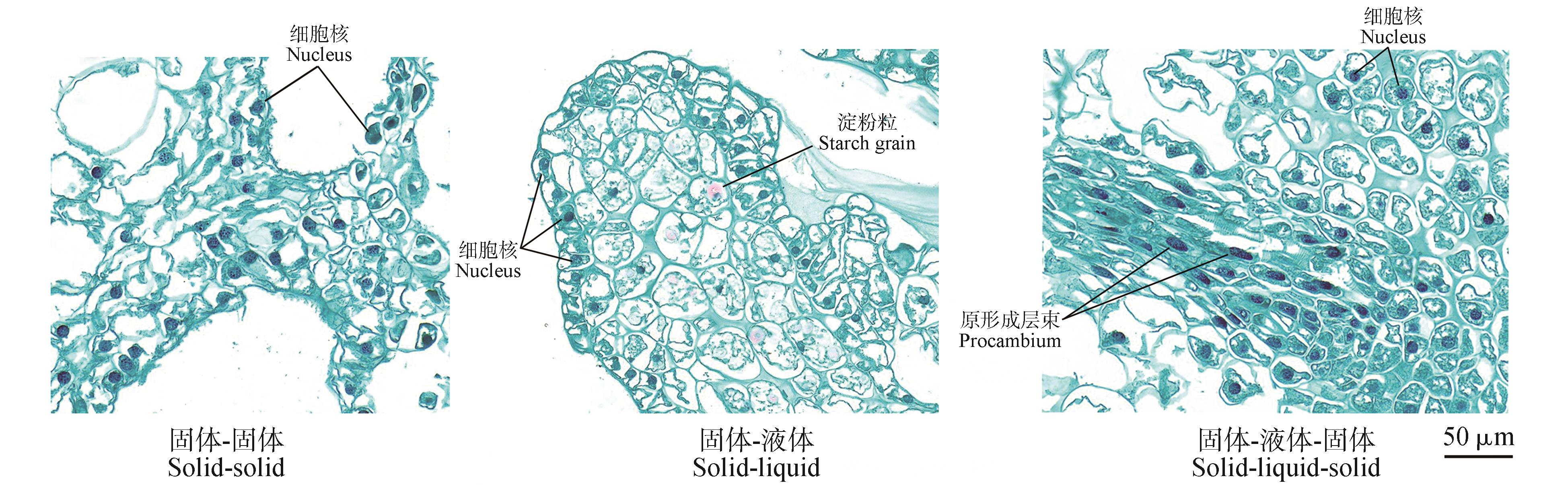
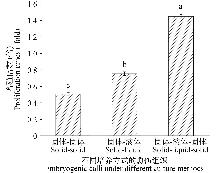
Fig.4
Proliferation coefficient of embryogenic callus under different culture methodsDifferent lowercase letters indicated significant differences at P<0.05 level among different culture methods.
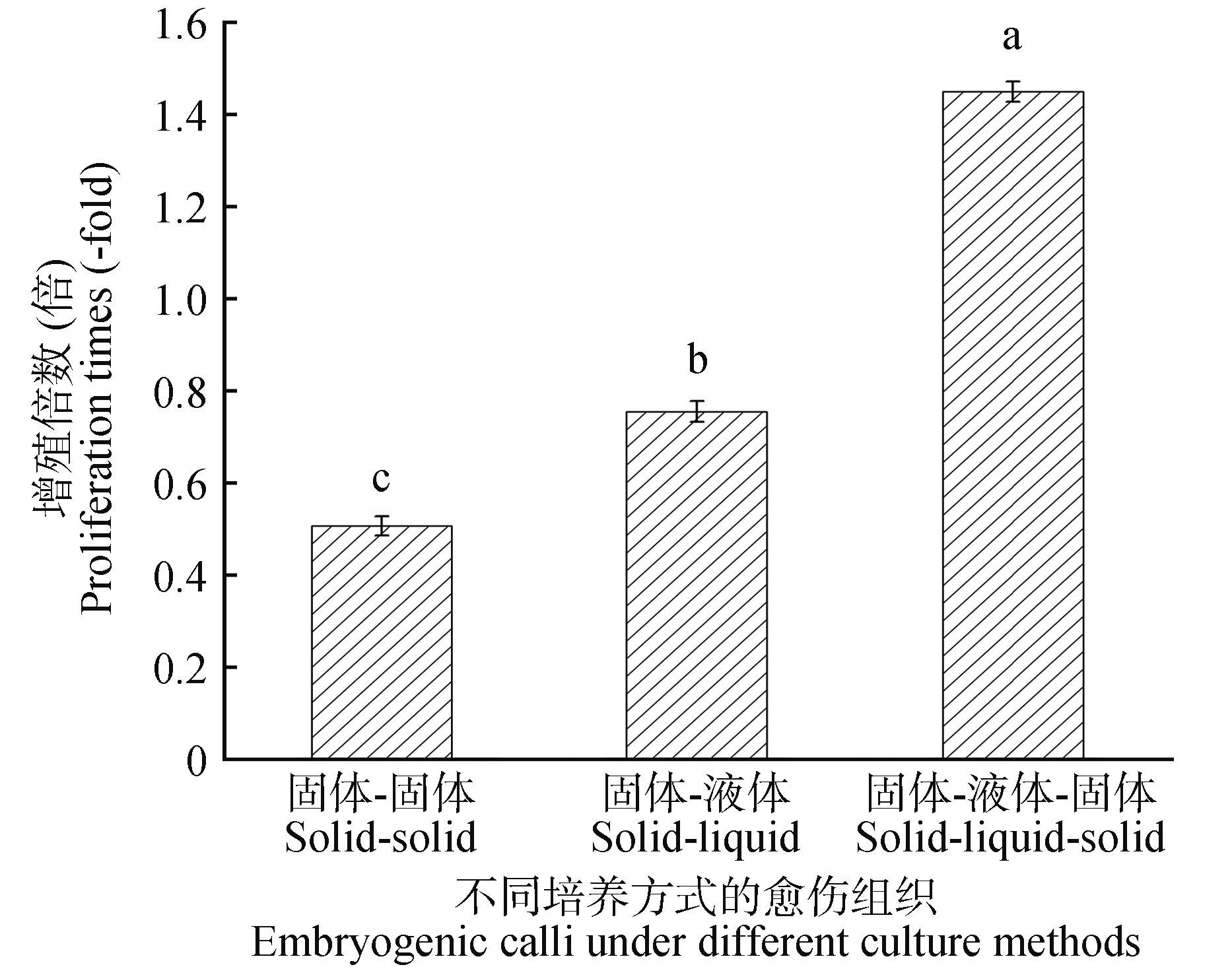
Fig.5
Effects of different culture methods on in vitro antioxidant capacity of the embryogenic callusA and B represented DPPH scavenging activity and FRAP value,respectively;different lowercase letters represented significant differences among different culture treatments at P<0.05.
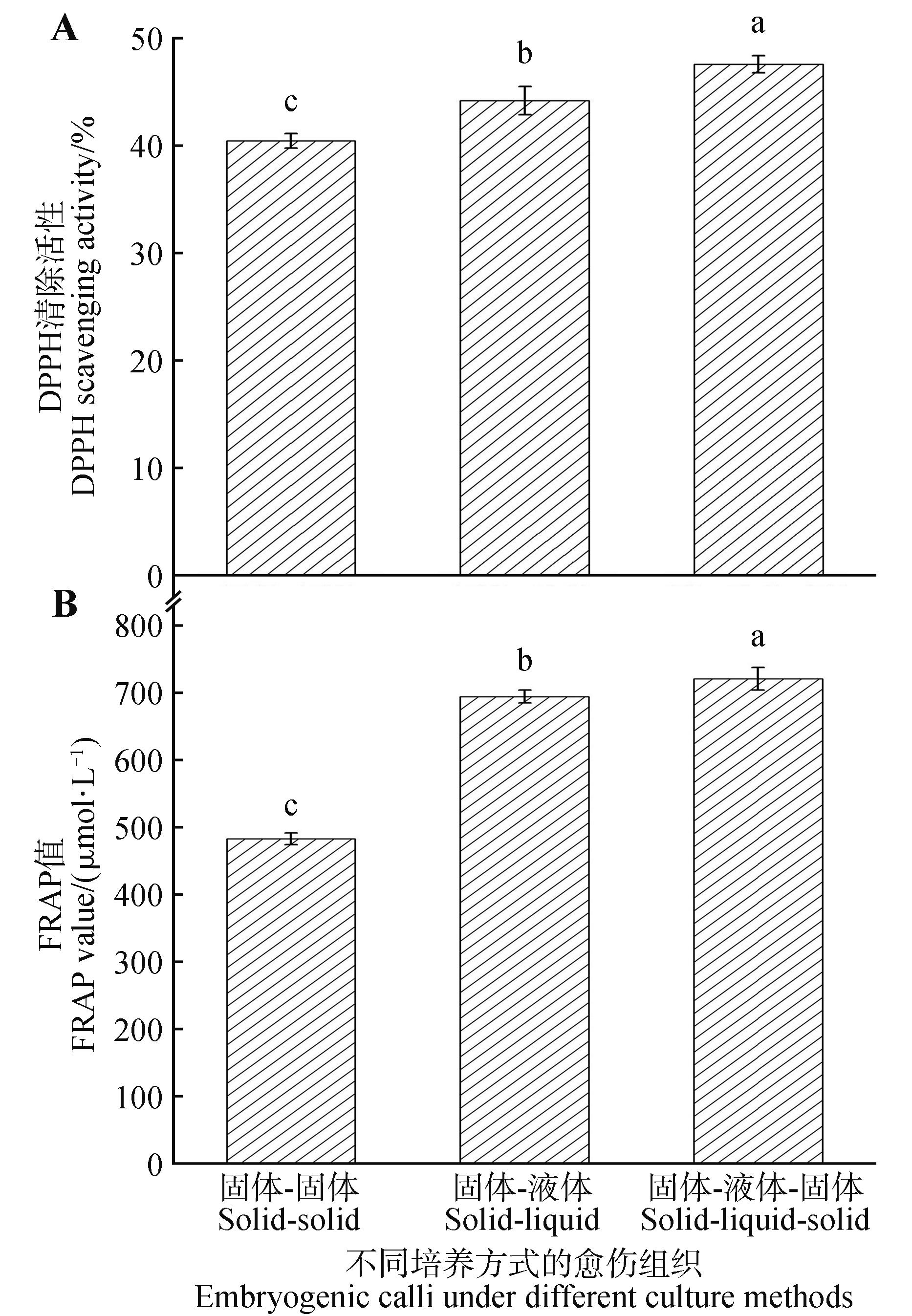
Fig.6
Effects of different culture methods on accumulation of bioactive metabolites of the embryogenic callusA,B and C represented mass fraction of soluble sugar,total flavonoids and phenolic,respectively; different lowercase letters represented significant differences among different treatments at P<0.05.
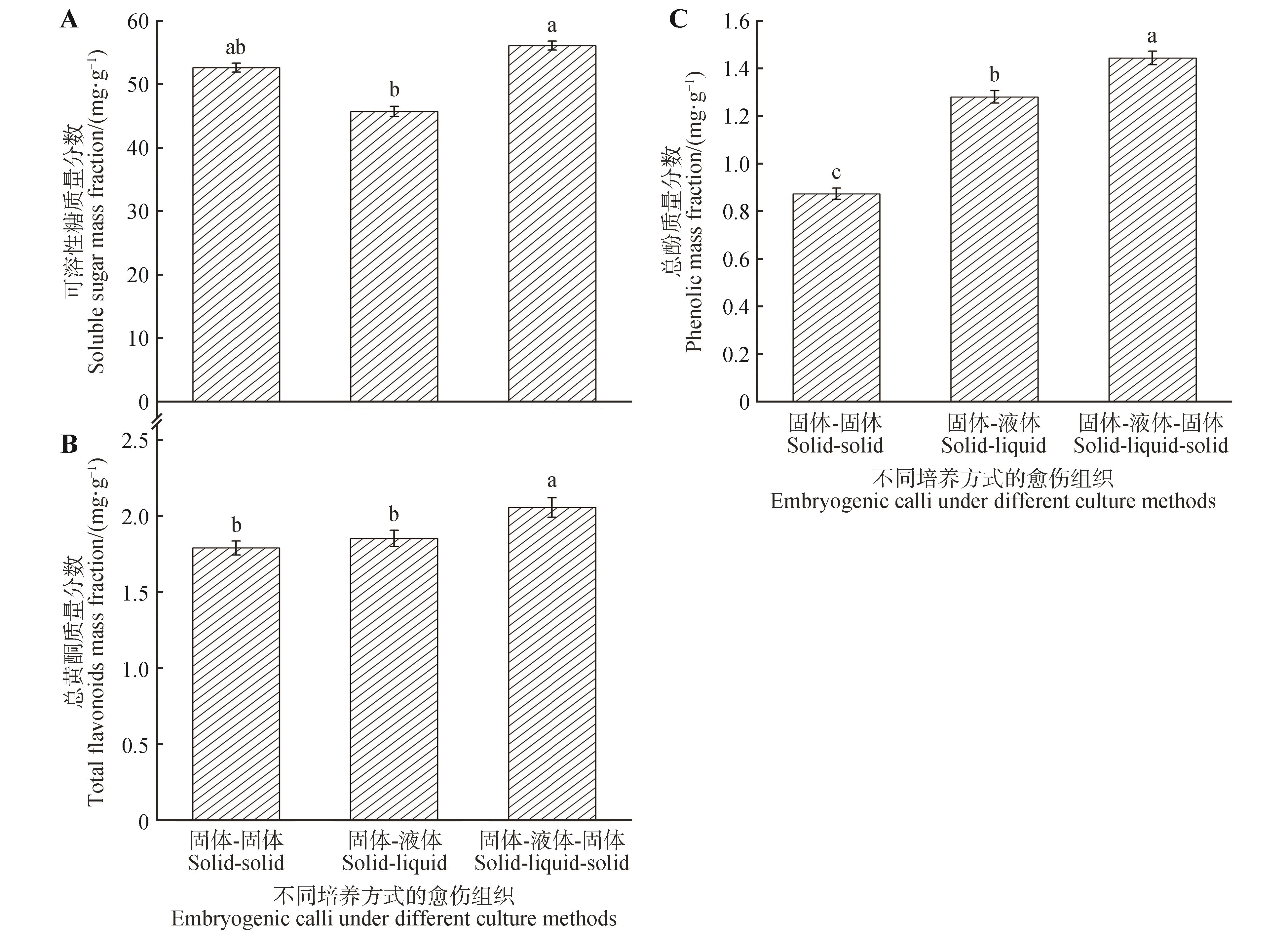
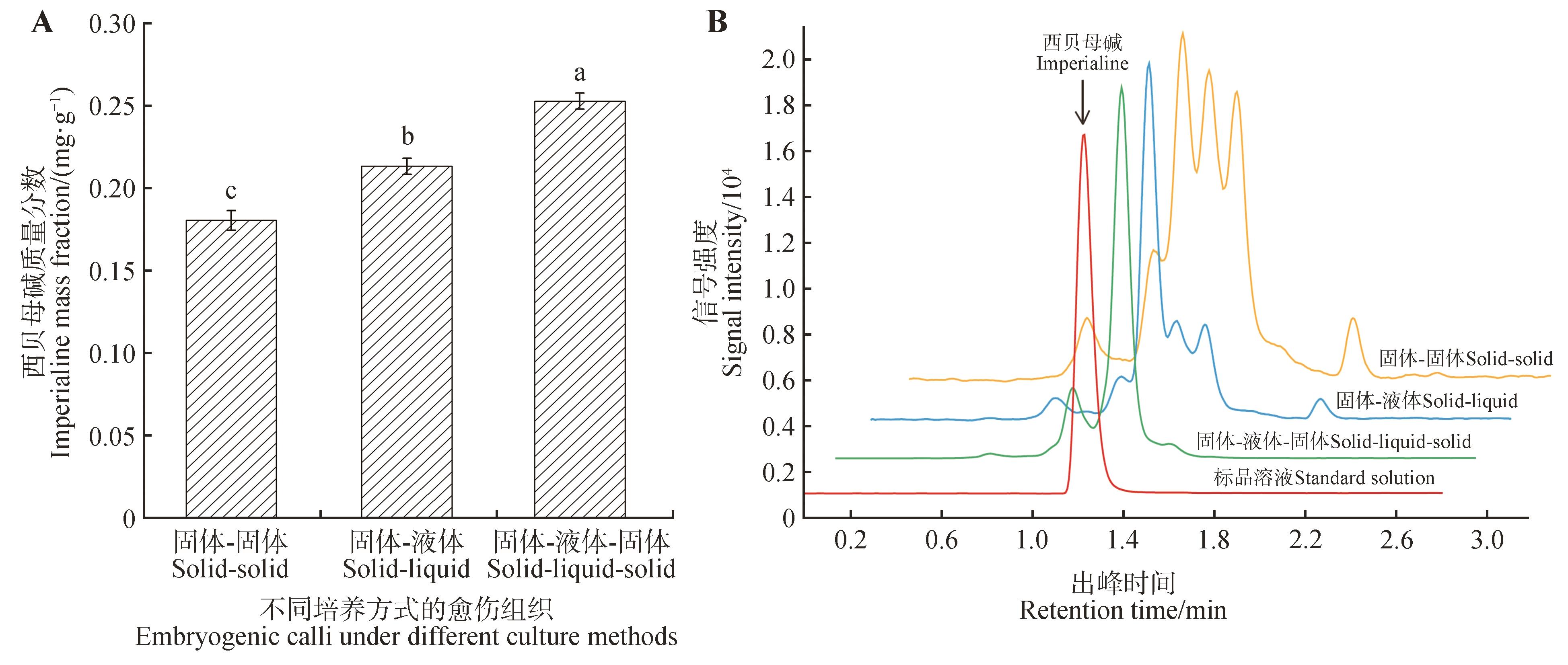
Fig.7
Effects of different culture methods on imperialine mass fraction of the embryogenic callusA.Imperialine content;B.LC-MS/MS chromatogram. Different lowercase letters indicated significant differences at P<0.05 level among different culture methods.
| [1] | 国家药典委员会.中华人民共和国药典:2025年版:一部[M].北京:中国医药科技出版社,2025:40-41. |
| China Pharmacopoeia Commission.Pharmacopoeia of the People’s Republic of China: 2025 Edition: Volume Ⅰ[M].Beijing:China Medical Science and Technology Press,2025:40-41. | |
| [2] | 谢梦迪,田亮玉,桂新景,等.近红外光谱技术结合化学计量学应用于川贝母真伪与规格的快速辨识研究[J].中草药,2022,53(8):2490-2498. |
| Xie Mengdi, Tian Liangyu, Gui Xinjing,et al.Fast identification of authenticity and specification of Fritillariae Cirrhosae Bulbus by near infrared spectroscopy combined with chemometrics[J].Chinese Traditional and Herbal Drugs,2022,53(8):2490-2498. | |
| [3] | 代琪,马珑珂,叶俏波,等.不同基源川贝母化学成分和药理作用研究进展[J].亚太传统医药,2024,20(6):239-243. |
| Dai Qi, Ma Longke, Ye Qiaobo,et al.Research advance in chemical constituents and pharmacological effects of Fritillariae Cirrhosae Bulbus from different base sources[J].Asia-Pacific Traditional Medicine,2024,20(6):239-243. | |
| [4] | 崔治家,马艳珠,张小荣,等.川贝母化学成分和药理作用研究进展及质量标志物的预测分析[J].中草药,2021,52(9):2768-2784. |
| Cui Zhijia, Ma Yanzhu, Zhang Xiaorong,et al.Research progress on chemical components and pharmacological effects and predictive analysis on quality markers of Fritillariae Cirrhosae Bulbus [J].Chinese Traditional and Herbal Drugs,2021,52(9):2768-2784. | |
| [5] | 王莹莹,余登利,邱风进,等.濒危植物岩生鼠尾草的组培快繁技术[J].植物研究,2025,45(4):558-568. |
| Wang Yingying, Yu Dengli, Qiu Fengjin,et al.Tissue culture and rapid propagation of endangered Salvia petrophila [J].Bulletin of Botanical Research,2025,45(4):558-568. | |
| [6] | 王娟,李金鑫,李建丽,等.植物组织培养技术在中药资源中的应用[J].中国中药杂志,2017,42(12):2236-2246. |
| Wang Juan, Li Jinxin, Li Jianli,et al.Application of plant tissue culture in field of Chinese medicine resources[J].China Journal of Chinese Materia Medica,2017,42(12):2236-2246. | |
| [7] | 李隆云,周裕书,代敏,等.暗紫贝母鳞茎再生组织培养技术研究[J].中国中药杂志,1995 (2):78-80. |
| Li Longyun, Zhou Yushu, Dai Min,et al.Study on tissue culture technology for bulb regeneration of Fritillaria unibracteata [J].China Journal of Chinese Materia Medica,1995(2):78-80. | |
| [8] | 陈敏,陈和荣,钟凤林,等.川贝母组织培养的研究[J].中国中药杂志,1995 (8):461-462. |
| Chen Min, Chen Herong, Zhong Fenglin,et al.Study on tissue culture of Fritillaria cirrhosa [J].China Journal of Chinese Materia Medica,1995 (8):461-462. | |
| [9] | 胡章薇,熊芹,肖小君.中草药川贝母繁育技术研究进展[J].安徽农学通报,2017,23(11):133-135. |
| Hu Zhangwei, Xiong Qin, Xiao Xiaojun.Research progress on the breeding technology of Fritillaria cirrhosa D. Don[J].Anhui Agricultural Science Bulletin,2017,23(11):133-135. | |
| [10] | 齐凤慧,王雯萱,刘林,等.基于液—固交替培养的水曲柳快速微繁系统研究[J].植物研究,2022,42(2):184-190. |
| Qi Fenghui, Wang Wenxuan, Liu Lin,et al.Rapid micropropagation of Fraxinus mandshurica Rupr. based on liquid and solid alternate culture[J].Bulletin of Botanical Research,2022,42(2):184-190. | |
| [11] | Zhang Z, Xing C Y, Su H Y,et al. In vitro plant regeneration and bioactive metabolite production of endangered medicinal plant Fritillaria cirrhosa [J].Current Plant Biology,2024,39:100363. |
| [12] | 王伟,张大燕,文欢,等.川贝母组织培养的影响因素研究[J].中药与临床,2017,8(4):1-3. |
| Wang Wei, Zhang Dayan, Wen Huan,et al.Study on the influencing factors of Chuanbeimu tissue culture[J].Pharmacy and Clinics of Chinese Materia Medica,2017,8(4):1-3. | |
| [13] | 王跃华,闫胜杰,代勇,等.川贝母不同部位外植体对鳞茎再生的影响[J].西南农业学报,2010,23(6):2026-2029. |
| Wang Yuehua, Yan Shengjie, Dai Yong,et al.Effect of different part of explants on regeneration of Fritillariae Cirrhosae bulb[J].Southwest China Journal of Agricultural Sciences,2010,23(6):2026-2029. | |
| [14] | 李强.组培川贝母(Fritillaria cirrhosa D. Don)鳞茎形成和发育过程中的生理生化研究[D].成都:四川大学,2003. |
| Li Qiang.Biochemical and physiological research of cultured Fritillaria cirrhosa D. Don during bulb organogensis and development[D].Chengdu:Sichuan University,2003. | |
| [15] | Liu X X, Luo M M, Li M F,et al.Depicting precise temperature and duration of vernalization and inhibiting early bolting and flowering of Angelica sinensis by freezing storage[J].Frontiers in Plant Science,2022,13:853444. |
| [16] | Li M F, Lü M, Yang D L,et al.Temperature-regulated anatomical and gene-expression changes in Sinopodophyllum hexandrum seedlings[J].Industrial Crops and Products,2020,152:112479. |
| [17] | Huang T M, Liu D, Cui X W,et al. In vitro bioactive metabolite production and plant regeneration of medicinal plant Angelica sinensis [J].Industrial Crops and Products,2023,194:116276. |
| [18] | Dong H, Li M L, Jin L,et al.Cool temperature enhances growth,ferulic acid and flavonoid biosynthesis while inhibiting polysaccharide biosynthesis in Angelica sinensis [J].Molecules,2022,27(1):320. |
| [19] | Li M L, Cui X W, Jin L,et al.Bolting reduces ferulic acid and flavonoid biosynthesis and induces root lignification in Angelica sinensis [J].Plant Physiology and Biochemistry,2022,170:171-179. |
| [20] | Zhu T T, Zhang M H, Su H Y,et al.Integrated metabolomic and transcriptomic analysis reveals differential mechanism of flavonoid biosynthesis in two cultivars of Angelica sinensis [J].Molecules,2022,27(1):306. |
| [21] | Nencini C, Menchiari A, Franchi G G,et al. In vitro antioxidant activity of aged extracts of some Italian Allium species[J].Plant Foods for Human Nutrition,2011,66(1):11-16. |
| [22] | Li M F, Pare P W, Zhang J L,et al.Antioxidant capacity connection with phenolic and flavonoid content in Chinese medicinal herbs[J].Records of Natural Products,2018,12(3):239-250. |
| [23] | 栗孟飞,姚园园,杨林贵,等.狭叶红景天引种驯化后抗氧化能力、主要活性物质含量及挥发性组分的变化[J].应用生态学报,2017,28(9):2947-2954. |
| Li Mengfei, Yao Yuanyuan, Yang Lingui,et al.Changes in antioxidant capacity,main bioactive compounds and volatile constituents of Rhodiola kirilowii after introduction and acclimatization[J].Chinese Journal of Applied Ecology,2017,28(9):2947-2954. | |
| [24] | Lay M M, Karsani S A, Mohajer S,et al.Phytochemical constituents,nutritional values,phenolics,flavonols,flavonoids,antioxidant and cytotoxicity studies on Phaleria macrocarpa (Scheff.) Boerl fruits[J].BMC Complementary and Alternative Medicine,2014,14(1):152. |
| [25] | Li M F, Li T, Li W,et al.Changes in antioxidant capacity,levels of soluble sugar,total polyphenol,organosulfur compound and constituents in garlic clove during storage[J].Industrial Crops and Products,2015,69:137-142. |
| [26] | 韩鸿萍,徐顺连,曹佳佳,等.UPLC-TQD-MS/MS分析青海川贝母药材中的生物碱[J].化学研究与应用,2023,35(10):2364-2369. |
| Han Hongping, Xu Shunlian, Cao Jiajia,et al.Analysis of alkaloids in Qinghai Fritillaria D. Don based on UPLC-TQD-MS/MS[J].Chemical Research and Application,2023,35(10):2364-2369. | |
| [27] | 李亦轩,赵健,付双彬,等.气动生物反应器油松胚性愈伤增殖体系的建立研究[J].北京林业大学学报,2019,41(11):37-43. |
| Li Yixuan, Zhao Jian, Fu Shuangbin,et al.Enhancement of embryogenic callus proliferation in Chinese pine (Pinus tabuliformis) by airlift bioreactor[J].Journal of Beijing Forestry University,2019,41(11):37-43. | |
| [28] | Yang X Y, Zhang X L.Regulation of somatic embryogenesis in higher plants[J].Critical Reviews in Plant Sciences,2010,29(1):36-57. |
| [29] | 王诗忆,黄奕孜,李舟阳,等.植物体细胞胚胎发生及其分子调控机制研究进展[J].浙江农林大学学报,2022,39(1):223-232. |
| Wang Shiyi, Huang Yizi, Li Zhouyang,et al.Research progress in plant somatic embryogenesis and its molecular regulation mechanism[J].Journal of Zhejiang A&F University,2022,39(1):223-232. | |
| [30] | 王跃华,何宗晟,孙雁霞,等.川贝母细胞团块悬浮培养生产生物碱的研究[J].中药材,2011,34(2):183-186. |
| Wang Yuehua, He Zongsheng, Sun Yanxia,et al.Study on the production of alkaloid by cell mass suspension culture of Fritillaria cirrhosa [J].Journal of Chinese Medicinal Materials,2011,34(2):183-186. | |
| [31] | 陈书安,王晓东,袁晓凡,等.藏红花细胞悬浮培养体系的建立及优化[J].生物技术通报,2010 (7):157-160. |
| Chen Shu’an, Wang Xiaodong, Yuan Xiaofan,et al.Establishment and optimization of Crocus sativus L. cell suspension culture system[J].Biotechnology Bulletin,2010(7):157-160. | |
| [32] | 宋跃,李淑娟,张含国,等.落叶松胚性愈伤组织悬浮培养体系的优化[J].林业科学,2018,54(7):146-154. |
| Song Yue, Li Shujuan, Zhang Hanguo,et al. Establishment and optimization of embryogenic callus suspension culture system of Larix [J].Scientia Silvae Sinicae,2018,54(7):146-154. | |
| [33] | 木合热皮亚·艾尔肯,张富春.诱导植物体细胞胚发生的几个因素研究[J].北方园艺,2013 (3):194-197. |
| Aierken Muherepiya, Zhang Fuchun. Studies on several factors inducing somatic embryogenesis of plant[J].Northern Horticulture,2013 (3):194-197. | |
| [34] | 熊成明,王巧欣,何利明,等.复幼措施对水曲柳生长与组培再生的影响[J].植物研究,2026,46(1):91-100. |
| Xiong Chengming, Wang Qiaoxin, He Liming,et al.Impact of rejuvenation measures on growth and tissue culture regeneration of Fraxinus mandshurica [J].Bulletin of Botanical Research,2026,46(1):91-100. | |
| [35] | 张建伟,王军辉,马建伟.粗枝云杉胚性愈伤组织增殖后期的体细胞胚发生方式转变[J].植物生理学报,2014,50(2):197-202. |
| Zhang Jianwei, Wang Junhui, Ma Jianwei.The way change of somatic embryogenesis at the late stage of embryogenic callus proliferation of Picea asperata Mast[J].Plant Physiology Journal,2014,50(2):197-202. | |
| [36] | Balla J, Kalousek P, Reinöhl V,et al.Competitive canalization of PIN-dependent auxin flow from axillary buds controls pea bud outgrowth[J].The Plant Journal,2011,65(4):571-577. |
| [37] | Alikhani S, Ghanati F, Hajebrahimi Z,et al.Soluble sugars maintain redox homeostasis and accelerate the growth of cultured Malva neglecta cells under 2D-clinorotation[J].Journal of Plant Physiology,2025,308:154489. |
| [38] | 占爱瑶,由香玲,詹亚光,等.白桦单细胞培养体系的建立[J].植物生理学通讯,2010,46(4):370-374. |
| Zhan Aiyao, You Xiangling, Zhan Yaguang,et al.Establishment of single cell culture of white birch (Betula platyphylla Suk.)[J].Plant Physiology Communications,2010,46(4):370-374. | |
| [39] | 刘艳军,张超,杨静慧,等.塔杨松散型均质胚性愈伤组织培养体系[J].植物研究,2016,36(1):123-128. |
| Liu Yanjun, Zhang Chao, Yang Jinghui,et al.Culture system on loose,homogeneous,embryogenic callus of Populus×canadensis Moench ‘Tower’[J].Bulletin of Botanical Research,2016,36(1):123-128. | |
| [40] | 刘群,李天祥,李庆和,等.药用植物细胞悬浮培养产生次生代谢产物的研究进展[J].天津中医药大学学报,2014,33(6):375-377. |
| Liu Qun, Li Tianxiang, Li Qinghe,et al.Research progress on production of secondary metabolites by cell suspension culture of medicinal plants[J].Journal of Tianjin University of Traditional Chinese Medicine,2014,33(6):375-377. |
| [1] | Huaiyi MA, Dan QIU, Yidi WANG, Mengfei LI. Effects of Methyl Jasmonate on Growth, Bioactive Metabolites Accumulation and Key Genes Expression in Suspension Cells of Angelica sinensis [J]. Bulletin of Botanical Research, 2026, 46(5): 880-888. |
| [2] | Wenhui GUO, Yue WANG, Lin WU, Jianfei YANG, Ling YANG, Peng ZHANG, Haibo WU, Hailong SHEN. Effects of Exogenous Flavonoids on Embryogenic Callus Proliferation and Somatic Embryogenesis of Korean Pine [J]. Bulletin of Botanical Research, 2025, 45(1): 130-138. |
| [3] | Yuhui REN, Shuai NIE, Chunxue PENG, Ling YANG, Hailong SHEN. Effects of Hormone Combinations, Carbon Source Type and Proliferation Cycle on Embryogenic Callus Proliferation of Pinus koraiensis [J]. Bulletin of Botanical Research, 2022, 42(4): 704-712. |
| [4] | Qiyang Gao, Yulong Huang, Wenbing Guo, Fencheng Zhao, Yang Liu. Effects of Carbon Source and Other Factors on the Proliferation of Embryogenic Callus of Elite Clone of Pinus elliottii [J]. Bulletin of Botanical Research, 2022, 42(1): 21-28. |
| [5] | HONG Sen-Rong;YIN Ming-Hua*;WANG Ai-Ping. Cryopreservation Technique of Jiangxi Yanshan Red Bud Taro(Colocasia esculenta L. Schott var. cormosus CV.Hongyayu) Embryogenic Callus by Droplet-vitrification [J]. Bulletin of Botanical Research, 2014, 34(3): 333-338. |
| [6] | GUO Ling-Ling;MIAO Shu-Kui;JI Qiao-Ling*;JIANG Li. High Frequency Somatic Embryogenesis and Histological Observation on Linum usitatissimum L. ‘Fany’ [J]. Bulletin of Botanical Research, 2011, 31(3): 306-312. |
| [7] | YANG Ling;SHEN Hai-Long*;LIU Chun-Ping;ZHAI Xiao-Jie. Somatic Embryogenesis from Mature Zygotic Embryo Explants of Sorbus pohuashanensis Hedl [J]. Bulletin of Botanical Research, 2010, 30(2): 174-179. |
| [8] | ZHANG Jian-Ying;JIANG Si-Jia;XING Ya-Juan;GUO Shu-Ping;GUO Xi-Jun;WANG Fei;*. Induction of Embryogenic callus and Somatic Embryogenesis of Juglans mandshurica Maxim. [J]. Bulletin of Botanical Research, 2010, 30(1): 22-26. |
| [9] | SHEN Yu-Hua;LI Wang-Feng;JIN Tai-Cheng;CHANG Qing;YIN Dong-Xu;WANG De-Li;LIU Li-Xia*. Establishment and Optimization of Agrobacterium-mediated Transformation of Suspension Embryogenic Callus of Alfalfa [J]. Bulletin of Botanical Research, 2009, 29(6): 721-727. |
| [10] | ZHAO Xiao-Min;SHEN Hai-Long*;YANG Ling;LIU Chun-Ping. Factors Affecting Induction of embryogenic callus of Larix gmelinii [J]. Bulletin of Botanical Research, 2007, 27(5): 538-543. |
| Viewed | ||||||
|
Full text |
|
|||||
|
Abstract |
|
|||||