Bulletin of Botanical Research ›› 2026, Vol. 46 ›› Issue (3): 458-470.doi: 10.7525/j.issn.1673-5102.2026.03.007
• Original Paper • Previous Articles Next Articles
Mei DING, Fan YANG, Anran LIU, Qin DU( )
)
Received:2026-01-27
Online:2026-05-20
Published:2026-06-01
Contact:
Qin DU
E-mail:duqin@gzucm.edu.cn
CLC Number:
Mei DING, Fan YANG, Anran LIU, Qin DU. Establishment of a Protoplast Isolation and Transient Transformation System from Different Explant Sources of Andrographis paniculata[J]. Bulletin of Botanical Research, 2026, 46(3): 458-470.
Add to citation manager EndNote|Ris|BibTeX
URL: https://bbr.nefu.edu.cn/EN/10.7525/j.issn.1673-5102.2026.03.007
Table 1
Orthogonal experimental design L9(33 ) for protoplast isolation from cotyledons
水平 Level | 纤维素酶 Cellulase/% | 离析酶 Macerozyme/% | 酶解时间 Enzymatic hydrolysis time/h |
|---|---|---|---|
| 1 | 4.0 | 0.5 | 3 |
| 2 | 5.0 | 1.0 | 4 |
| 3 | 6.0 | 1.5 | 5 |
Table 2
Orthogonal experimental design L9(33 ) for protoplast isolation from root callus
水平 Level | 纤维素酶 Cellulase/% | 离析酶 Macerozyme/% | 酶解时间 Enzymatic hydrolysis time/h |
|---|---|---|---|
| 1 | 3.0 | 1.0 | 7 |
| 2 | 3.5 | 1.5 | 8 |
| 3 | 4.0 | 2.0 | 9 |
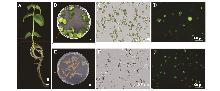
Fig.1
Isolation of protoplasts from cotyledons and root callus of Andrographis paniculataA. Sterile seedlings of Andrographis paniculata cultured for 30 days; B, E. Cotyledons and roots callus, respectively; C, F. Protoplasts isolated from cotyledon and root callus under bright field, respectively; D, J. Corresponding FDA-stained protoplasts of cotyledon and root callus under dark field, respectively.
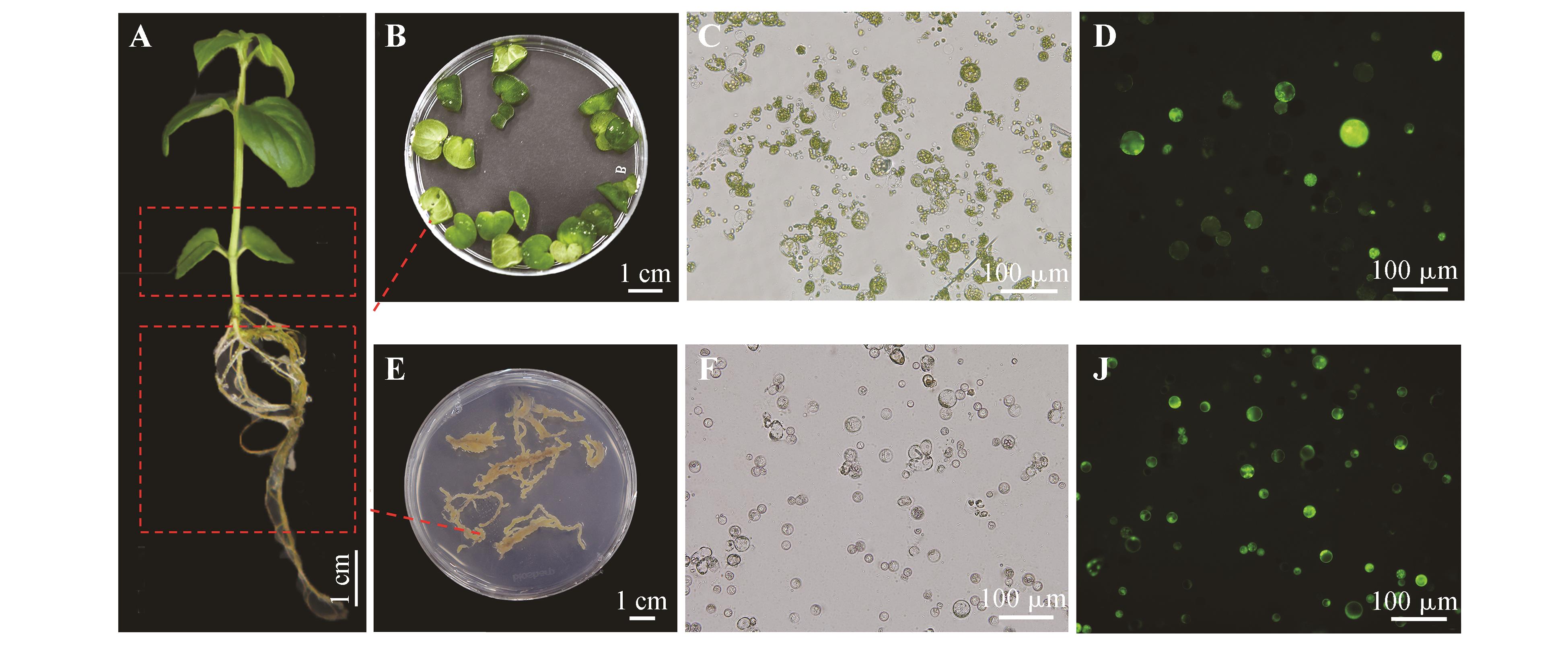
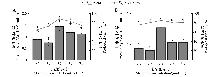
Fig.2
Effect of mannitol concentration on yield and viability of protoplasts from different explants of Andrographis paniculataA.Cotyledons; B.Root callus. Different lowercase letters indicated significant differences among groups(P<0.05).
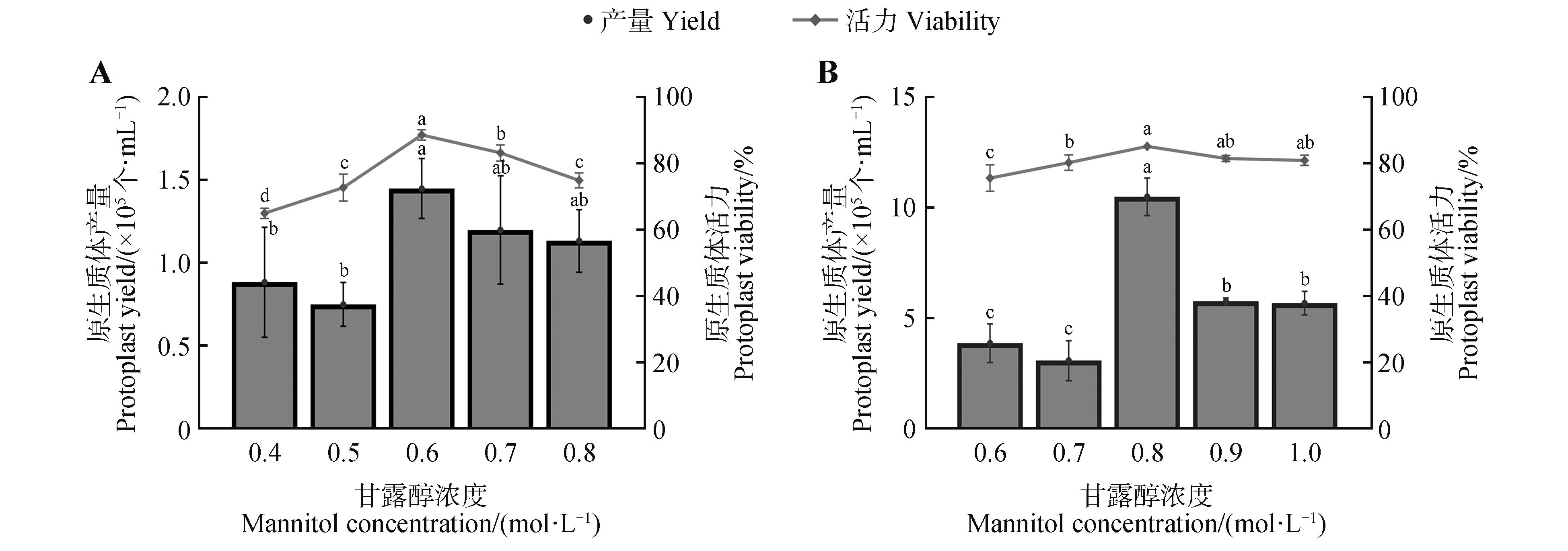
Fig.3
Effect of enzyme concentration on yield and viability of protoplasts from different explants of Andrographis paniculataA,C.Cotyledons; B,D,E.Root callus. Different lowercase letters indicated significant differences among groups(P<0.05).
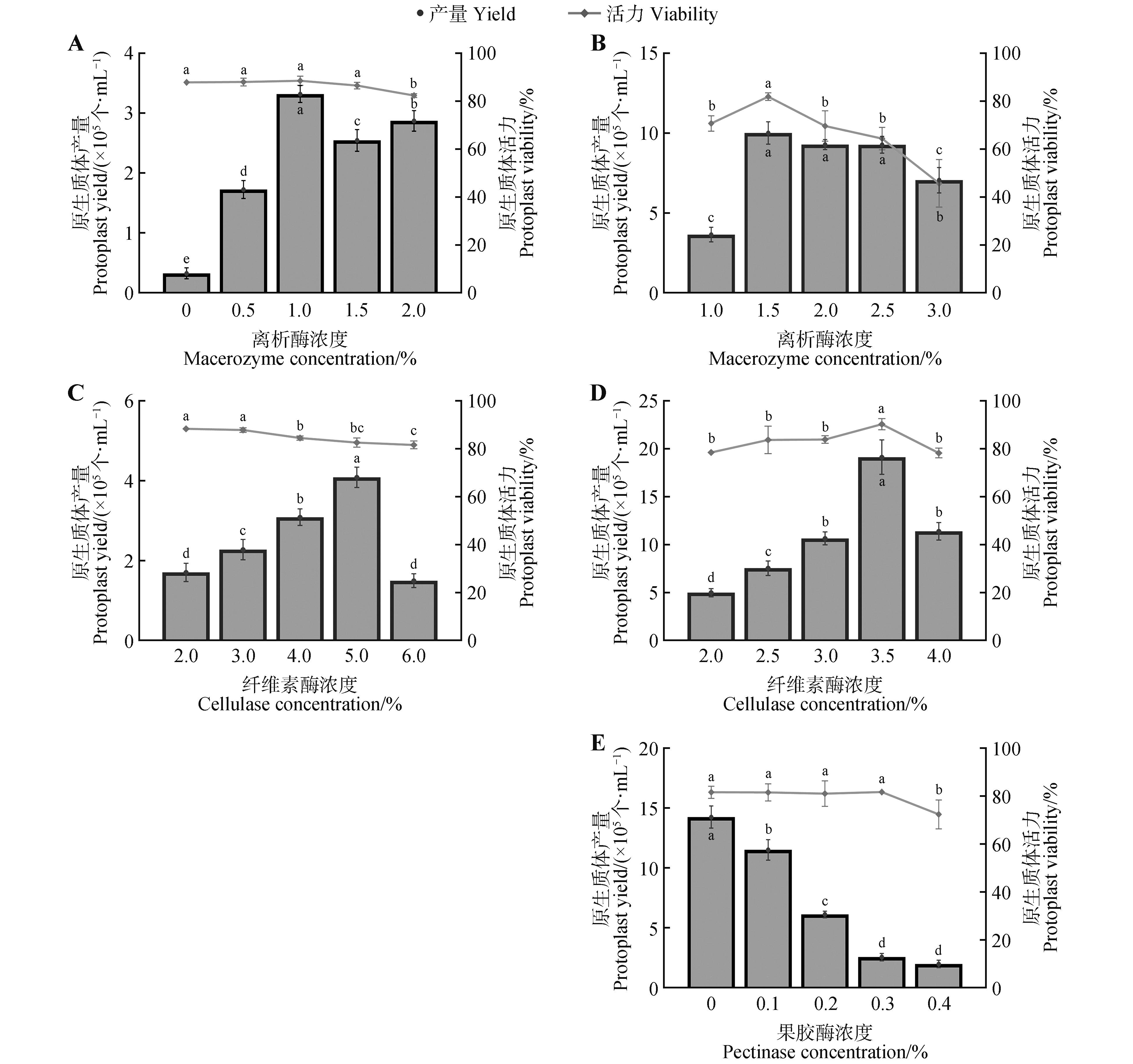
Fig.4
Effect of enzymatic digestion time on yield and viability of protoplasts from different explants of Andrographis paniculataA.Cotyledons;B.Root callus. Different lowercase letters indicated significant differences among groups(P<0.05).
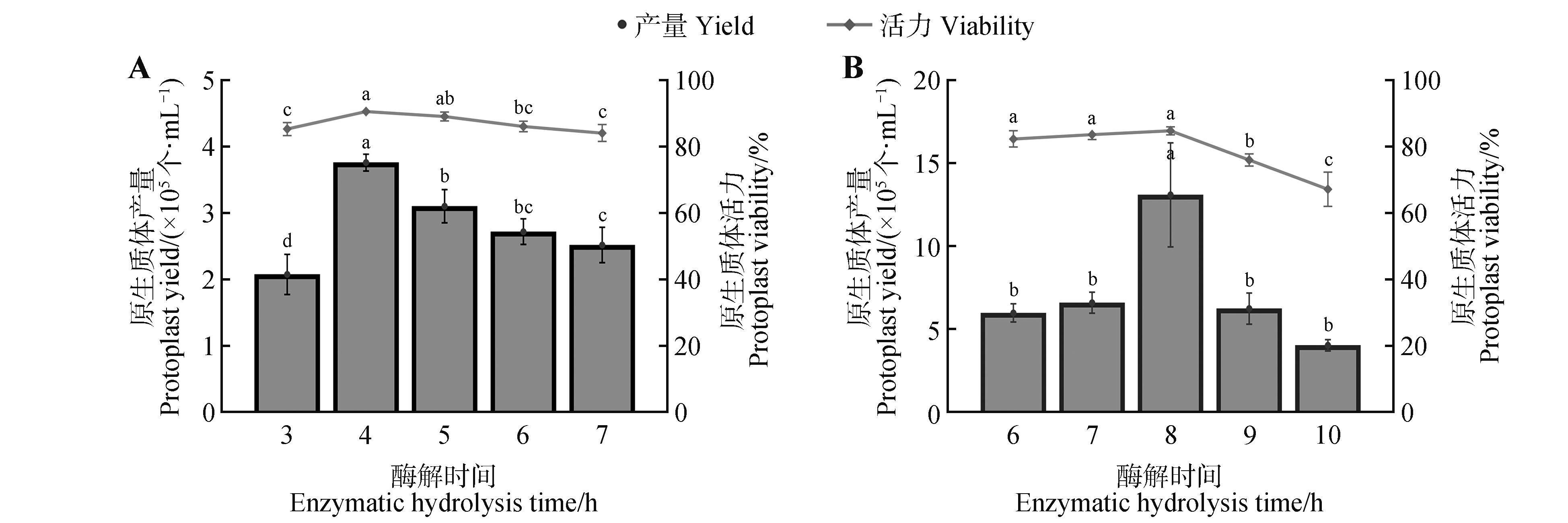
Table 3
Results of orthogonal test and range analysis for Andrographis paniculata cotyledons
编号 Number | A | B | C | 产量 Protoplast yield/ (×105 个·mL-1) |
|---|---|---|---|---|
| 1 | 1 | 2 | 3 | 1.90 |
| 2 | 1 | 3 | 2 | 3.32 |
| 3 | 1 | 1 | 1 | 1.35 |
| 4 | 2 | 3 | 3 | 1.73 |
| 5 | 2 | 2 | 1 | 1.63 |
| 6 | 2 | 1 | 2 | 0.75 |
| 7 | 3 | 3 | 1 | 1.57 |
| 8 | 3 | 1 | 3 | 1.60 |
| 9 | 3 | 2 | 2 | 2.97 |
| K1 | 6.57 | 3.70 | 4.55 | |
| K2 | 4.11 | 6.50 | 7.04 | |
| K3 | 6.14 | 6.62 | 5.23 | |
| R | 0.82 | 0.97 | 0.83 |
Table 4
Analysis of variance for orthogonal test results
方差来源 Source | 平方和 SS | 自由度 df | 均方 MS | F | P |
|---|---|---|---|---|---|
| A | 1.565 | 2 | 0.783 | 1.588 | 0.225 |
| B | 2.975 | 2 | 1.488 | 3.427 | 0.049 |
| C | 5.821 | 2 | 2.910 | 9.224 | 0.001 |
Table 5
Orthogonal test results and extreme variance analysis for Andrographis paniculata root callus
编号 Number | A | B | C | 产量 Protoplast yield/ (×105个·mL-1) |
|---|---|---|---|---|
| 1 | 1 | 2 | 3 | 1.51 |
| 2 | 1 | 3 | 2 | 0.44 |
| 3 | 1 | 1 | 1 | 2.74 |
| 4 | 2 | 3 | 3 | 4.46 |
| 5 | 2 | 2 | 1 | 1.53 |
| 6 | 2 | 1 | 2 | 5.67 |
| 7 | 3 | 3 | 1 | 2.00 |
| 8 | 3 | 1 | 3 | 6.23 |
| 9 | 3 | 2 | 2 | 4.92 |
| K1 | 4.69 | 14.64 | 6.26 | |
| K2 | 11.66 | 7.96 | 11.03 | |
| K3 | 13.15 | 6.90 | 12.20 | |
| R | 8.46 | 7.74 | 5.94 |
Table 6
Analysis of variance of orthogonal test results
方差来源 Source | 平方和 SS | 自由度 df | 均方 MS | F | P |
|---|---|---|---|---|---|
| A | 40.732 | 2 | 20.366 | 7.327 | 0.003 |
| B | 35.230 | 2 | 17.615 | 5.855 | 0.008 |
| C | 19.794 | 2 | 9.897 | 2.710 | 0.087 |
Fig.5
Effect of culture duration on yield and viability of protoplasts from Andrographis paniculata root ca-llusDifferent lowercase letters indicated significant differences among groups(P<0.05).
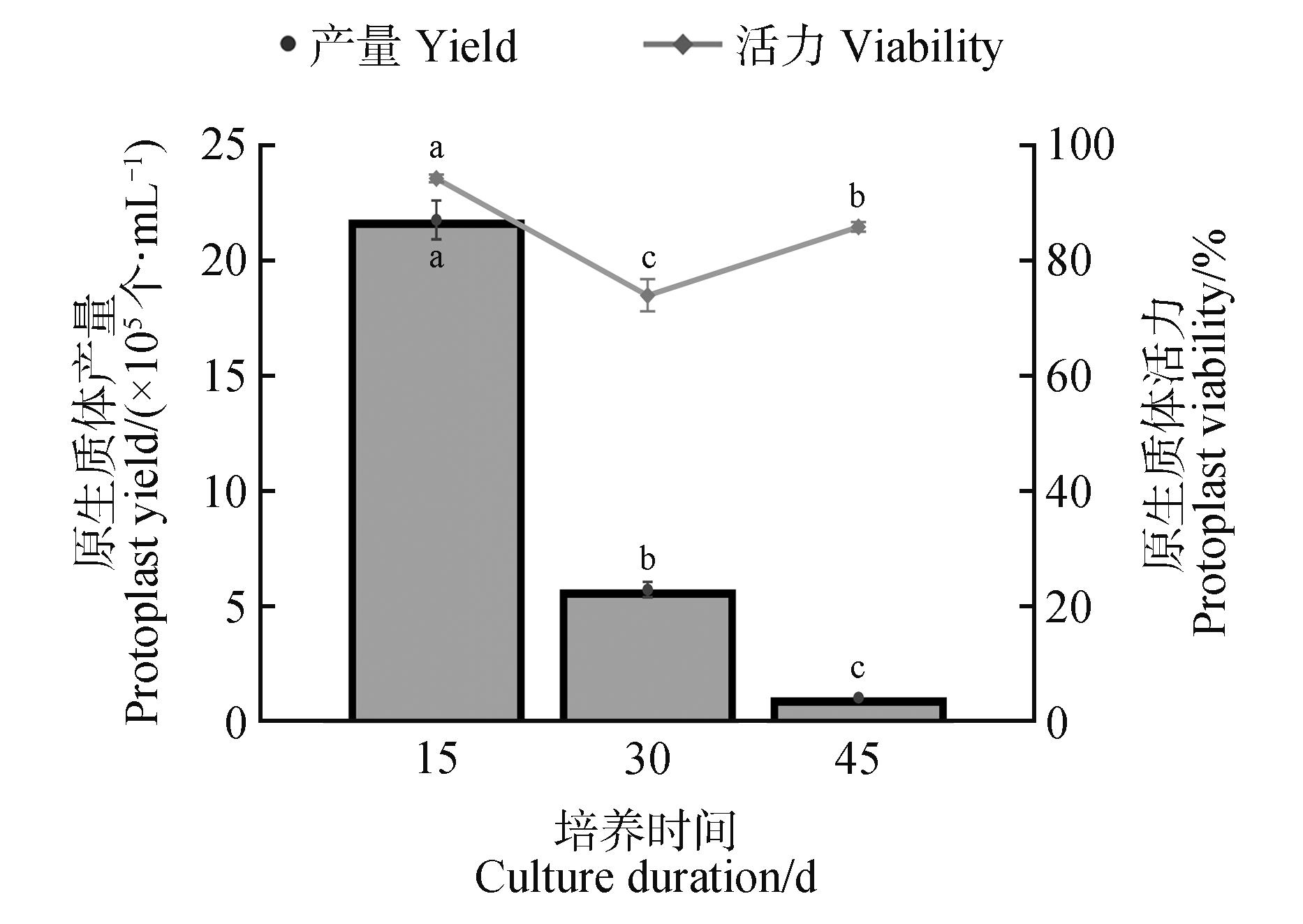
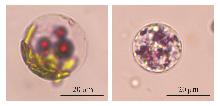
Fig.6
Vacuole staining of protoplasts from cotyledon and root callusA.Cotyledon;B.Root callus.
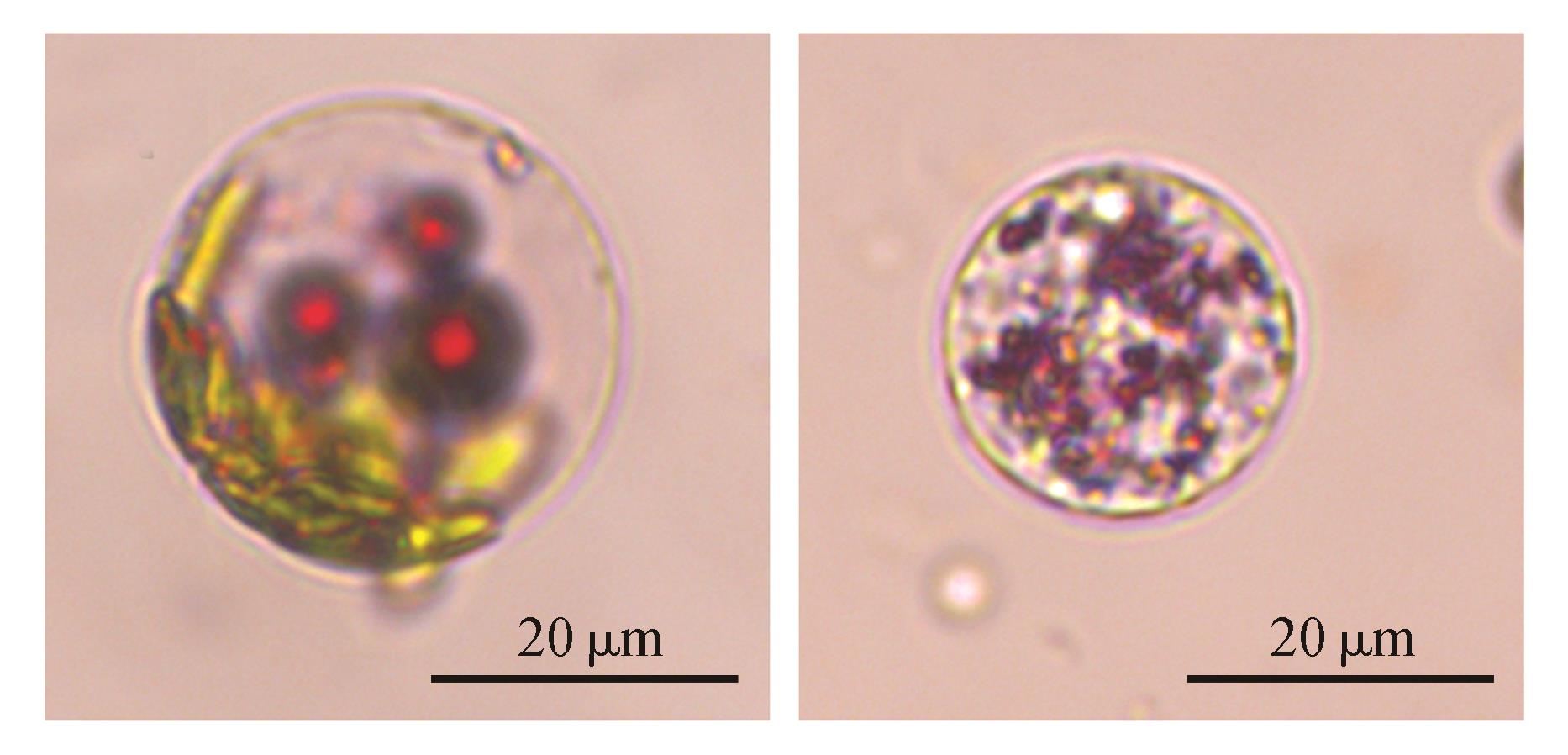
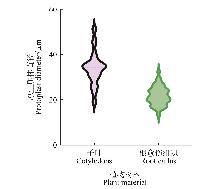
Fig.7
Diameter of protoplasts from different tissues of Andrographis paniculata
Fig.8
Factors affecting the transient transformation of Andrographis paniculata protoplastsDifferent lowercase letters indicated significant differences among groups(P<0.05).
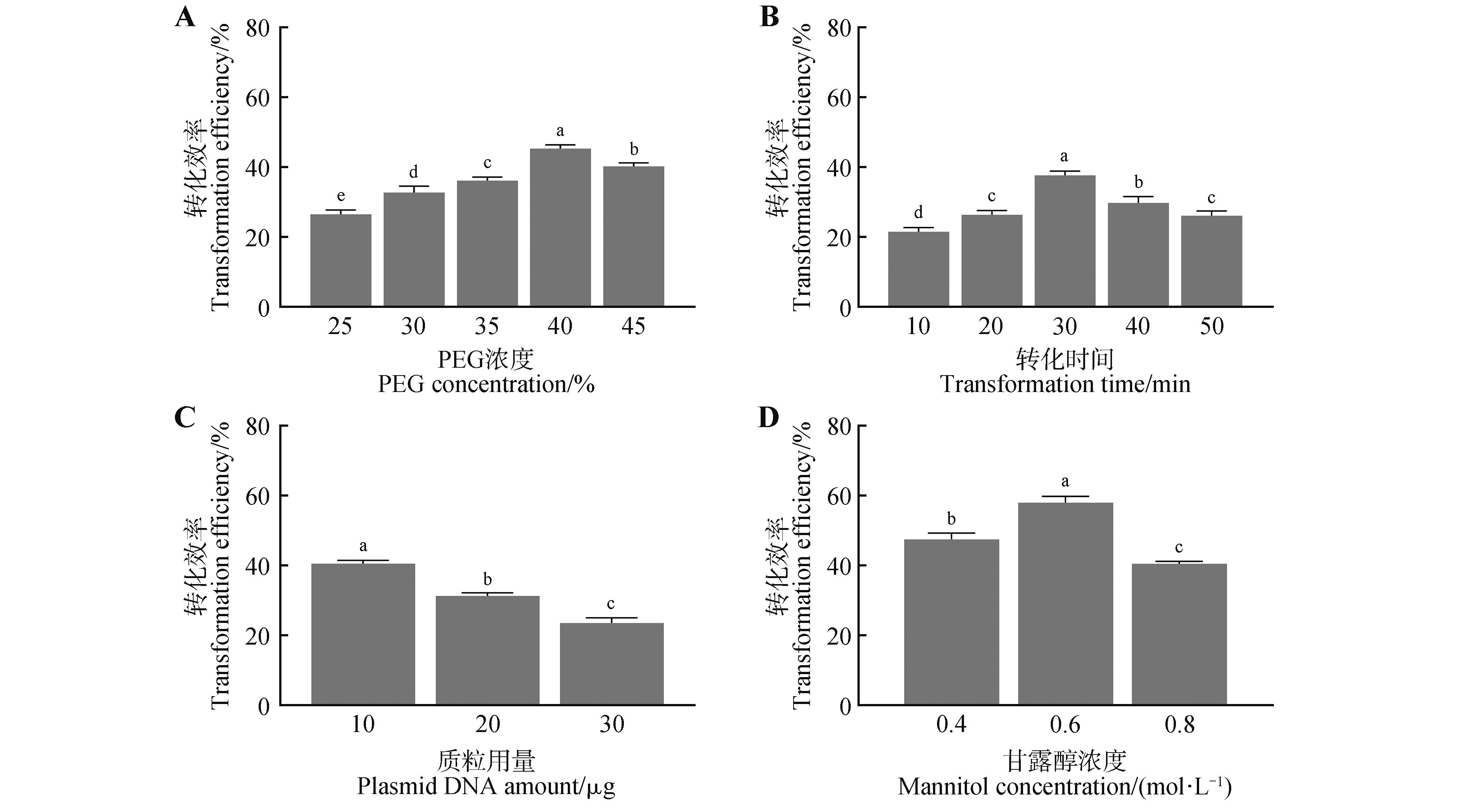
Fig.9
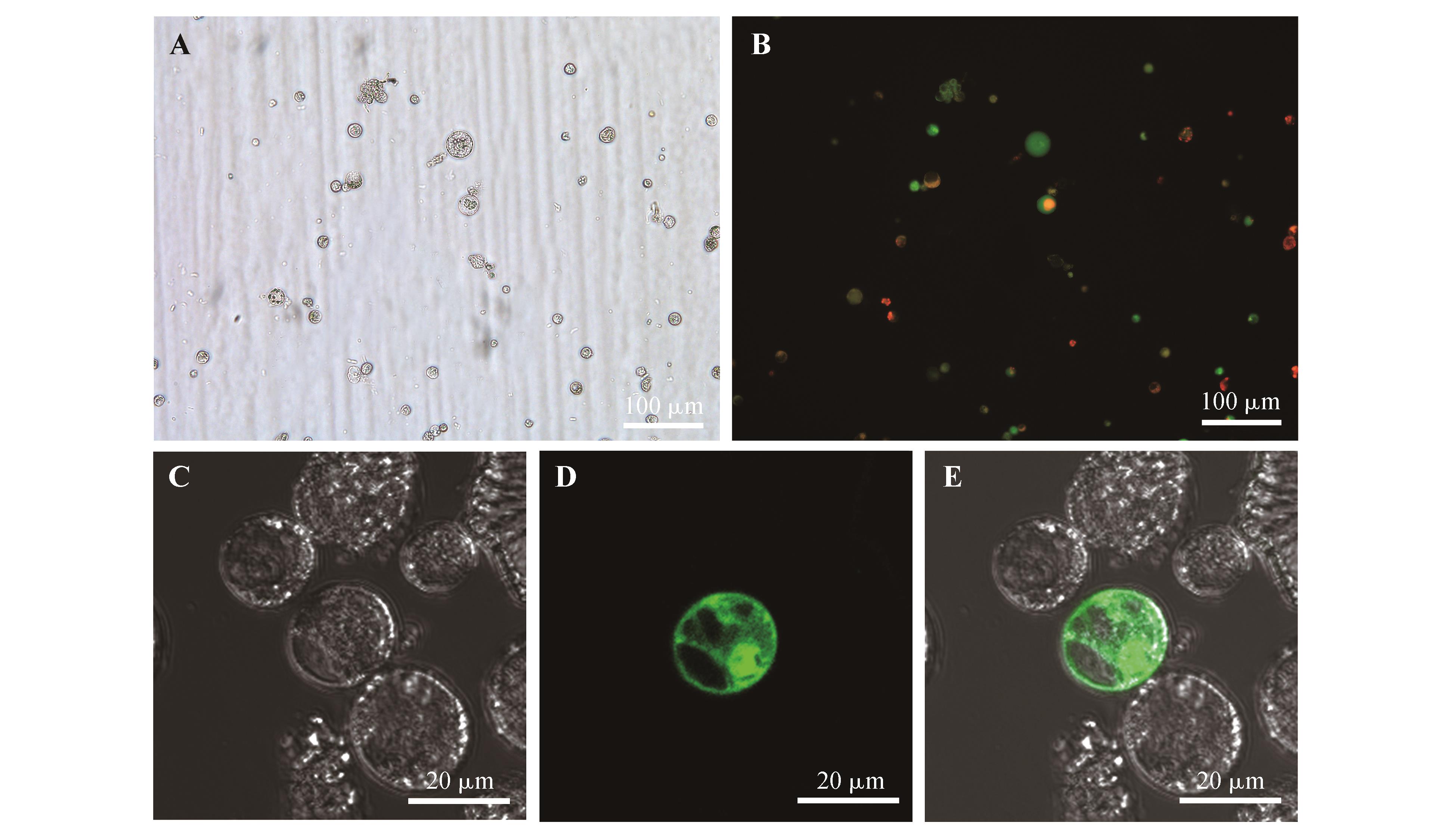
Transient transformation of Andrographis paniculata root callus protoplastsA. Bright field image of root callus protoplasts; B. Dark field image of root callus protoplasts; C. Bright field image of protoplasts under a confocal laser scanning microscope; D. Dark field image of protoplasts under a confocal laser scanning microscope; E. Merged field image of protoplasts under a confocal laser scanning microscope.
| [1] | LOW M, KHOO C S, MÜNCH G,et al.An in vitro study of anti-inflammatory activity of standardised Andrographis paniculata extracts and pure andrographolide[J].BMC Complementary and Alternative Medicine,2015,15(1):18. |
| [2] | MAIUOLO J, CAMINITI R, MAZZA V,et al.An innovative method of improving an extract of Andrographis paniculata from leaves:its anticancer effect involves the cell endoplasmic reticulum[J].International Journal of Molecular Sciences,2025,26(1):344. |
| [3] | JADHAV A K, KARUPPAYIL S M. Andrographis paniculata (Burm.f.) wall ex nees:antiviral properties[J].Phytotherapy Research,2021,35(10):5365-5373. |
| [4] | AKHTAR M T, MOHD SARIB M S BIN, ISMAIL I S,et al.Anti-diabetic activity and metabolic changes induced by Andrographis paniculata plant extract in obese diabetic rats[J].Molecules,2016,21(8):1026. |
| [5] | LIN F L, WU S J, LEE S C,et al.Antioxidant,antioedema and analgesic activities of Andrographis paniculata extracts and their active constituent andrographolide[J].Phytotherapy Research,2009,23(7):958-964. |
| [6] | GAO S Y, TAN H X, GANG J.Inhibition of hepatocellular carcinoma cell proliferation through regulation of the cell cycle,AGE-RAGE,and leptin signaling pathways by a compound formulation comprised of andrographolide,wogonin,and oroxylin a derived from Andrographis paniculata(Burm.f.) Nees[J].Journal of Ethnopharmacology,2024,329:118001. |
| [7] | ISLAM M A, HOSSAIN M S, HASNAT S,et al.In-silico study unveils potential phytocompounds in Andrographis paniculata against E6 protein of the high-risk HPV-16 subtype for cervical cancer therapy[J].Scientific Reports,2024,14(1):17182. |
| [8] | 邵艳华.穿心莲种质资源及其质量评价研究[D].广州:广州中医药大学,2015. |
| SHAO Y H.Study on germplasm resource and quality evaluation of the medicinal plant Andrographis paniculata [D].Guangzhou:Guangzhou University of Chinese Medicine,2015. | |
| [9] | 陈东亮,钟楚,林阳.药用植物穿心莲种质资源、育种及栽培研究进展[J].江苏农业科学,2020,48(21):34-40. |
| CHEN D L, ZHONG C, LIN Y.Research progress on germplasm resources,breeding and cultivation of medicinal plant Andrographis paniculata (Burm.f.) Nees[J].Jiangsu Agricultural Sciences,2020,48(21):34-40. | |
| [10] | EECKHAUT T, LAKSHMANAN P S, DERYCKERE D,et al.Progress in plant protoplast research[J].Planta,2013,238(6):991-1003. |
| [11] | YOKOYAMA R, KUKI H, KUROHA T,et al. Arabidopsis regenerating protoplast:a powerful model system for combining the proteomics of cell wall proteins and the visualization of cell wall dynamics[J].Proteomes,2016,4(4):34. |
| [12] | XU Y, LI R L, LUO H B,et al.Protoplasts:small cells with big roles in plant biology[J].Trends in Plant Science,2022,27(8):828-829. |
| [13] | ROEST S, GILISSEN L J W.Plant regeneration from protoplasts:a literature review[J].Acta Botanica Neerlandica,1989,38(1):1-23. |
| [14] | WANG Q, ZHANG M Y, HAN M X,et al.Development of a transient expression system for Panax ginseng based on protoplast isolation from its embryoids[J].Horticultural Plant Journal,2025,11(1):459-462. |
| [15] | HSU C T, CHIU C C, HSIAO P Y,et al.Transgene-free CRISPR/Cas9-mediated gene editing through protoplast-to-plant regeneration enhances active compounds in Salvia miltiorrhiza [J].Plant Biotechnology Journal,2024,22(6):1549-1551. |
| [16] | 黄瑞华,刘潇晗,曹天丽,等.穿心莲叶片原生质体制备方法的建立与优化[J].分子植物育种,2021,19(17):5878-5885. |
| HUANG R H, LIU X H, CAO T L,et al.Optimization of protoplasts preparation of leaves from Andrographis paniculata (Burm.f.) Nees[J].Molecular Plant Breeding,2021,19(17):5878-5885. | |
| [17] | 胡斌盛,周纯贤,郑健云,等.穿心莲花药愈伤组织原生质体分离条件初探[J/OL].分子植物育种,(2023-03-20)[2026-01-10].. |
| HU B S, ZHOU C X, ZHENG J Y,et al.Preliminary study on isolation conditions of anther callus protoplasts from Andrographis paniculata (Burm.f.) Nees[J/OL].Molecular Plant Breeding,(2023-03-20)[2026-01-10].. | |
| [18] | HOU S L, LI Z Y, YI D D,et al.Establishment of a system for tissue culture regeneration and isolation of camellia yubsienensis,and PEG-mediated transient expression of mesophyll protoplasts[J].Industrial Crops and Products,2024,222:119897. |
| [19] | LIU Q K, LI P T, CHENG S,et al.Protoplast dissociation and transcriptome analysis provides insights to salt stress response in cotton[J].International Journal of Molecular Sciences,2022,23(5):2845. |
| [20] | SINHA A, WETTEN A C, CALIGARI P D S.Effect of biotic factors on the isolation of Lupinusalbus protoplasts[J].Australian Journal of Botany,2003,51(1):103-109. |
| [21] | KLIMEK-CHODACKA M, KADLUCZKA D, LUKASIEWICZ A,et al.Effective callus induction and plant regeneration in callus and protoplast cultures of Nigella damascena L.[J].Plant Cell,Tissue and Organ Culture,2020,143(3):693-707. |
| [22] | MASANI M Y A, NOLL G A, PARVEEZ G K A,et al.Efficient transformation of oil palm protoplasts by PEG-mediated transfection and DNA microinjection[J].PLoS One,2014,9(5):e96831. |
| [23] | 张曼,张叶卓,何其邹洪,等.植物细胞壁结构及成像技术研究进展[J].生物技术通报,2023,39(7):113-122. |
| ZHANG M, ZHANG Y Z, HE Q Z H,et al.Advances in plant cell wall structure and imaging technology[J].Biotechnology Bulletin,2023,39(7):113-122. | |
| [24] | VIÑAS M, GÓMEZ-ZELEDÓN J, ACUÑA-GUTIÉRREZ C,et al.Protoplast isolation from different explant sources in pitahaya (Selenicereus costaricensis,Cactaceae):insights from roots,callus,and shoot tissues[J].Plant Cell,Tissue and Organ Culture,2025,161(1):17. |
| [25] | 孙长恒.大豆不同器官原生质体制备的研究[D].哈尔滨:东北农业大学,2024. |
| SUN C H.Study on preparation of protoplasts from different organs of soybean[D].Harbin:Northeast Agricultural University,2024. | |
| [26] | CHEN G Q, LI M L, GUO X X,et al.Impact of cultivation methods and leaf age on protoplast isolation efficiency in Calibrachoa hybrida [J].Scientia Horticulturae,2025,350:114369. |
| [27] | PUJARI I, THOMAS A, RAI P S,et al.Cell size:a key determinant of meristematic potential in plant protoplasts[J].aBIOTECH,2021,2(1):96-104. |
| [28] | FARACO M, DI SANSEBASTIANO G P, SPELT K,et al.One protoplast is not the other![J].Plant Physiology,2011,156(2):474-478. |
| [29] | LI S F, ZHAO R, YE T W,et al.Isolation,purification and PEG-mediated transient expression of mesophyll protoplasts in Camellia oleifera [J].Plant Methods,2022,18(1):141. |
| [30] | 王丹丹,李成阳,李强.甘薯高效原生质体瞬时转化系统的建立及应用[J].江苏农业学报,2024,40(12):2201-2206. |
| WANG D D, LI C Y, LI Q.Establishment and application of an efficient protoplast transient transformation system in sweet potato[J].Jiangsu Journal of Agricultural Sciences,2024,40(12):2201-2206. | |
| [31] | YU X X, YU J T, LU Y,et al.An efficient and universal protoplast-based transient gene expression system for genome editing in Brassica crops[J].Horticultural Plant Journal,2024,10(4):983-994. |
| [1] | Guoju XU, Piaoxue GUO, Xunran ZHU, Zimei YANG, Huanyu CHENG, Wei QIANG. The Salicylic Acid Responsive UrSTR4 Gene is Involved in Rhynchophylline Biosynthesis in Uncaria rhynchophylla [J]. Bulletin of Botanical Research, 2025, 45(4): 491-503. |
| [2] | Yanshuo LI, Minyan WANG, Diankuan LIU, Wei LI, Hengfu YIN. Establishment of a System for Preparation and Transient Transformation of Protoplasts of Pinus massoniana [J]. Bulletin of Botanical Research, 2025, 45(2): 202-210. |
| [3] | Xin HAN, Ruonan WU, Xin LI, Yunyao YANG, Minmin CHEN, Yongchun ZHANG, Liuyan YANG. Protoplast Isolation, Purification and Application of Lilium davidii var. unicolor [J]. Bulletin of Botanical Research, 2024, 44(6): 936-944. |
| [4] | Zhuanzhuan JIANG, Li GONG, Yaling SONG. The Chloroplast Division Protein PARC6 Affected the Growth of Cotyledon and Leaf in Arabidopsis thaliana [J]. Bulletin of Botanical Research, 2023, 43(5): 700-710. |
| [5] | Hong-Mei TIAN, Xiao GUO, Kui-Ling WANG, Ying-Kun SUN. Plant Regeneration System from Cotyledon of Camellia japonica (Naidong) [J]. Bulletin of Botanical Research, 2021, 41(3): 321-328. |
| [6] | WANG Wan-Qi, QI Wan-Zhu, ZHAO Qiu-Shuang, ZENG Dong, LIU Yi, FU Peng-Yue, QU Guan-Zheng, ZHAO Xi-Yang. Cloning and Expression Analysis of BpJMJ18 Gene Promoter in Betula platyphylla [J]. Bulletin of Botanical Research, 2020, 40(5): 751-759. |
| [7] | FAN Er-Qin, LIU Cai-Xia, FU Peng-Yue, YANG Chuan-Ping, QU Guan-Zheng. Expression Pattern of PagC3H3 Gene in Populus alba×P.glandulosa [J]. Bulletin of Botanical Research, 2019, 39(4): 521-528. |
| [8] | LIN Yun, BI Hai-Yan, LI Chao, YUN Ying-Xia. Correction of Typographical Errors in the Protologue of Eleven Taxa(Dicotyledon) in China [J]. Bulletin of Botanical Research, 2019, 39(2): 310-320. |
| [9] | XU De-Lin, ZHANG Lin, CHU Shi-Run, WEI Xin, QIAN Gang, ZHENG Ming-Hui. A Protocol for the Isolation and Purification of Protoplast from Bletilla striata Leaves [J]. Bulletin of Botanical Research, 2016, 36(5): 795-800. |
| [10] | LIN Yun1;LIU Wen-Qun1;WU Hui-Bing1;SUN Miao2;SUN Qian2;YANG Zhi-Rong2;LIN Qi2*. Lectotypifications of Sixteen Names in Dicotyledon [J]. Bulletin of Botanical Research, 2015, 35(6): 807-811. |
| [11] | FAN Xiao-Feng;LI Dong-Bo;LIU Ling-Xia;LIU Xiu-Li;YANG Ying-Li*. Protoplast Culture and Plant Regeneration of Celastrus orbiculatus Thunb. [J]. Bulletin of Botanical Research, 2011, 31(3): 300-305. |
| [12] | YAN Gui-Hua;WANG Li-Jun*;NIE Xiao-Lan. Anatomical Study on the Primary Vascular System of Seedling of Catalpa ovata [J]. Bulletin of Botanical Research, 2011, 31(3): 261-264. |
| [13] | ZHANG Feng-Lan;HAO Li-Zhen;*;YANG Zhong-Ren;HU Ning-Bao;WANG Liu-Ying;ZHANG Jin-Wen;. Micromorphology of Cotyledon Epidermis of Pugionium Gaertn. [J]. Bulletin of Botanical Research, 2009, 29(5): 524-528. |
| [14] | HUANG Zuo-Xi;WANG Fang;ZHANG Yun-Gang;ZHOU Ling-Ling;YU Guo-Zhi;DUAN Hui-Guo;. The Induction of Female Flowers in Cotyledons of Cucumber (Cucumis sativus L.) in Vitro [J]. Bulletin of Botanical Research, 2008, 28(3): 283-287. |
| [15] | FENG Tao;HU Dong. An Improving Method for Observation of the Stomata on Monocotyledon [J]. Bulletin of Botanical Research, 2008, 28(1): 82-84. |
| Viewed | ||||||
|
Full text |
|
|||||
|
Abstract |
|
|||||