寄生植物锁阳种子萌发方法及愈伤组织、初生吸器诱导研究
In vitro Germination,Callus Induction and Primary Haustorium Organogenesis in the Parasitic Plant Cynomorium songaricum
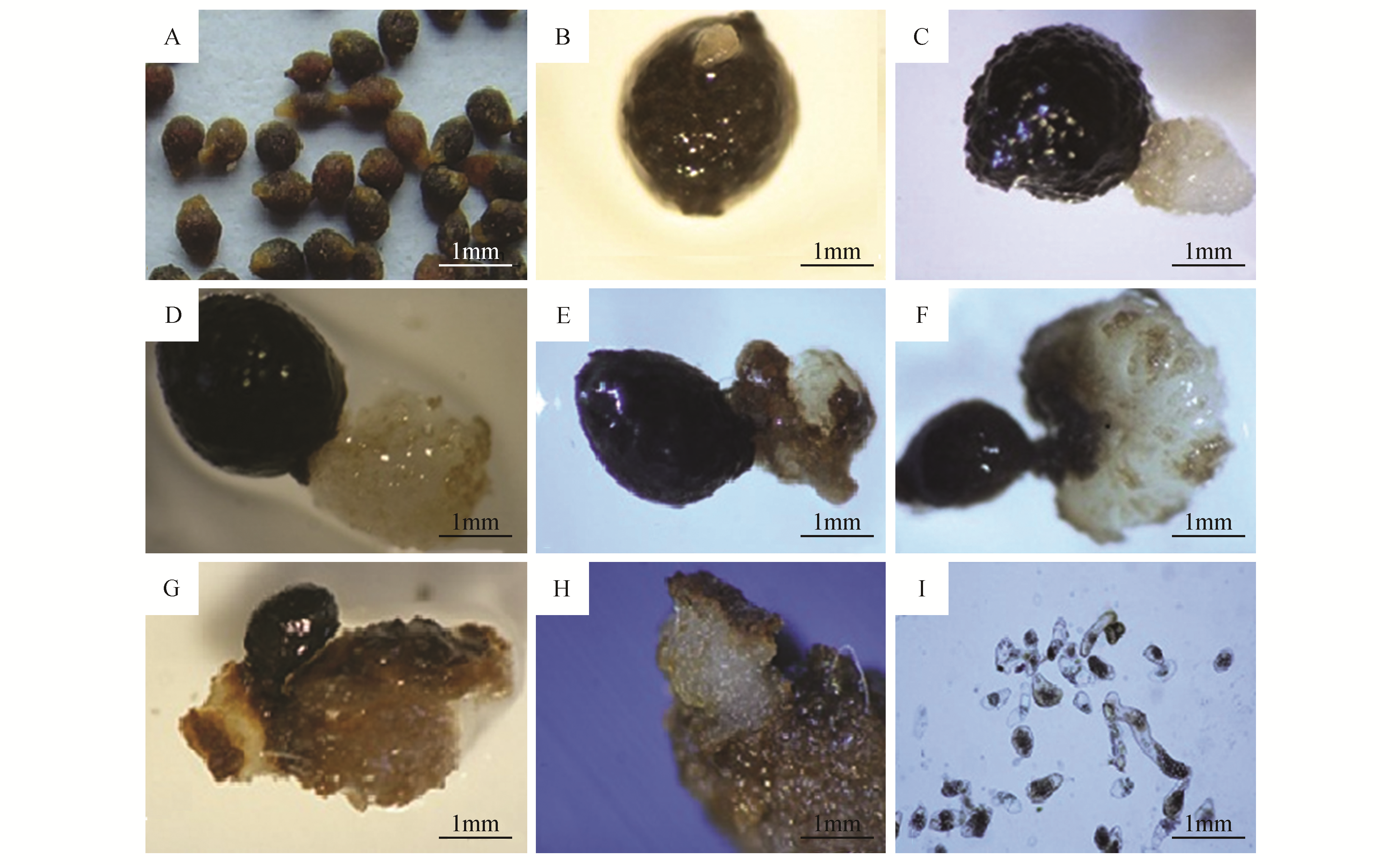
The embryo broke through the seed coat at the micropylar end after 40 days of culture(Fig.2B). The radicle continued to elongate in the following days(Fig.2C). The radicle’s top became intumescent(Fig.2D) and eventually formed a callus(Fig.2E). The callus was pure white and dense, and grew rapidly from the radicle(Fig.2F). After another 20 d, it became brown(Fig.2G), and embryogenic callus formation occurred(Fig.2H). Embryogenic cells were mostly cylindrical, with large nuclei and starch grains(Fig.2I)